Royal Delft Blauw Handwerk Decorative Plate
QUICK FACTS
Categories
Era
Mid-20th Century to Contemporary (c. 1950 - 2000s)
Origin
🇳🇱 Netherlands
Brand
Royal Delft Blauw Handwerk
Rarity
Ordinary (3/10)
Discovered
Feb 12, 2026
2 weeks ago
DESCRIPTION
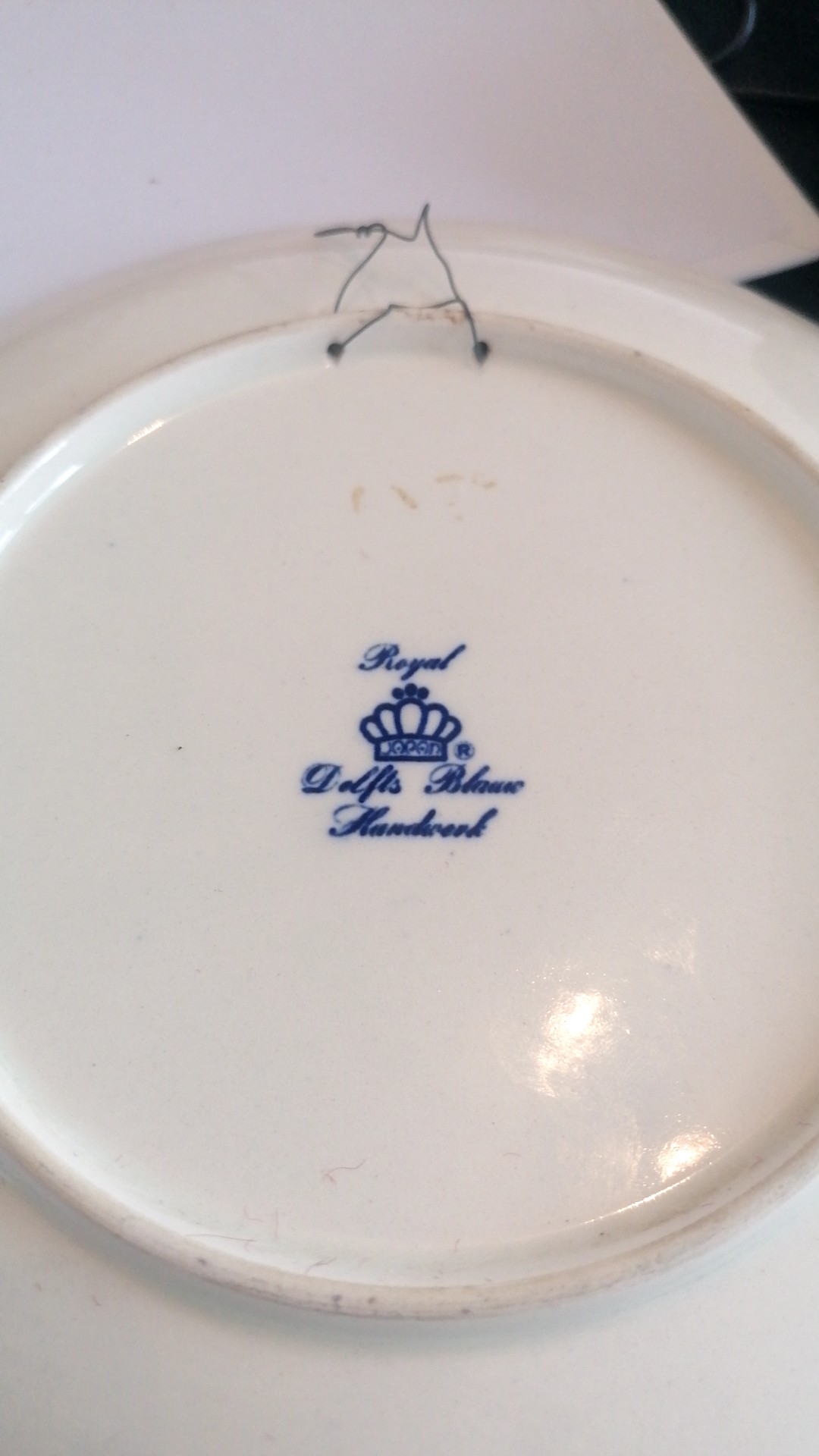
This appears to be a decorative ceramic plate, hand-painted in the traditional blue and white Delft style. The central motif features a stylized floral arrangement, primarily roses and leaves, encircled by a border of smaller floral elements. The reverse shows a clear maker's mark: 'Royal Delft Blauw Handwerk' surmounted by a crown symbol, indicating production from a Dutch factory specializing in Delftware, likely within the last century. The wire hanger suggests its intended use as a wall decor piece.
CULTURAL ECHOES
Where This Object Echoes
The original inspiration for blue and white ware, especially during the Ming and Qing dynasties, which Dutch Delftware emulated and adapted.
Other European tin-glazed earthenware traditions that developed independently or in influence from Delftware, such as those from Italy, France, and England.
Ritual & Ceremonial Use
- •Souvenir collecting and display, especially for items associated with national heritage or travel.
- •Domestic decoration, where such plates are hung on walls or displayed on plate stands to add traditional aesthetic appeal.
Meaning Through Time
Symbol of wealth and sophistication, initially an imitation of luxury Chinese imports.
Becomes a staple of Dutch identity, a decorative item for middle-class homes, and later, a canvas for nationalist imagery.
Largely produced as decorative tourist souvenirs or affordable home decor, maintaining traditional aesthetics but often machine-assisted in execution.
HISTORICAL STORY
DID YOU KNOW?
The distinctive blue hue of Delftware was originally achieved by grinding cobalt oxide, which turns vibrant blue upon firing at high temperatures.
Although often associated with windmills and tulips, early Delftware frequently depicted Asian-inspired scenes, demonstrating the global exchange of artistic ideas during the Dutch Golden Age.
MATERIAL & CONDITION
Surface
The plate exhibits a glossy, white tin-glazed ceramic surface, adorned with hand-painted underglaze blue decoration. The glaze appears uniform with no obvious crazing visible from the images. The raised footrim on the reverse is unglazed.
Weight & Feel
Based on its size and ceramic material, it likely has a moderate and solid weight, typical for a decorative wall plate.
Condition
The plate appears to be in very good condition with no visible chips, cracks, or significant wear to the glaze or painted decoration. The wire hanger is slightly bent but functional.
RARITY ANALYSIS
Standard antiques commonly found at estate sales and flea markets. Plentiful supply meets modest demand.
Typical Characteristics
- Moderate production runs
- Common at estate sales
- Entry-level collectibles
EXPERT ANALYSIS
Decorative Arts Specialist
Confidence is high due to the clear maker's mark and distinctive style, which firmly identify it as a piece of Delftware. The exact era and confirmation of hand-painting versus transfer would require further visual evidence.
KEY EVIDENCE
- 1The prominent 'Royal Delft Blauw Handwerk' mark on the reverse indicates the manufacturer and style.
- 2The hand-painted floral decoration is characteristic of Delftware, although mass-produced modern versions often use transfers.
- 3The overall form factor and presence of a wire hanger suggest its primary function is decorative display rather than utilitarian use.
- 4The 'Royal' prefix in the mark often denotes a modern company with royal charter or historic connection, rather than a 17th-century origin.
UNCERTAINTIES
- •Without additional images of the footrim and careful inspection of the brushwork under magnification, it's difficult to definitively confirm 'Handwerk' (hand-work) as opposed to a hand-finished transfer print, a common practice in later Delft-style production.
- •The exact age cannot be determined without a specific date code or deeper factory mark analysis not visible here.
WHAT WOULD IMPROVE CERTAINTY
- →Obtain a high-resolution close-up of the footrim for evaluation of wear and glaze application.
- →Inspect the decoration under magnification to distinguish true hand-painting from hand-finished transfer prints.
- →Check for any additional incised or impressed marks on the base.
- →If possible, research 'Royal Delft Blauw Handwerk' to pinpoint the specific factory and its production dates.
ESTIMATED VALUE
Updated: Feb 27, 2026
- Market comparables from auctions & retail
- Condition, completeness & craftsmanship
- Current collector demand & trends
- Low = quick sale, high = patient seller
For informational purposes only, not a formal appraisal.

ABOUT DECORATIVE OBJECTS
Ceramics, silver, porcelain, glassware, and decorative arts.
Browse all Decorative ObjectsSHARE THIS CURIOSITY
Have your own curiosities to discover?
Scan Your Curiosity
COMMENTS
No comments yet. Be the first to share your thoughts!
Sign in to leave a comment