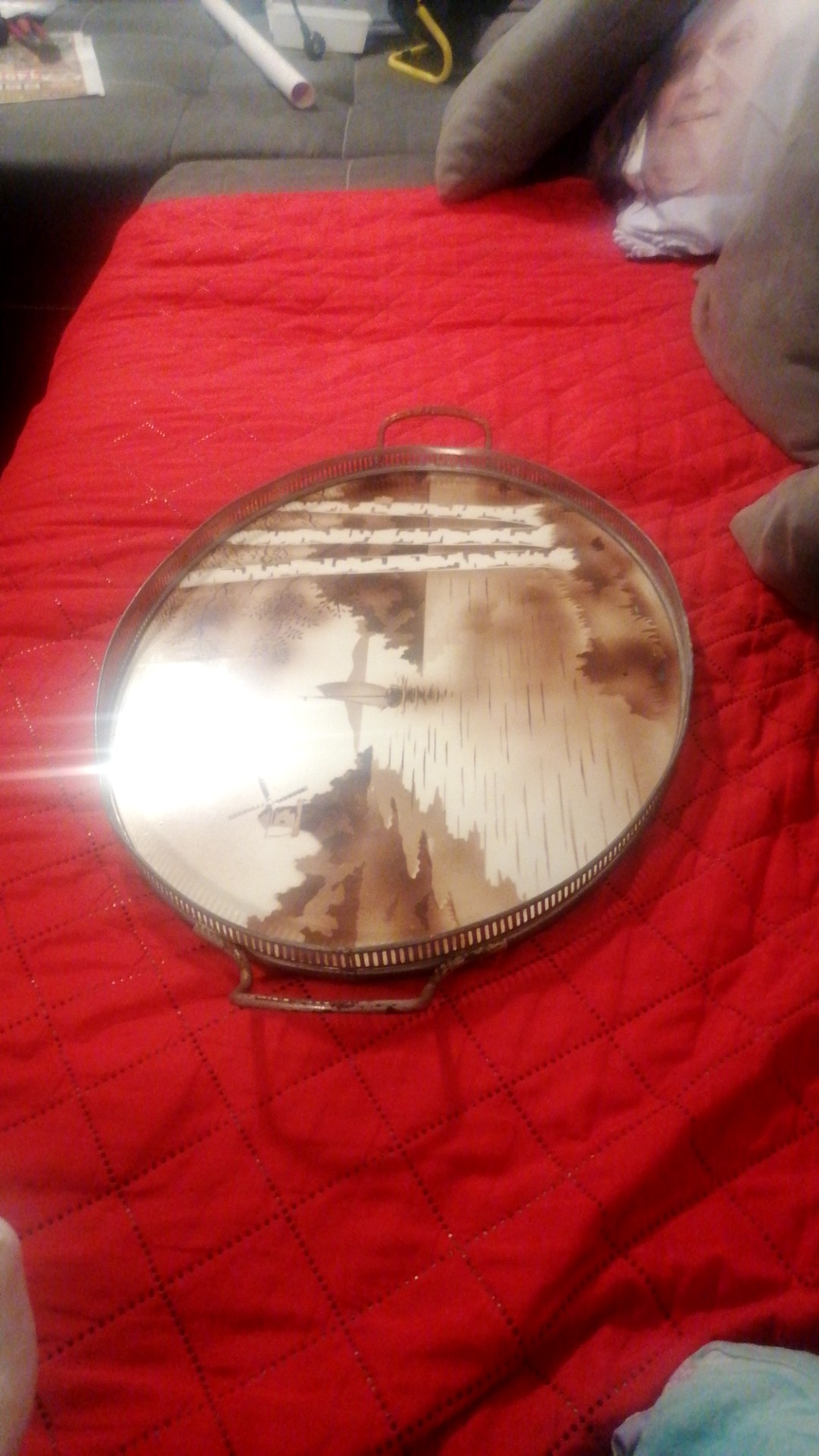
Mid-20th Century Oval Mirrored Serving Tray with Etched Landscape
QUICK FACTS
Categories
Era
1940s-1960s
Origin
🌍 International
Brand
Paetsch
Rarity
Ordinary (3/10)
Discovered
Feb 12, 2026
2 weeks ago
DESCRIPTION
This appears to be an oval mirrored serving tray, framed in what looks like a silver-plated or similar base metal, featuring decorative handles. The mirror surface is reverse-etched or decorated with a landscape scene, depicting trees, water, and likely a boat or distant landmass. The decorative technique on the mirror is characteristic of mid-20th-century decorative household items, intended to add a touch of elegance to serving or display.
CULTURAL ECHOES
Where This Object Echoes
Mirrored platters and trays were prevalent in the mid-20th century, often drawing inspiration from romanticized landscape paintings and pastoral scenes.
Ritual & Ceremonial Use
- •Entertaining and hospitality, used for serving cocktails, appetizers, or desserts during social gatherings.
- •Home decoration, serving as a decorative base for floral arrangements or vanity items.
Meaning Through Time
Symbol of domestic elegance and a 'well-appointed' home, reflecting a post-war prosperity and emphasis on stylish entertaining.
Often repurposed as decorative accents in 'shabby chic' or 'vintage' interior design themes, or as practical catch-all trays.
HISTORICAL STORY
DID YOU KNOW?
Mirrored trays became extremely popular in the Art Deco era and continued to be a staple in home decor for several decades, often made by industrial manufacturers but aiming for a luxurious look.
The reverse painting or etching technique on mirrors, where the design is applied to the back of the glass, protects the artwork and creates a sense of depth and luminosity not achievable on the front surface.
MATERIAL & CONDITION
Surface
The mirror surface exhibits a reflective, slightly aged quality, with the decorative etching appearing in a sepia or brownish tone against the silvering. The metallic frame, likely silver-plated, shows some patina and possible wear, consistent with age and handling. The etched scene provides a matte contrast to the glossy mirror.
Weight & Feel
Given its size and materials (mirror glass, metal frame), the tray would likely feel moderately heavy and substantial to handle, indicating a solid construction.
Condition
The mirror appears to be intact, though the decorative etching shows some areas of possible wear, making the details less crisp in places. The metallic frame has visible signs of tarnishing or patina, especially on the handles and rim, which is expected for plated items of this age. Without closer inspection, it's difficult to ascertain if any of the silvering on the mirror itself has deteriorated.
RARITY ANALYSIS
Standard antiques commonly found at estate sales and flea markets. Plentiful supply meets modest demand.
Typical Characteristics
- Moderate production runs
- Common at estate sales
- Entry-level collectibles
EXPERT ANALYSIS
Decorative Arts Specialist
The confidence level is good because the item's form, materials, and decorative style are consistent with typical mid-20th century decorative arts. However, specific maker identification would require clearer images of any factory markings and potential hallmarks.
KEY EVIDENCE
- 1The overall design and form of the oval tray with handles points to a mid-20th century aesthetic.
- 2The reverse-etched mirror technique was a popular decorative method during this period for household items.
- 3The landscape motif is typical for such decorative wares, aiming for a generally appealing, romanticized scene.
- 4The visible tarnishing on the metal frame suggests a silver-plated or similar base metal surface, consistent with age.
- 5The '3416' and 'VERBOT' marks on the reverse might be factory production numbers or obscure maker's marks, guiding towards industrial manufacture.
UNCERTAINTIES
- •The specific maker (if any beyond a production factory) is not immediately identifiable without clearer marks.
- •The exact method of mirror decoration (etching, reverse painting, chemical treatment) cannot be definitively determined from images alone.
- •Impact of potential losses to the original silvering on the mirror cannot be fully assessed.
WHAT WOULD IMPROVE CERTAINTY
- →High-resolution close-ups of the 'VERBOT' and '3416' markings on the reverse for potential identification.
- →A clear, well-lit image of the entire mirrored surface to better assess the decorative technique and condition of the art.
- →Detailed images of the frame and handles to inspect for any further maker's marks or plating loss.
- →A size measurement to provide a better sense of scale.
ESTIMATED VALUE
Updated: Feb 27, 2026
- Market comparables from auctions & retail
- Condition, completeness & craftsmanship
- Current collector demand & trends
- Low = quick sale, high = patient seller
For informational purposes only, not a formal appraisal.
ABOUT DECORATIVE OBJECTS
Ceramics, silver, porcelain, glassware, and decorative arts.
Browse all Decorative ObjectsSHARE THIS CURIOSITY
Have your own curiosities to discover?
Scan Your Curiosity
COMMENTS
No comments yet. Be the first to share your thoughts!
Sign in to leave a comment