Japanese Moriage Dragonware Geisha Lithophane Teacup and Saucer
QUICK FACTS
Categories
Era
Early-to-mid 20th Century
Origin
🇯🇵 Japan
Rarity
Average (4/10)
Discovered
Feb 12, 2026
2 weeks ago
DESCRIPTION
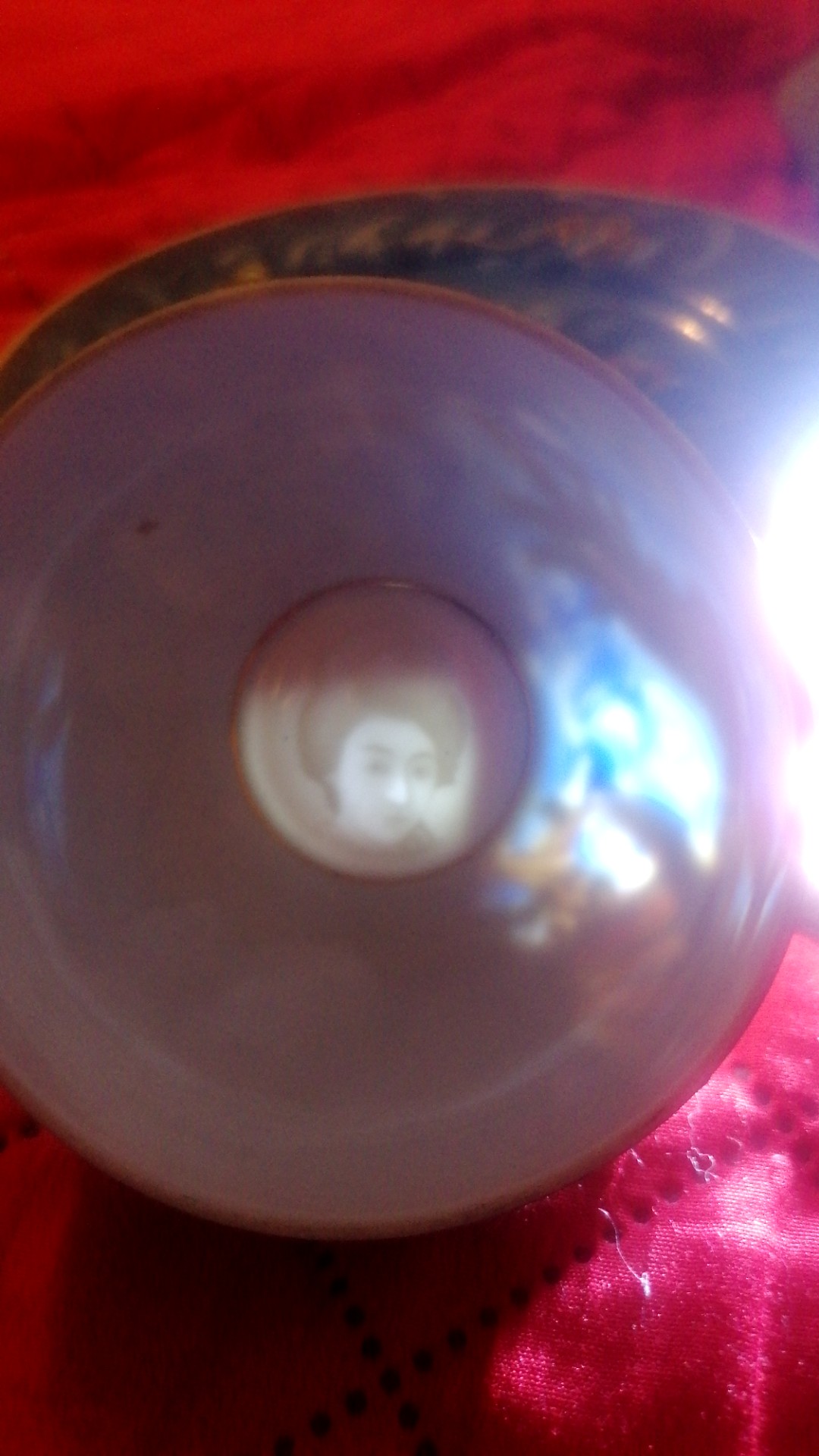
This appears to be a Japanese porcelain teacup and saucer set, commonly referred to as 'Dragonware' or 'Moriage' due to its raised enamel decoration. The most distinctive feature is the lithophane image of a geisha visible at the bottom of the teacup when held to the light. The exterior of both the cup and saucer features intricate, hand-painted dragons in rich cobalt blue, white, and gold accents, with the raised enamel 'moriage' technique giving a tactile, three-dimensional effect to the dragon scales or bodies.
CULTURAL ECHOES
Where This Object Echoes
Similar porcelain tea sets were produced in various Japanese kilns, such as those in the Arita or Seto regions, specifically for export markets, often adopting decorative styles appealing to Western tastes.
The aesthetic of highly decorative, often nature-inspired motifs, and a fascination with Japanese art greatly influenced European and American decorative arts during these movements, making these Japanese pieces highly desirable.
Ritual & Ceremonial Use
- •The ritual of tea drinking, a culturally significant practice globally, shaped the production of such elaborate tea sets, designed for both daily use and formal occasions.
- •Gift-giving and souvenir collecting: These sets were often purchased as mementos of travel or as special gifts.
- •Display and decoration: Beyond their functional purpose, such ornate sets were often prominently displayed in homes as part of interior decor, showcasing elements of exoticism.
Meaning Through Time
During this period, these items symbolized a blend of Eastern artistry and Western utility, reflecting early globalization and cultural exchange.
Many pieces were brought back by American servicemen, becoming cherished souvenirs from Japan and representing a tangible memory of their time abroad.
Today, these pieces are valued for their craftsmanship, historical context, and the novelty of the lithophane, often sought after by collectors of vintage Japanese porcelain.
HISTORICAL STORY
DID YOU KNOW?
Lithophanes were originally a European invention from the 1820s, with intricate scenes carved into wax and then cast in unglazed porcelain, becoming visible when backlit.
The 'moriage' technique, featuring raised enamel decoration, is achieved by meticulously building up layers of slip or enamel to create a three-dimensional texture on the ceramic surface.
MATERIAL & CONDITION
Surface
The surface of the teacup and saucer exhibits a glossy, hard-paste porcelain body, with vibrant cobalt blue underglaze and overglaze enamel decoration. The moriage work creates a distinctly raised, textured surface for the dragon details, likely applied by hand. The interior of the cup is smooth, with the clear, translucent lithophane image at the very base.
Weight & Feel
Based on the material, this set appears to be of moderate weight, typical for porcelain tea wares of the period, possessing a delicate but substantial feel.
Condition
The visible areas suggest generally good condition, with the paint and moriage details appearing intact. Without closer inspection, the presence of any chips, cracks, or significant wear to the gilt edges or enamel cannot be definitively assessed, but none are immediately apparent.
RARITY ANALYSIS
Typical antique shop fare. Requires some searching but regularly available. This is where most genuine antiques fall.
Typical Characteristics
- Standard antique shop items
- Regularly available
- Moderate collector interest
EXPERT ANALYSIS
Decorative Arts Specialist
Confidence is high for the general identification of this as Japanese moriage dragonware with a lithophane, given the clear visual cues of the decoration and characteristic lithophane feature. Specific dating and maker attribution are less certain without visible marks and clearer images.
KEY EVIDENCE
- 1Distinctive 'moriage' raised enamel decoration on the dragon design.
- 2Lithophane image of a geisha visible at the bottom of the cup, a common feature in Japanese export wares.
- 3Cobalt blue and gold color scheme is characteristic of this style.
- 4Two-piece teacup and saucer configuration specifically designed for tea service.
UNCERTAINTIES
- •The images are somewhat overexposed, making it difficult to discern subtle surface details, such as faint cracks or wear to the gilt edges.
- •Absence of clear maker's marks or backstamps, which often aid in specific attribution and dating.
WHAT WOULD IMPROVE CERTAINTY
- →Capture clearer, well-lit images of the entire set from various angles, including the undersides of both the cup and saucer.
- →Inspect closely for any maker's marks, backstamps, or numbers on the base of the cup and saucer, and photograph them clearly.
- →Check the footrims for signs of wear or kiln stilt marks, which can provide clues about age and manufacturing.
- →Examine the gilt edges for any wear or rubbing, as this is a common indicator of age and use.
ESTIMATED VALUE
Updated: Feb 27, 2026
- Market comparables from auctions & retail
- Condition, completeness & craftsmanship
- Current collector demand & trends
- Low = quick sale, high = patient seller
For informational purposes only, not a formal appraisal.
ABOUT DECORATIVE OBJECTS
Ceramics, silver, porcelain, glassware, and decorative arts.
Browse all Decorative ObjectsSHARE THIS CURIOSITY
Have your own curiosities to discover?
Scan Your Curiosity
COMMENTS
No comments yet. Be the first to share your thoughts!
Sign in to leave a comment