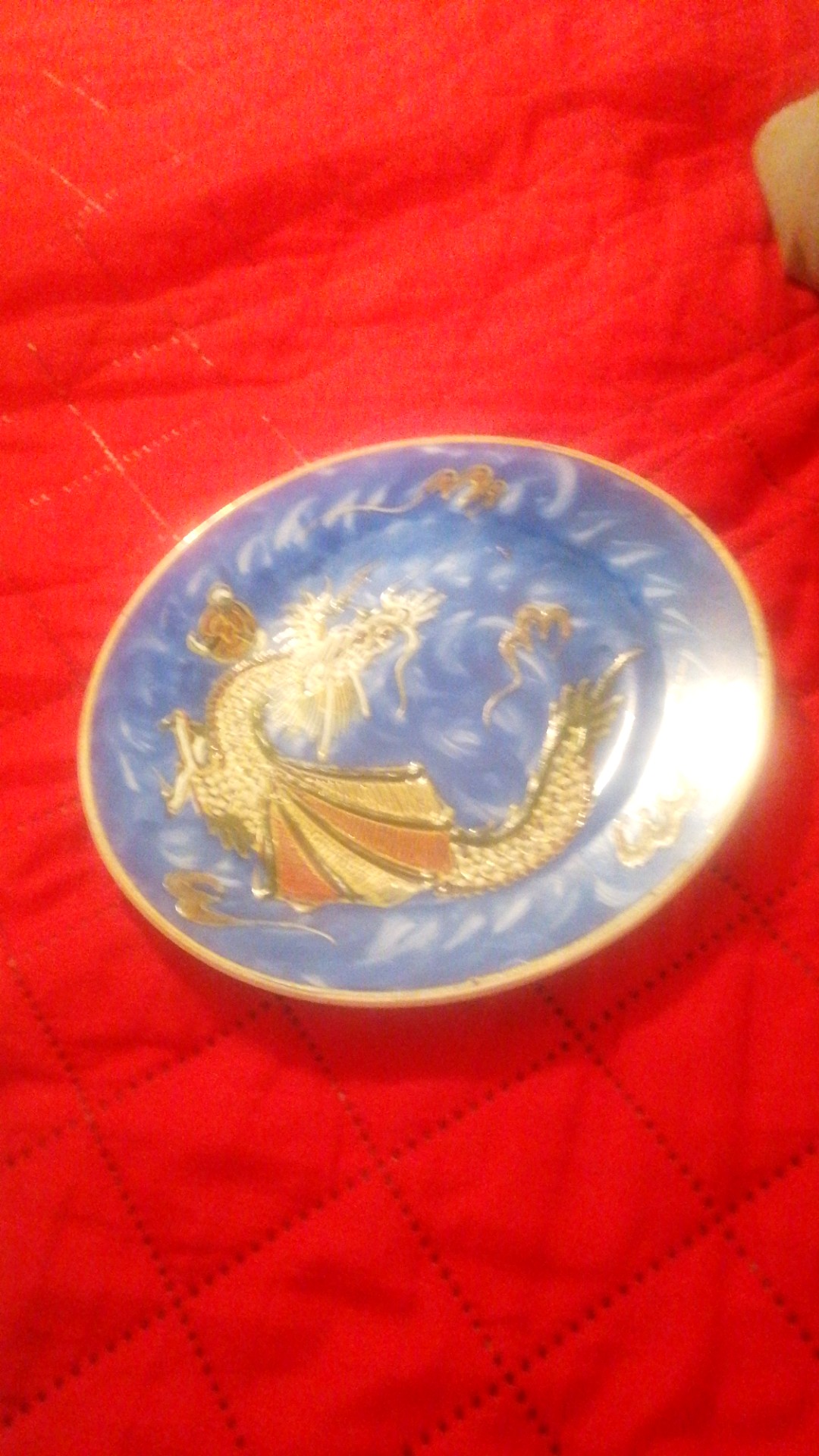
Asian-Style Decorative Porcelain Plate with Dragon Motif
QUICK FACTS
Categories
Era
Mid-20th Century to Late 20th Century
Origin
🌍 International
Rarity
Ordinary (3/10)
Discovered
Feb 12, 2026
2 weeks ago
DESCRIPTION
This is a small decorative porcelain plate featuring a prominent dragon motif against a blue ground. The dragon appears to be rendered in a raised, possibly enamelled or gilded finish, with details in white, gold, and a muted reddish-orange. The plate's rim is edged in gold. The overall impression suggests a decorative piece, likely for display rather than daily use, given the prominent ornamentation and the gold details.
CULTURAL ECHOES
Where This Object Echoes
Traditional use of dragon motifs on porcelain for imperial or celebratory objects, symbolizing power and good fortune.
Richly decorated, often gilded porcelain intended for export, frequently featuring mythical creatures and intricate patterns including dragons.
Ritual & Ceremonial Use
- •Display as a decorative accent in homes, sometimes for perceived auspiciousness or cultural appreciation.
- •Gift-giving, particularly as souvenirs or tokens of goodwill due to the dragon's symbolic meanings.
Meaning Through Time
Often associated with imperial power or high status when featured on porcelain, especially for domestic use or tribute.
Wider commercial appeal, symbolizing general good luck, strength, or exoticism, leading to mass-produced decorative items.
HISTORICAL STORY
DID YOU KNOW?
In many East Asian cultures, dragons are benevolent creatures associated with water, rain, and good fortune, quite different from the fire-breathing, treasure-hoarding Western dragons.
The number of claws on a dragon can often indicate its significance; four or five claws typically denote imperial connection in Chinese art, while three claws are more common in Japanese and Korean depictions.
MATERIAL & CONDITION
Surface
The surface presents a glossy, glazed porcelain body. The dragon decoration creates tactile variance, suggesting raised enameling or relief work rather than mere painting. The blue background appears to have a subtle cloud-like or wave-like pattern, providing depth to the dragon's environment.
Weight & Feel
Due to its size and ceramic nature, the plate likely feels light to moderate in hand, consistent with typical decorative porcelain.
Condition
From the image, the plate appears to be in good overall condition. There are no immediately obvious chips, cracks, or significant losses to the decorative elements or gilt rim, though close inspection would be necessary to confirm this.
RARITY ANALYSIS
Standard antiques commonly found at estate sales and flea markets. Plentiful supply meets modest demand.
Typical Characteristics
- Moderate production runs
- Common at estate sales
- Entry-level collectibles
EXPERT ANALYSIS
Decorative Arts Specialist
Confidence is moderate due to the clear visual evidence of a decorative porcelain plate with a consistent style; however, the absence of any identifying marks (even blurry ones) and the general nature of the motif limit a more precise attribution.
KEY EVIDENCE
- 1Porcelain body with glossy glaze visible.
- 2Raised dragon motif suggests enameling or relief work.
- 3Gilt detailing on the rim and parts of the dragon.
- 4Blue ground indicative of many East Asian porcelain decorative styles.
UNCERTAINTIES
- •No visible maker's mark or backstamp present, which is crucial for precise attribution and dating.
- •Image quality is moderate, making it difficult to discern subtle details that could indicate higher quality or specific origin.
- •The style is common among a wide range of decorative wares from various regions and production eras.
WHAT WOULD IMPROVE CERTAINTY
- →Obtain clear, well-lit photographs of the underside of the plate, specifically looking for any maker's marks, stamps, or labels.
- →Provide measurements (diameter) to accurately assess its size and intended function (e.g., side plate, wall plate).
- →Inspect the gilder's work and the fine lines of the dragon for signs of hand-painting versus decal application using a jeweler's loupe or magnifying glass.
ESTIMATED VALUE
Updated: Feb 27, 2026
- Market comparables from auctions & retail
- Condition, completeness & craftsmanship
- Current collector demand & trends
- Low = quick sale, high = patient seller
For informational purposes only, not a formal appraisal.

ABOUT DECORATIVE OBJECTS
Ceramics, silver, porcelain, glassware, and decorative arts.
Browse all Decorative ObjectsSHARE THIS CURIOSITY
Have your own curiosities to discover?
Scan Your Curiosity
COMMENTS
No comments yet. Be the first to share your thoughts!
Sign in to leave a comment