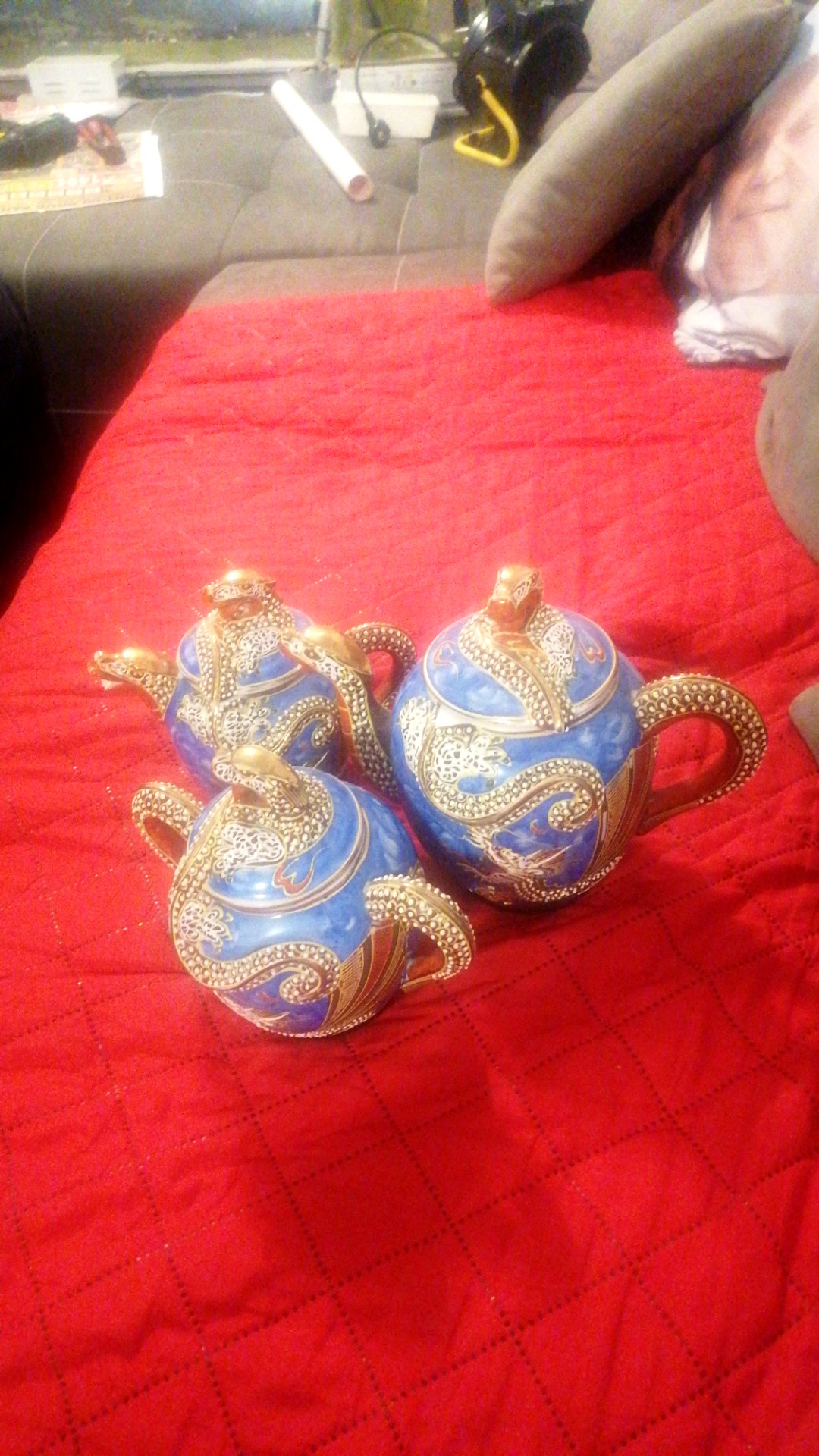
Decorative Enamelware Teapot Collection (Set of Three)
QUICK FACTS
Categories
Era
Mid-20th Century to Contemporary
Origin
🌍 International
Artist/Maker
Lithophane handgeschilderde draken koffiepot, suikerpot en theepot met merkteken van de kunstenaar
Rarity
Average (4/10)
Discovered
Feb 12, 2026
2 weeks ago
DESCRIPTION
This appears to be a set of three decorative enamelware teapots, likely crafted from a base metal and adorned with intricate cloisonné or champlevé enamel work. The bold blue ground is overlaid with ornate gold-toned serpentine or dragon motifs, highlighted with what appears to be simulated 'jewels' or raised enamel dots, giving them a rich, textural quality. The handles and finials are also heavily embellished with a stippled or beaded texture, contributing to their opulent aesthetic.
CULTURAL ECHOES
Where This Object Echoes
The use of intricate enamel work, particularly with dragon motifs and vibrant color palettes, draws heavily from traditional Chinese cloisonné techniques which flourished for centuries.
The European fascination with 'Oriental' and ornate aesthetics led to reproductions and reinterpretations of Asian decorative arts, often featuring rich enamels, gilding, and exotic motifs during the late 19th and early 20th centuries.
Ritual & Ceremonial Use
- •These items, while resembling teapots, were more likely used as purely decorative curios, part of the 'cabinet of curiosities' tradition, or displayed among other objets d'art on shelves or mantels in a domestic setting.
- •Gift-giving, particularly as presentation pieces or tokens of esteem, given their ornate and seemingly luxurious appearance.
Meaning Through Time
Cloisonné enamelware signified imperial power, wealth, and sophisticated artistic skill, often produced for the court or elite.
Similar designs became symbolic of exoticism, luxury, and cultural connoisseurship in Western consumer markets, often machine-assisted or mass-produced to appeal to a wider audience.
HISTORICAL STORY
DID YOU KNOW?
Enamelware, particularly cloisonné (where metal wires create cells for enamel), was often a favored medium for depicting mythical creatures like dragons and serpents because the distinct color cells allowed for highly detailed and vibrant imagery.
Though often styled as teapots, many such elaborately decorated pieces were primarily intended for display rather than actual use, serving as focal points in parlors or curio cabinets to showcase craftsmanship and exotic design.
MATERIAL & CONDITION
Surface
The surface exhibits a vibrant blue enamel base, upon which raised gold-toned metallic outlines form decorative motifs. These outlines appear to define areas filled with white or clear raised enamel 'dots' and some red accents. The handles and finials have a heavily textured, almost caviar-like beaded finish, simulating a jeweled or heavily gilded appearance. The overall impression is glossy and highly tactile.
Weight & Feel
Given the likely base metal construction with enamel, these objects would feel moderately substantial for their size, perhaps hollow. The heavily embellished handles would contribute to a balanced, ornamental feel.
Condition
From the visible images, the enamel appears largely intact with a good sheen. There are no immediately obvious chips or cracks in the enamel, which is a common point of fragility for such pieces. The gold-toned elements seem bright, suggesting minimal tarnishing or wear, though close inspection would be needed to detect any rubbing or loss.
RARITY ANALYSIS
Typical antique shop fare. Requires some searching but regularly available. This is where most genuine antiques fall.
Typical Characteristics
- Standard antique shop items
- Regularly available
- Moderate collector interest
EXPERT ANALYSIS
Decorative Arts Specialist
Confidence is good regarding the material and general decorative classification, based on the visible enamel work and stylistic details. However, the lack of discernible marks or scale prevents a more precise dating or attribution which impacts higher confidence.
KEY EVIDENCE
- 1Ornate enamel decoration over a dark blue ground, featuring gold-toned serpentine/dragon motifs.
- 2Raised 'jeweled' or beaded textures on the decorative elements and handles.
- 3Finials appear to be sculpted in the form of a creature's head, likely a dragon or serpent.
- 4Set of three identically styled, though perhaps varying slightly in size, decorative teapots.
UNCERTAINTIES
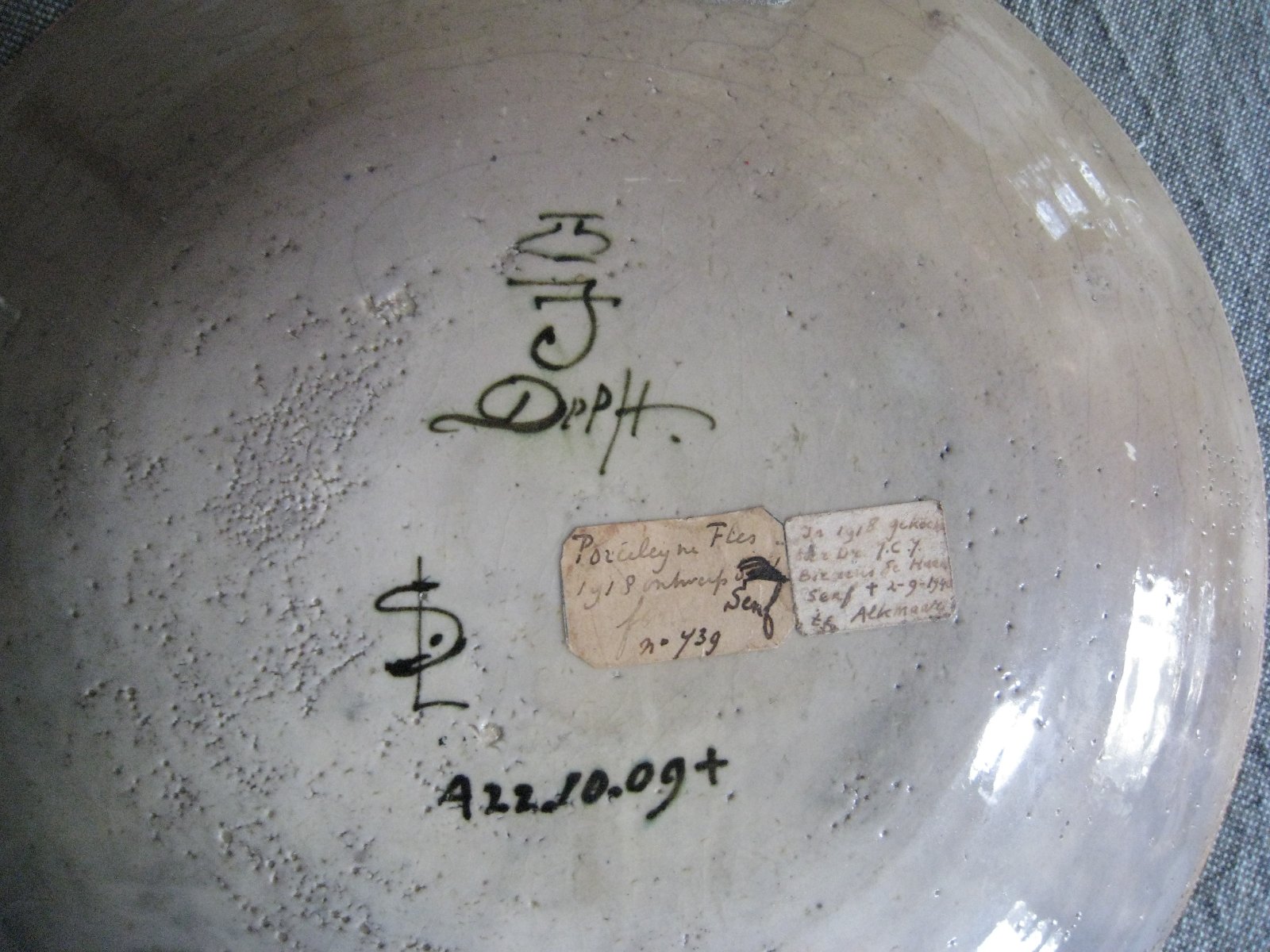
- •Absence of visible maker's marks or stamps, which is common on purely decorative items, but prevents precise attribution.
- •The images do not allow for a detailed examination of the enamel quality or base metal, which could indicate manufacturing origin and age more precisely.
- •Without a size reference, their scale and potential function (purely decorative vs. actual, albeit ornate, use) is ambiguous.
WHAT WOULD IMPROVE CERTAINTY
- →Take close-up photos of the underside of each teapot, looking for any marks, labels, or firing rings.
- →Provide a photo with a common object for scale (e.g., a coin or ruler).
- →Examine the interior for signs of practical use (e.g., tea stains) or if it's purely enclosed for decoration.
- →Perform a UV light test to check for any hidden repairs or restorations to the enamel.
ESTIMATED VALUE
Updated: Feb 27, 2026
- Market comparables from auctions & retail
- Condition, completeness & craftsmanship
- Current collector demand & trends
- Low = quick sale, high = patient seller
For informational purposes only, not a formal appraisal.
ABOUT DECORATIVE OBJECTS
Ceramics, silver, porcelain, glassware, and decorative arts.
Browse all Decorative ObjectsSHARE THIS CURIOSITY
Have your own curiosities to discover?
Scan Your Curiosity
COMMENTS
No comments yet. Be the first to share your thoughts!
Sign in to leave a comment