Lot of Freshwater Cultured Pearls (Loose)
QUICK FACTS
Categories
Era
21st Century
Origin
🌍 International
Rarity
Common (2/10)
Discovered
Feb 10, 2026
2 weeks ago
DESCRIPTION
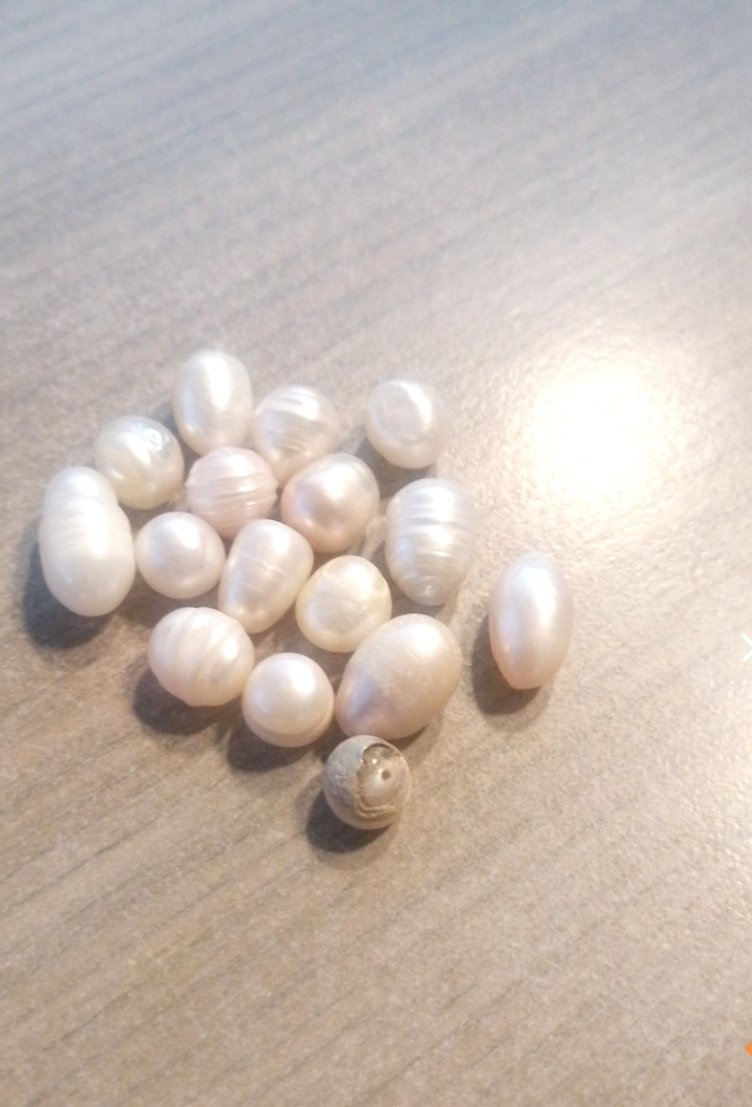
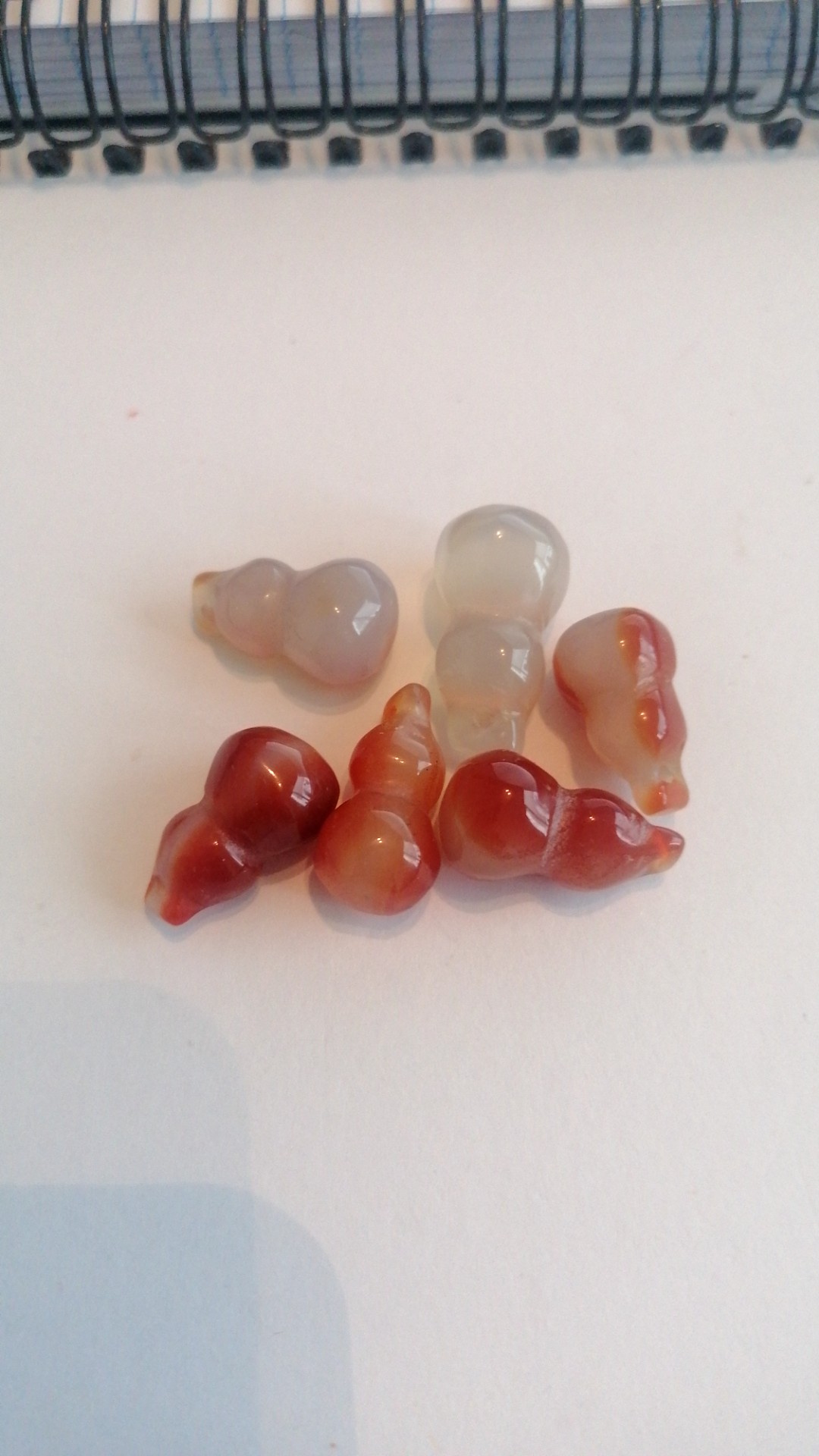
This appears to be a mixed lot of loose freshwater cultured pearls in various baroque and near-round shapes. The pearls exhibit a range of white to light pinkish body colors with visible orient, indicating layers of nacre. The shapes vary from elongated ovals (rice pearls) to more rounded, slightly irregular forms. There is one bead that appears to be a natural sea snail shell, possibly a turritella or similar, which is not a pearl.
CULTURAL ECHOES
Where This Object Echoes
Pearls were highly valued as symbols of wealth and social status, often associated with Venus, the goddess of love and beauty.
The organic, natural forms of pearls, especially baroque shapes, were highly favored in Art Nouveau jewelry designs, often combined with enamel and other naturalistic motifs.
Ritual & Ceremonial Use
- •Pearls are traditional gifts for bridal jewelry and anniversaries, symbolizing purity, wisdom, and love.
- •In many cultures, pearls are believed to bring protection and good fortune to the wearer.
Meaning Through Time
Extreme rarity, divine association, and a symbol of ultimate wealth and power, worn exclusively by royalty and the elite.
Became more accessible, leading to their widespread adoption in fashion and jewelry, transitioning from a solely royal symbol to a broader emblem of elegance and refined taste.
HISTORICAL STORY
DID YOU KNOW?
Most freshwater cultured pearls today originate from China, where modern culturing techniques allow for a single mollusk to produce dozens of pearls.
The unique undulating patterns often seen on freshwater baroque pearls are due to the growth of the nacre layers around an irregularly shaped mantle tissue implant, rather than a round bead nucleus.
MATERIAL & CONDITION
Surface
The pearls display a smooth, iridescent surface with visible luster and orient, characteristic of nacre deposits. Some show slight streaking or dimpling, typical of baroque freshwater pearls. The small, non-pearl item appears to be a natural shell with a textured, matte surface.
Weight & Feel
Based on their size and material, the pearls would be lightweight, consistent with their organic composition. The small shell would also be very light.
Condition
The pearls appear to be in good, un-drilled condition, suitable for setting. No significant surface abrasions or chips are visible from the images. The natural shell bead has an eroded appearance, typical for a found or beach-worn specimen.
RARITY ANALYSIS
Older mass-produced items still widely available. Easy to find on eBay, antique malls, and estate sales in large quantities.
Typical Characteristics
- Mass produced historically
- High survival rate
- Readily available everywhere
EXPERT ANALYSIS
Gemologist & Mineral Specialist
Confidence is good based on the characteristic baroque shapes, luster, and color palette strongly indicative of freshwater cultured pearls. However, without tactile examination and gemological testing, I cannot definitively confirm their natural or cultured status, though visual evidence leans heavily towards cultured.
KEY EVIDENCE
- 1Irregular shapes (baroque, oval) and varying sizes indicate freshwater cultured pearls.
- 2Visible surface luster and orient, consistent with nacre layering.
- 3Color range from white to light pink, common in freshwater pearls.
- 4Presence of a natural shell next to the pearls suggests a collection of natural items but does not alter pearl identification. The shell is not a pearl.
UNCERTAINTIES
- •Inability to confirm natural vs. cultured origin without direct examination and specific gravity/refractive index testing.
- •Lighting conditions in the image make a definitive assessment of color and luster quality challenging.
WHAT WOULD IMPROVE CERTAINTY
- →Obtain clear, well-lit photographs from multiple angles, ideally with a neutral background and a size reference.
- →Submit the pearls for gemological laboratory identification and certification to confirm natural/cultured origin and to rule out imitations.
- →Perform a specific gravity test on a selection of the pearls.
- →Microscopic examination to check for typical freshwater pearl characteristics, such as internal growth structures and lack of a distinct bead nucleus.
ESTIMATED VALUE
Updated: Feb 27, 2026
- Market comparables from auctions & retail
- Condition, completeness & craftsmanship
- Current collector demand & trends
- Low = quick sale, high = patient seller
For informational purposes only, not a formal appraisal.
ABOUT GEMSTONES
Precious stones, semi-precious gems, minerals, crystals, and geological specimens.
Browse all GemstonesSHARE THIS CURIOSITY
Have your own curiosities to discover?
Scan Your Curiosity
COMMENTS
No comments yet. Be the first to share your thoughts!
Sign in to leave a comment