Carnelian Donut Beads
QUICK FACTS
Categories
Era
Post-1980
Origin
🌍 International
Rarity
Common (2/10)
Discovered
Feb 12, 2026
2 weeks ago
DESCRIPTION
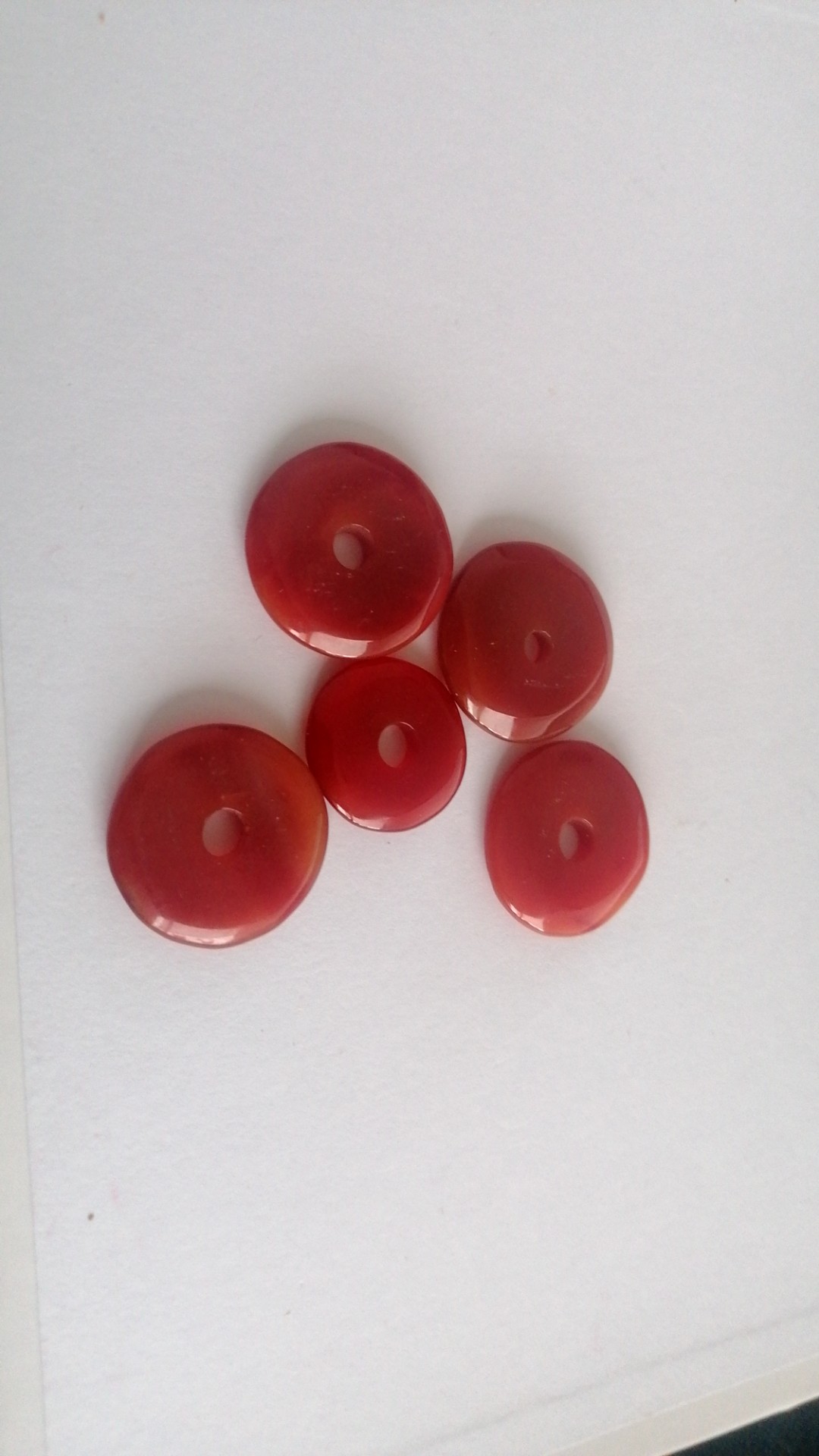
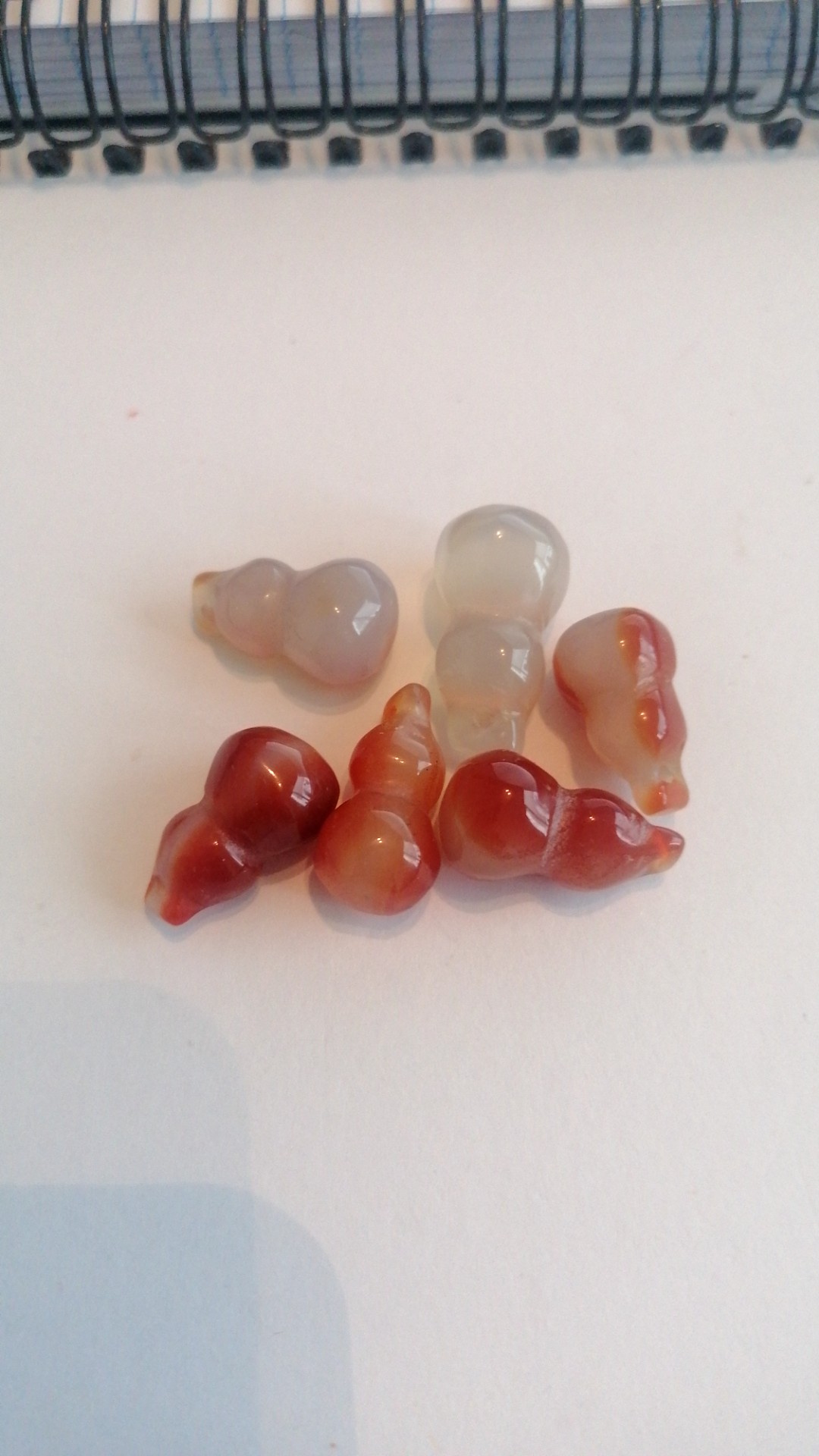
This grouping presents five polished, donut-shaped beads, indicative of carnelian, a variety of chalcedony. The rich, translucent reddish-orange hue is characteristic of carnelian, suggesting a natural geological origin. Each bead features a central hole, a common design for use in jewelry making, allowing them to be strung or mounted. The varying sizes among the beads suggest they may be intended for a graduated necklace or bracelet design, or perhaps as individual decorative elements.
CULTURAL ECHOES
Where This Object Echoes
Widely used in amulets and jewelry, symbolizing protection and vitality, often carved into scarabs or protective symbols.
Popular for signet rings and intaglios, believed to impart courage and prevent misfortune. Its hardness made it suitable for sealing wax.
Ritual & Ceremonial Use
- •Historically used in protective rituals and as talismans for courage and warding off evil.
- •Incorporated into some spiritual practices today for stimulating energy and creativity.
Meaning Through Time
Symbol of the sun, life, vitality, courage, protection, and status.
Primarily valued for its aesthetic appeal in jewelry, often associated with concepts of energy, creativity, and grounding in metaphysical circles.
HISTORICAL STORY
DID YOU KNOW?
Carnelian, often found in volcanic rocks, gets its distinct red and orange colors from iron oxide impurities.
Historically, carnelian was believed to stem from the setting sun, making it a powerful talisman for vitality and protection.
MATERIAL & CONDITION
Surface
The beads exhibit a smooth, highly polished surface with notable translucency, allowing light to pass through and highlight subtle internal color variations typical of natural chalcedony. The edges of the central drill holes appear clean and well-finished.
Weight & Feel
Given their size and material, these carnelian beads would feel moderately substantial for their dimensions, possessing a pleasant heft when handled.
Condition
The beads appear to be in excellent, unused condition. Their polished surfaces show no visible chips, cracks, or abrasions, suggesting new or very carefully stored stock, typical of components for jewelry making.
RARITY ANALYSIS
Older mass-produced items still widely available. Easy to find on eBay, antique malls, and estate sales in large quantities.
Typical Characteristics
- Mass produced historically
- High survival rate
- Readily available everywhere
EXPERT ANALYSIS
Decorative Arts Specialist
The visual evidence strongly points to these being carnelian beads due to their characteristic color, translucency, and form. The absence of distinguishing marks makes a more specific identification challenging, but the material itself is quite clear.
KEY EVIDENCE
- 1Consistent reddish-orange translucent color across all five beads.
- 2Smooth, highly polished surfaces typical of cut and finished gemstones.
- 3Central drilled holes indicating their use as beads.
- 4Irregularities in size and shape suggest natural material rather than perfectly uniform synthetic.
- 5No visible matrix or inclusions, characteristic of polished carnelian.
WHAT WOULD IMPROVE CERTAINTY
- →Photographs with a scale to ascertain precise dimensions.
- →Refractometer test to confirm refractive index for carnelian.
- →Specific gravity test for density confirmation.
ESTIMATED VALUE
Updated: Feb 27, 2026
- Market comparables from auctions & retail
- Condition, completeness & craftsmanship
- Current collector demand & trends
- Low = quick sale, high = patient seller
For informational purposes only, not a formal appraisal.
ABOUT GEMSTONES
Precious stones, semi-precious gems, minerals, crystals, and geological specimens.
Browse all GemstonesSHARE THIS CURIOSITY
Have your own curiosities to discover?
Scan Your Curiosity
COMMENTS
No comments yet. Be the first to share your thoughts!
Sign in to leave a comment