Ormolu or Silver-Plated Serving Tray with Reverse-Painted Glass Panel
QUICK FACTS
Categories
Era
c. 1900-1940s
Origin
🌍 International
Brand
Steingutfabrik Paetsch
Rarity
Average (4/10)
Discovered
Feb 13, 2026
2 weeks ago
DESCRIPTION
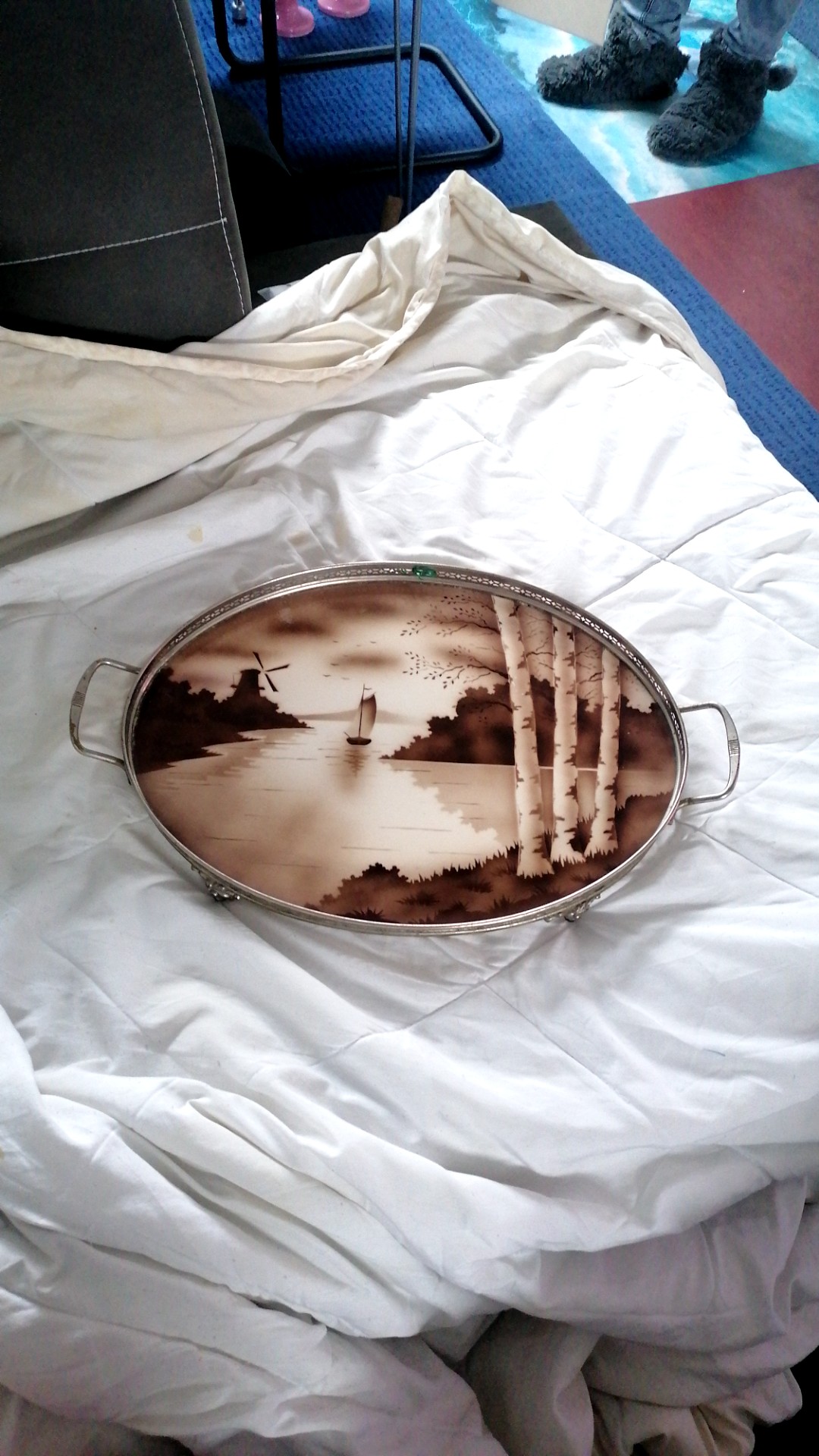
This appears to be an oval-shaped serving tray featuring a decorative reverse-painted glass panel nestled within a metal frame. The frame displays a pierced gallery or rim with a patterned design, and includes two loop handles. The painting depicts a monochromatic landscape scene, possibly a Dutch or Northern European motif with a windmill, birch trees, and a sailboat on water, rendered in sepia tones with subtle green accents. The construction suggests it could be either gilt or silver-plated metal, likely brass or a white metal alloy, holding the glass insert.
CULTURAL ECHOES
Where This Object Echoes
The decorative motifs in the metal frame could reflect late Art Nouveau or early Art Deco sensibilities, while the overall form speaks to the functionality popular in these design movements.
The demand for intricate, slightly ornate domestic accessories, including serving trays, was high during these periods, emphasizing home decor and entertaining.
Ritual & Ceremonial Use
- •Afternoon tea or coffee service, where such trays would elegantly present refreshments to guests.
- •Displaying decorative objects like perfume bottles, small figurines, or floral arrangements on a dressing table or side table.
- •Gift-giving for weddings or special occasions, as a functional yet beautiful household item.
Meaning Through Time
These trays represented a blend of utility and refined aesthetics, reflecting a changing domestic culture that valued both practicality and decorative charm in everyday objects.
Today, such trays are appreciated as vintage decorative items, often repurposed as decorative accents, wall hangings, or part of a curated display rather than daily serving ware.
HISTORICAL STORY
DID YOU KNOW?
Reverse painting on glass, also known as Verre Églomisé when gilded, is an ancient art form that dates back to pre-Roman times, but it experienced a resurgence in decorative arts throughout Europe in the 18th and 19th centuries.
Trays with decorative inserts were particularly fashionable for afternoon tea and cocktail services, making them staples in many middle-class homes in the early to mid-20th century.
MATERIAL & CONDITION
Surface
The metal frame shows signs of tarnishing and possible plating loss, suggesting it is either silver-plated or a base metal that has oxidized over time. The decorative border appears to be a pierced or stamped design. The glass insert is smooth and glossy on the front, protecting the painted scene beneath its surface.
Weight & Feel
Based on its size and construction, it would likely feel moderately weighty due to the glass insert and metal frame, perhaps a few pounds, providing a sense of stability when carried or placed.
Condition
The metal frame exhibits visible oxidation and discoloration consistent with age and exposure. Some of the intricate detailing in the border might show wear. The back of the glass appears to have some aged residue or staining, which is common for older glass inserts that were not completely sealed. There's no immediately apparent damage like cracks or chips to the glass, but a closer inspection would be required.
RARITY ANALYSIS
Typical antique shop fare. Requires some searching but regularly available. This is where most genuine antiques fall.
Typical Characteristics
- Standard antique shop items
- Regularly available
- Moderate collector interest
EXPERT ANALYSIS
Decorative Arts Specialist
The visual evidence clearly indicates a decorative serving tray with a reverse-painted glass panel, typical of early 20th-century decorative metalware. However, the lack of marks and clear material identification prevents a higher confidence level regarding precise origin or value.
KEY EVIDENCE
- 1Oval shape with integrated handles typical of serving trays.
- 2Metal frame with pierced or embossed decorative border, suggesting plating over a base metal.
- 3Reverse-painted glass insert with a monochromatic landscape scene.
- 4Visible tarnishing and wear on the metal indicative of age and probable plating.
UNCERTAINTIES
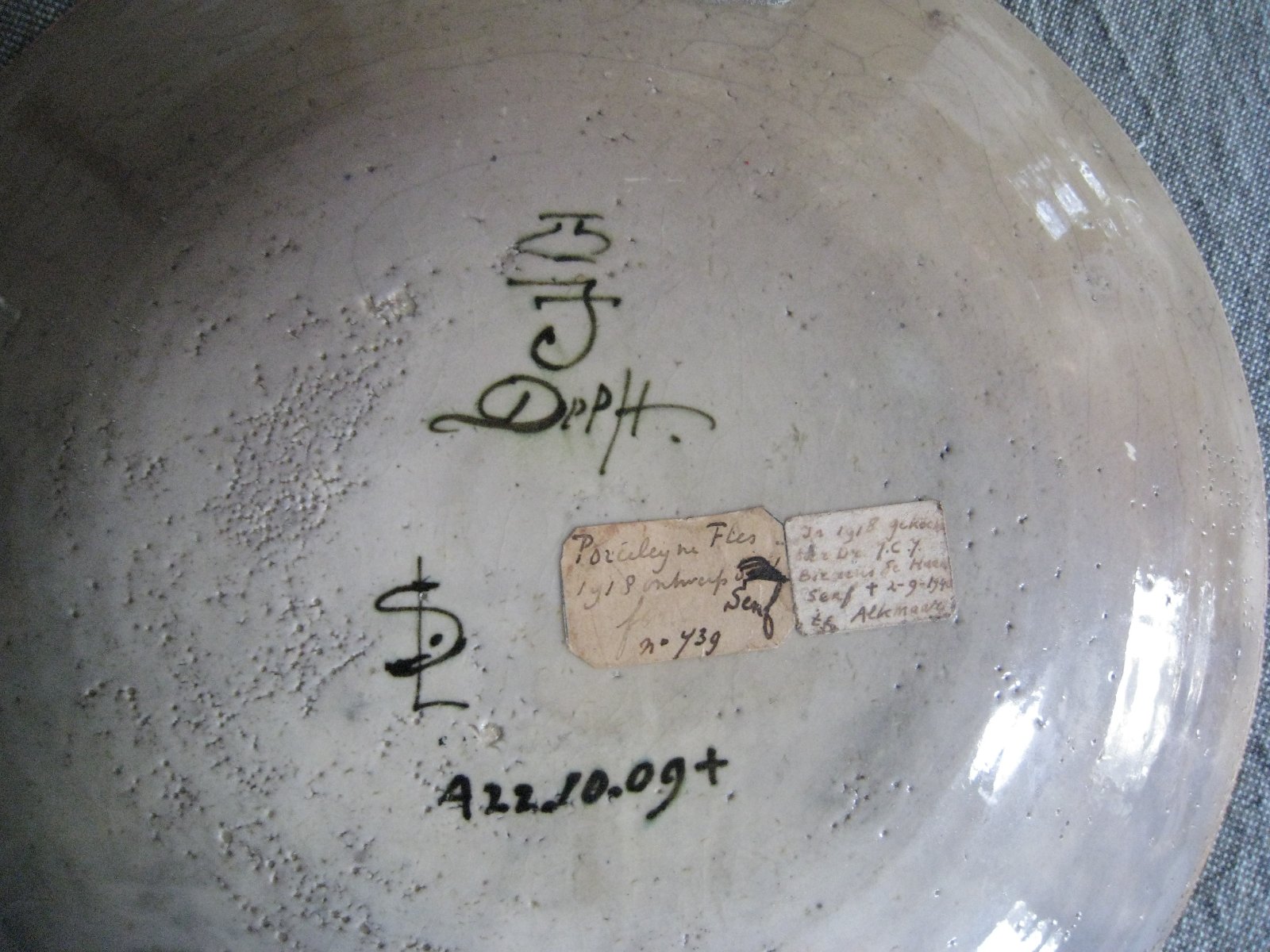
- •No visible maker's marks or hallmarks on the metal frame, making definitive attribution difficult.
- •The exact plating material (silver-plated, nickel-plated, or ormolu/gilt brass) is unclear from images alone.
- •The extent of paint loss or damage on the reverse of the glass cannot be fully assessed.
WHAT WOULD IMPROVE CERTAINTY
- →Inspect the metal frame for any hidden marks or stamps, particularly on the underside or near the handles, using magnification.
- →Gently clean a small, inconspicuous area of the metal to determine the base metal and plating condition.
- →Examine the back of the glass panel for any artist's signatures or labels underneath the paint.
- →Perform a more thorough visual inspection of the glass for cracks, chips, or paint degradation.
ESTIMATED VALUE
Updated: Feb 27, 2026
- Market comparables from auctions & retail
- Condition, completeness & craftsmanship
- Current collector demand & trends
- Low = quick sale, high = patient seller
For informational purposes only, not a formal appraisal.
ABOUT DECORATIVE OBJECTS
Ceramics, silver, porcelain, glassware, and decorative arts.
Browse all Decorative ObjectsSHARE THIS CURIOSITY
Have your own curiosities to discover?
Scan Your Curiosity
COMMENTS
No comments yet. Be the first to share your thoughts!
Sign in to leave a comment