Contemporary Asian Inspired Ceramic Figures
QUICK FACTS
Categories
Era
Late 20th Century to Early 21st Century
Origin
🌍 International
Rarity
Ordinary (3/10)
Discovered
Jan 31, 2026
4 weeks ago
DESCRIPTION
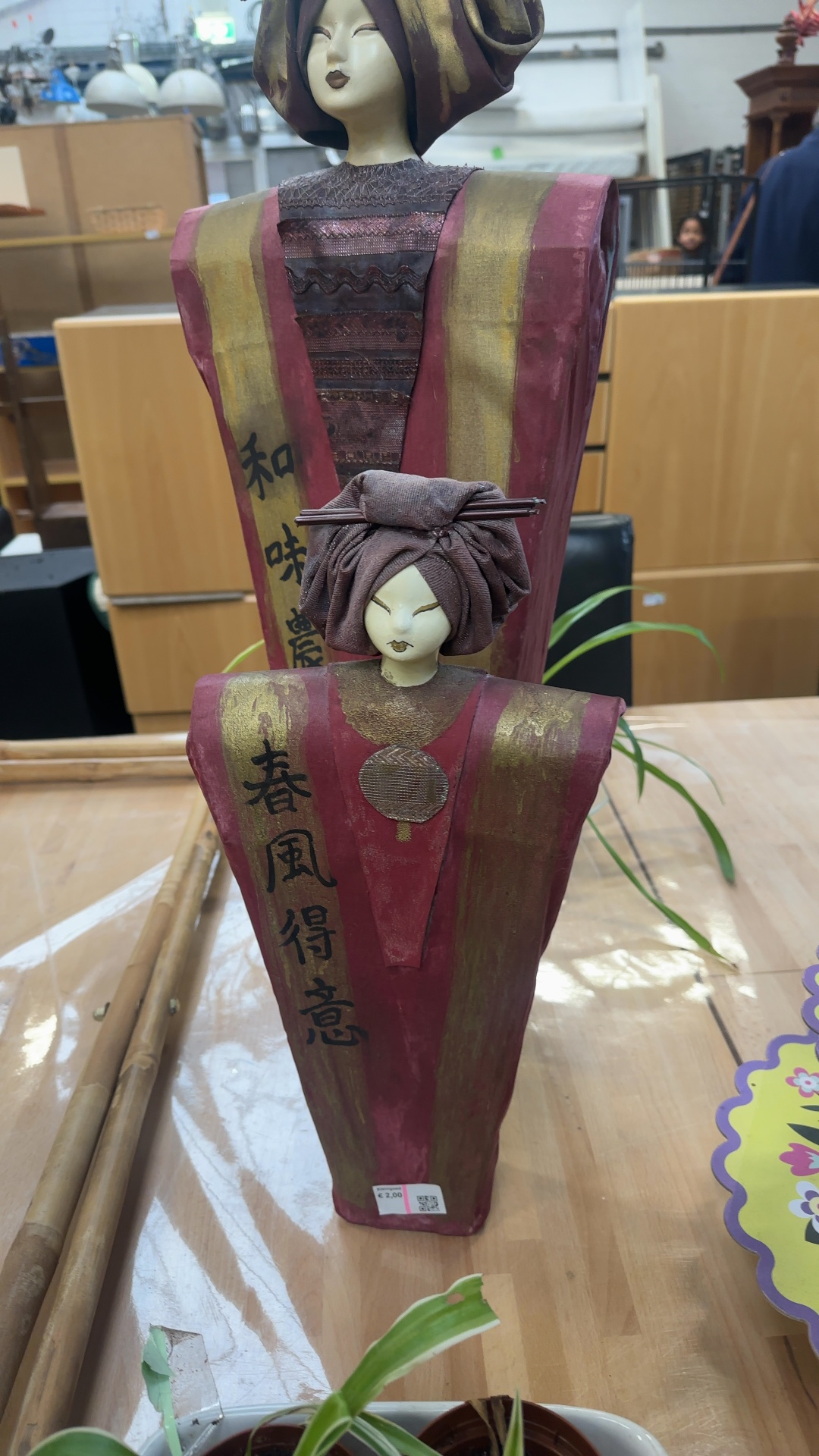
This appears to be a pair of contemporary decorative ceramic figures, inspired by traditional East Asian, likely Japanese, aesthetics. The figures are stylized, presenting as busts or truncated torsos, with sculpted faces and fabric-wrapped 'hair.' They are adorned with garments painted in rich red and gold tones, featuring pseudo-calligraphy that contributes to their decorative appeal. The forms are quite abstract, emphasizing the decorative surfaces rather than realistic bodily representation.
CULTURAL ECHOES
Where This Object Echoes
The stylized figures and specific 'hair' arrangements are reminiscent of traditional Japanese dolls (ningyō) or theatrical masks, adapted for a modern decorative context.
The overall color palette (red and gold) and the use of calligraphy-like script are common decorative elements found across various East Asian cultures.
HISTORICAL STORY
DID YOU KNOW?
The art of calligraphy, often seen in Asian decorative arts, is not merely writing but considered a high art form, where the brushstrokes themselves convey emotion and aesthetic balance.
While these figures are clearly decorative, traditional Japanese dolls (ningyō) have a rich cultural history, often used in festivals, as good luck charms, or for teaching children.
MATERIAL & CONDITION
Surface
The figures exhibit a matte, somewhat uneven painted surface, likely ceramic, with applied fabric elements for the headwear. The red and gold paint appears to be brushed on, giving a slightly rustic or hand-painted aesthetic. The 'garments' show some textural relief, possibly from impressed patterns or additional paint layers, with pseudo-calligraphy applied directly to the painted surface.
Weight & Feel
Given their ceramic construction and truncated form, these pieces would likely feel moderately weighty for their size, providing a sense of stability as decorative objects.
Condition
The figures appear to be in good, used condition. There are no immediately visible chips or cracks. The painted surfaces show some minor scuffs commensurate with age and handling, and the fabric elements are intact. The overall impression is one of well-preserved decorative items.
RARITY ANALYSIS
Standard antiques commonly found at estate sales and flea markets. Plentiful supply meets modest demand.
Typical Characteristics
- Moderate production runs
- Common at estate sales
- Entry-level collectibles
EXPERT ANALYSIS
Decorative Arts Specialist
My confidence is high regarding the identification as contemporary ceramic decorative figures due to their visible construction, aesthetic style, and general appearance. The lack of specific identifying marks prevents a higher confidence in precise origin or maker.
KEY EVIDENCE
- 1Stylized ceramic forms and facial features indicating modern production.
- 2Fabric elements integrated into the 'costume' for textural contrast.
- 3Painted surfaces with a matte finish and pseudo-calligraphy, suggesting a decorative purpose.
- 4Lack of discernible factory marks or artist signatures visible in the images.
- 5The overall aesthetic points to an Asian 'inspired' theme rather than a precise cultural artifact.
UNCERTAINTIES
- •The text painted on the figures is not clearly identifiable as specific characters/phrases, making precise cultural attribution challenging without further examination.
- •Without a clear maker's mark or signature, exact origin and date are difficult to pinpoint beyond stylistic observations.
WHAT WOULD IMPROVE CERTAINTY
- →Examine the base of each figure closely for any impressed marks, painted signatures, or paper labels that might provide manufacturer or artist information.
- →Attempt to translate the painted text (if possible) to gain more insight into their specific cultural or thematic context.
- →Inspect the ceramic body for specific clay types or firing characteristics that might indicate regional origin.
ESTIMATED VALUE
Updated: Feb 27, 2026
- Market comparables from auctions & retail
- Condition, completeness & craftsmanship
- Current collector demand & trends
- Low = quick sale, high = patient seller
For informational purposes only, not a formal appraisal.
ABOUT DECORATIVE OBJECTS
Ceramics, silver, porcelain, glassware, and decorative arts.
Browse all Decorative ObjectsSHARE THIS CURIOSITY
Have your own curiosities to discover?
Scan Your Curiosity
COMMENTS
No comments yet. Be the first to share your thoughts!
Sign in to leave a comment