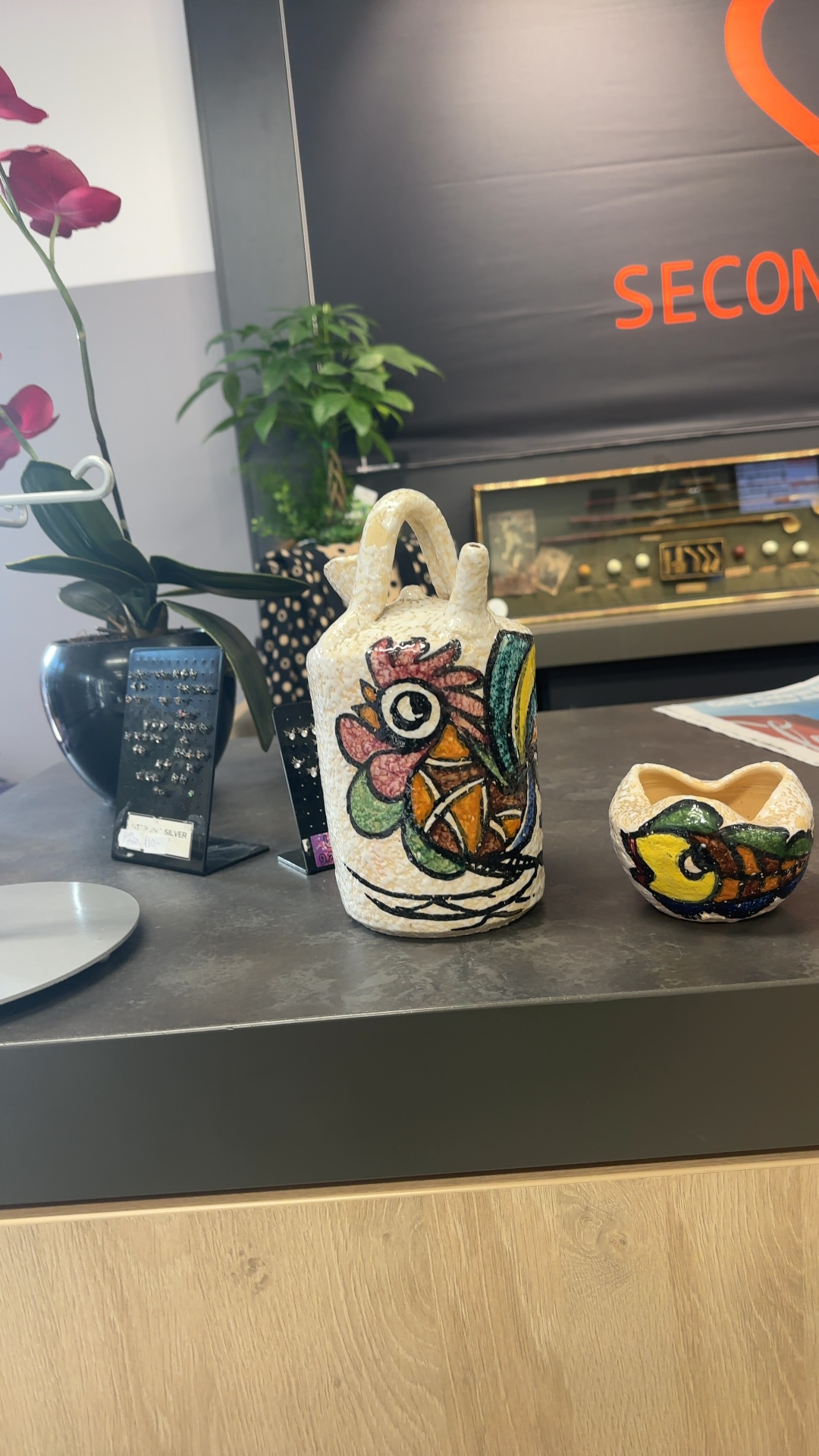
Mid-Century Modern Italian Art Pottery Rooster Pourer/Cruet
QUICK FACTS
Categories
Era
Mid-20th Century (1950s-1970s)
Origin
🇮🇹 Italy
Rarity
Average (4/10)
Discovered
Jan 21, 2026
1 months ago
DESCRIPTION
This appears to be a vibrant ceramic pourer or cruet, likely of Italian origin, characterized by its distinctive texture and bold, colorful decoration. The form features a central handle with two pouring spouts flanking it, often associated with olive oil or vinegar vessels. The decoration, a stylized rooster with abstract, blocky colors against a textured, almost 'cracked ice' cream-colored ground, is highly reminiscent of Italian art pottery from the mid-20th century.
CULTURAL ECHOES
Where This Object Echoes
The post-war period saw a flourishing of modern design, incorporating folk art and modernist aesthetics, particularly in ceramics from regions like Faenza and Vietri sul Mare.
The stylized, fragmented, and brightly colored approach to the rooster's depiction aligns with artistic influences from early 20th-century avant-garde movements, adapted into decorative arts.
Ritual & Ceremonial Use
- •Traditional Italian dining, where oil and vinegar are presented at the table in decorative cruets.
- •Gift-giving, as these pieces were popular souvenirs for tourists visiting Italy.
Meaning Through Time
During this period, such folk-inspired yet modernist pottery represented a blend of tradition and contemporary design, appealing to both domestic and international tastes.
HISTORICAL STORY
DID YOU KNOW?
The rooster ('Gallo') is a very common motif in Italian ceramics, especially from regions like Tuscany, symbolizing good fortune, prosperity, and hospitality.
Pourers with two spouts are often referred to as 'amphora' or 'oil and vinegar cruets,' reflecting their dual purpose in traditional Italian dining.
MATERIAL & CONDITION
Surface
The piece exhibits a matte, textured finish on parts of the cream body, likely achieved through intentional 'craquelure' or a sgraffito-like technique creating a relief effect. The polychrome decoration is applied with a glossy, colorful glaze that contrasts sharply with the background, showing brushstroke variations and depth typical of hand-painted ceramics.
Weight & Feel
Given its ceramic construction and apparent size, it would likely feel substantial and dense in hand, perhaps a few pounds.
Condition
Visually, the piece appears to be in good vintage condition. There is no obvious chipping or major cracking from the provided images. The textured surface and glaze application technique might mask minor imperfections, but the colors remain vibrant.
RARITY ANALYSIS
Typical antique shop fare. Requires some searching but regularly available. This is where most genuine antiques fall.
Typical Characteristics
- Standard antique shop items
- Regularly available
- Moderate collector interest
EXPERT ANALYSIS
Decorative Arts Specialist
The visual characteristics, particularly the style of decoration, glaze, and form, are highly consistent with well-documented mid-century Italian art pottery. The absence of a specific maker's mark prevents an absolute attribution, but the regional and temporal identification is strong.
KEY EVIDENCE
- 1Distinctive 'textured' or 'cracked ice' glaze on the background.
- 2Bold, abstract, and colorful hand-painted rooster motif.
- 3Two-spouted pourer form, common in Italian ceramics.
- 4Overall aesthetic strongly points towards mid-century Italian art pottery.
- 5Lack of visible detailed factory mark often consistent with smaller artisan studios.
UNCERTAINTIES
- •No visible maker's mark or signature, which limits precise attribution to a specific studio or artist.
WHAT WOULD IMPROVE CERTAINTY
- →Obtain clear, well-lit photos of the base to check for any impressed or painted marks.
- →Inspect the piece under UV light to detect any hidden restorations or repairs to the ceramic body or glazes.
- →A close-up of the glaze and body where the color meets the textured background would confirm the decorative technique.
ESTIMATED VALUE
Updated: Feb 26, 2026
- Market comparables from auctions & retail
- Condition, completeness & craftsmanship
- Current collector demand & trends
- Low = quick sale, high = patient seller
For informational purposes only, not a formal appraisal.

ABOUT DECORATIVE OBJECTS
Ceramics, silver, porcelain, glassware, and decorative arts.
Browse all Decorative ObjectsSHARE THIS CURIOSITY
Have your own curiosities to discover?
Scan Your Curiosity
COMMENTS
No comments yet. Be the first to share your thoughts!
Sign in to leave a comment