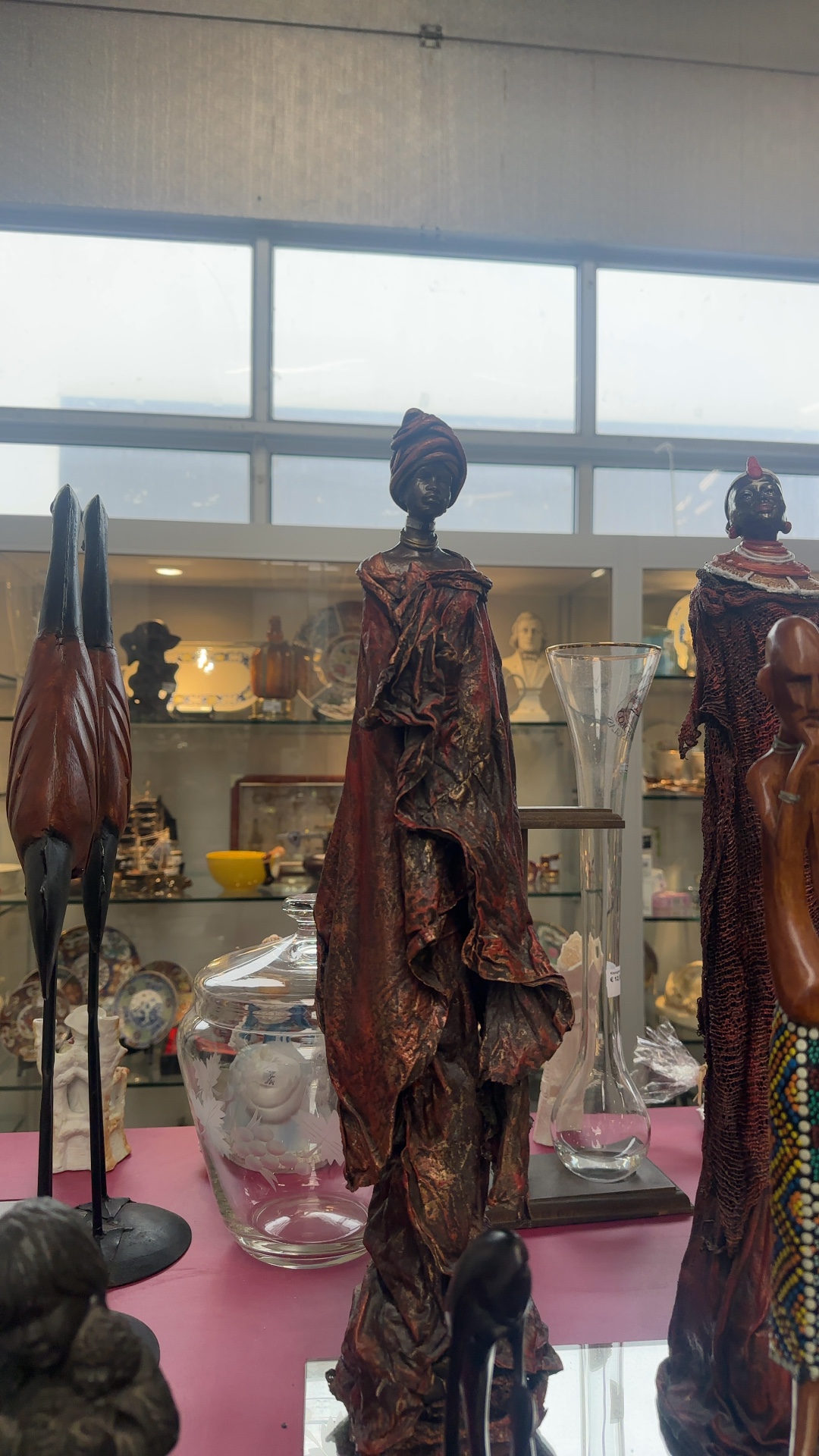
Figurine of a North African or Middle Eastern Woman
QUICK FACTS
Categories
Era
Late 20th Century to Early 21st Century
Origin
🌍 International
Rarity
Ordinary (3/10)
Discovered
Jan 31, 2026
4 weeks ago
DESCRIPTION
This appears to be a decorative figurine, depicting a woman in draped attire, possibly a North African or Middle Eastern figure given the head covering. The material suggests a resin or composite with a metallic finish, mimicking bronze or patinated copper. The draping of the garment is quite expressive, indicating an emphasis on sculptural form and texture rather than fine detail in the facial features.
CULTURAL ECHOES
Where This Object Echoes
Stylized depictions of North African and Middle Eastern figures were a popular theme in European art and decorative arts, often romanticizing and exoticizing these cultures.
Ritual & Ceremonial Use
- •Often used as a mantelpiece decoration or shelf display, contributing to home aesthetics and personal expression.
- •Gift-giving for housewarming or decorative purposes.
Meaning Through Time
Represented exoticism, sophistication, and a romanticized view of distant cultures, often associated with a 'traveler's aesthetic'.
Continues to serve as a decorative item, often purchased for its aesthetic appeal or to complement global-inspired interior design themes, sometimes with less direct engagement with specific cultural narratives.
HISTORICAL STORY
DID YOU KNOW?
The use of draped fabric in sculpture has ancient roots, with many classical Greek and Roman statues employing 'wet drapery' techniques to emphasize the human form beneath.
Figurines and decorative statuettes depicting diverse cultures became very popular during the Victorian era and continue to be produced today, evolving in style and materials.
MATERIAL & CONDITION
Surface
The surface is heavily textured, particularly on the garment, to simulate the folds and movement of fabric. It has a metallic, aged patina-like finish, a common coating for resin or composite materials to mimic bronze or copper.
Weight & Feel
Given its likely material (resin or a similar composite), the figurine would feel lighter than a solid metal piece, but still substantial enough to suggest quality. It would not be as heavy as bronze.
Condition
From the image, the condition appears generally good. There are no obvious chips or breaks. The metallic finish shows some wear or intentional distressing, contributing to its aged aesthetic.
RARITY ANALYSIS
Standard antiques commonly found at estate sales and flea markets. Plentiful supply meets modest demand.
Typical Characteristics
- Moderate production runs
- Common at estate sales
- Entry-level collectibles
EXPERT ANALYSIS
Decorative Arts Specialist
Confidence is good as the general type, material impression, and likely age are clearly discernible. However, precise material and origin without any marks remain an estimation.
KEY EVIDENCE
- 1The sculptural style emphasizes draped fabric and texture, suggesting a more modern decorative approach.
- 2The metallic finish over what appears to be a composite material, rather than solid cast metal.
- 3Lack of discernible artist signature or foundry marks, common for mass-produced decorative items.
- 4The general aesthetic aligns with contemporary home decor trends that draw inspiration from global cultures.
UNCERTAINTIES
- •The specific material is difficult to ascertain precisely from the image alone (bronze vs. resin with metallic finish).
WHAT WOULD IMPROVE CERTAINTY
- →Examine the base for any maker's marks, labels, or inscriptions.
- →Gently tap the figure; a hollow, resonant sound would suggest resin or composite, while a dull 'thud' would suggest solid material.
- →Observe the specific color and texture of the 'metal' close up to determine if it's painted resin, patinated bronze, or another material.
- →Consider holding the piece to gauge its weight, which could help differentiate between materials.
ESTIMATED VALUE
Updated: Feb 27, 2026
- Market comparables from auctions & retail
- Condition, completeness & craftsmanship
- Current collector demand & trends
- Low = quick sale, high = patient seller
For informational purposes only, not a formal appraisal.
ABOUT DECORATIVE OBJECTS
Ceramics, silver, porcelain, glassware, and decorative arts.
Browse all Decorative ObjectsSHARE THIS CURIOSITY
Have your own curiosities to discover?
Scan Your Curiosity
COMMENTS
No comments yet. Be the first to share your thoughts!
Sign in to leave a comment