Wall-Mounted Barometer and Thermometer
QUICK FACTS
Categories
Era
1960s-1980s
Origin
🌍 International
Rarity
Common (2/10)
Discovered
Jan 31, 2026
4 weeks ago
DESCRIPTION
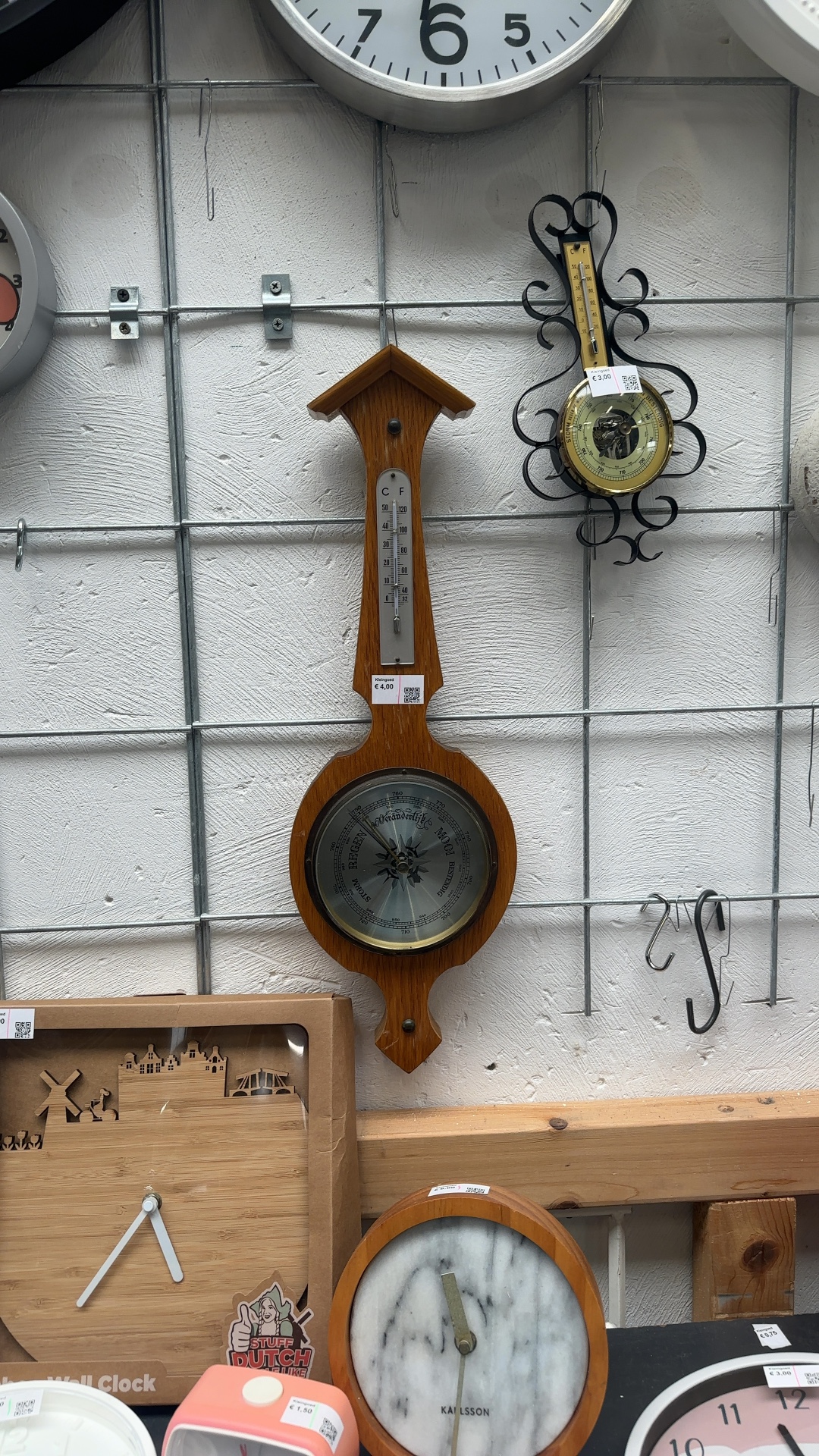
This is a wall-mounted instrument panel combining a barometer and a thermometer. The primary material is a light-colored wood, likely oak or ash, with a simple, functional design. The barometer at the base features a circular metallic dial with a central compass rose motif and a pointer, indicating atmospheric pressure. Above it, an elongated thermometer is set into the wood, displaying temperature in Celsius. The overall aesthetic suggests a domestic weather station, likely a commercial product from the latter half of the 20th century.
CULTURAL ECHOES
Where This Object Echoes
Similar wall-mounted weather stations were popular across Europe and North America from the mid-20th century, often blending traditional instrument design with contemporary materials.
Ritual & Ceremonial Use
- •Domestic weather observation: Part of a daily routine for those interested in local weather patterns or outdoor activities.
- •Gift-giving: Often given as housewarming presents or practical, decorative items for a home.
Meaning Through Time
A barometer was a sophisticated scientific instrument, often ornate, owned by the educated and wealthy.
Domestic barometers became a common, affordable household item, valued for both function and decorative appeal.
With the advent of digital weather forecasts, these instruments are more decorative or nostalgic, rather than primary tools for weather prediction.
HISTORICAL STORY
DID YOU KNOW?
Aneroid barometers, like the one here, use a small, sealed metal chamber that expands or contracts with changes in air pressure, making them compact and safe compared to earlier mercury-filled versions.
The words on the barometer dial ('REGEN', 'STORM', 'VERANDERLIJK', 'MOOI', 'BESTENDIG') are Dutch, meaning Rain, Storm, Changeable, Fair, and Settled, respectively, indicating its intended market or origin.
MATERIAL & CONDITION
Surface
The wooden surface appears to be varnished or lacquered, exhibiting a fairly uniform, light brown tone with visible grain. The metal dial of the barometer shows some slight oxidation or age-related dullness, typical of components exposed over time. The thermometer is encased in glass or plastic, showing no immediate signs of damage.
Weight & Feel
Given its wooden construction and relatively small size, this piece would likely feel light to moderate in weight, easily manageable for wall hanging.
Condition
The overall condition appears good for its age, with no obvious signs of significant damage like cracks or deep scratches on the wood. The metal components show some superficial wear and possibly slight tarnishing, consistent with normal aging. The instruments themselves appear intact, though their accuracy cannot be verified visually.
RARITY ANALYSIS
Older mass-produced items still widely available. Easy to find on eBay, antique malls, and estate sales in large quantities.
Typical Characteristics
- Mass produced historically
- High survival rate
- Readily available everywhere
EXPERT ANALYSIS
Furniture Historian & Restoration Specialist
Confidence is good as the item is clearly identifiable as a common type of domestic weather station. The materials, construction style, and language on the dial provide enough visual evidence for a solid assessment.
KEY EVIDENCE
- 1Simple, functional wooden construction with minimal ornamentation.
- 2Integrated thermometer and aneroid barometer, indicating a multi-function domestic weather station.
- 3Dutch language on the barometer dial points to a European market.
- 4Visible price tag of €4,00 suggests a common, affordable item in its current market.
WHAT WOULD IMPROVE CERTAINTY
- →Inspect the reverse side for any maker's marks, labels, or stamps.
- →Examine the wood for any specific identifying features of species or age-related characteristics.
- →Check the hardware (screws, hanging mechanism) for clues about manufacturing method and age.
ESTIMATED VALUE
Updated: Feb 27, 2026
- Market comparables from auctions & retail
- Condition, completeness & craftsmanship
- Current collector demand & trends
- Low = quick sale, high = patient seller
For informational purposes only, not a formal appraisal.

ABOUT DECORATIVE OBJECTS
Ceramics, silver, porcelain, glassware, and decorative arts.
Browse all Decorative ObjectsSHARE THIS CURIOSITY
Have your own curiosities to discover?
Scan Your Curiosity
COMMENTS
No comments yet. Be the first to share your thoughts!
Sign in to leave a comment