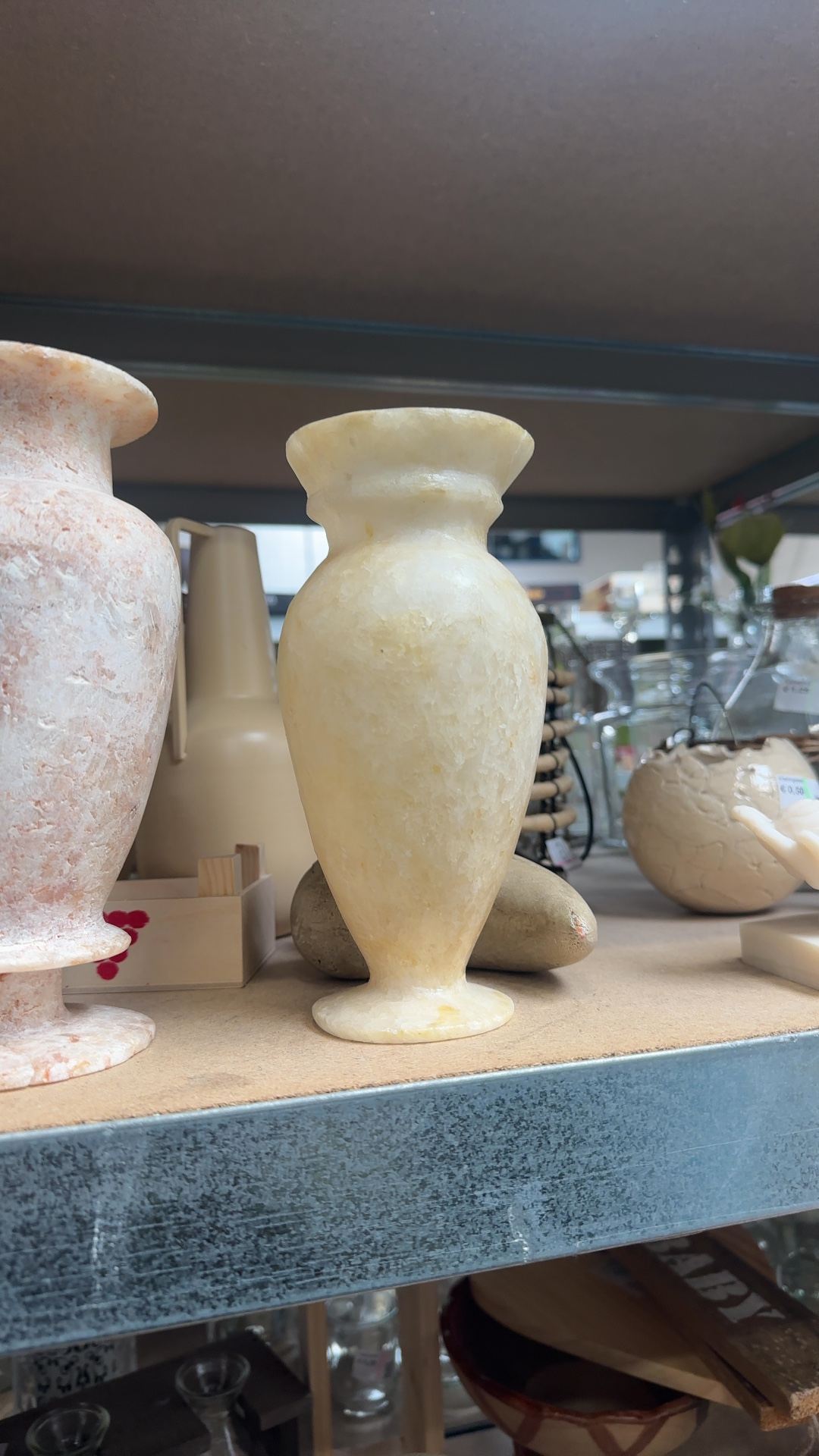
Alabaster Urn-Shaped Vase
QUICK FACTS
Categories
Era
Mid-20th Century to Present
Origin
🌍 International
Rarity
Ordinary (3/10)
Discovered
Jan 31, 2026
4 weeks ago
DESCRIPTION
This appears to be an urn-shaped vase carved from alabaster, likely a softer variety given the subtle translucence. Its form is classic, featuring a flared rim, a tapering body, and a pedestal base. The stone itself exhibits natural veining and variations in its off-white to yellowish coloration.
CULTURAL ECHOES
Where This Object Echoes
Alabaster was widely used for funerary vessels, canopic jars, and other ritualistic and decorative items due to its beauty and workability.
Urn forms, often used for funerary ashes or holding precious liquids, influenced decorative arts for centuries.
Ritual & Ceremonial Use
- •In domestic settings, such vases contribute to rituals of home decor, serving as focal points for floral arrangements or as standalone sculptural elements.
- •Historically, similar forms were used for libations or as funerary urns, connecting them to rites of remembrance and ceremonial offerings.
Meaning Through Time
Symbolized purity, preciousness, and often served sacred or funerary purposes, holding valuable oils or ashes.
Represented a revival of classical ideals, grace, and refined taste in interior decoration.
Primarily decorative, valued for natural material beauty and classic form, often for minimalist or natural aesthetic pairings.
HISTORICAL STORY
DID YOU KNOW?
Alabaster is a soft mineral, typically gypsum or calcite, which can be easily carved, making it a favored material for sculptures and decorative objects throughout history, from ancient Egypt to the present day.
The translucency of alabaster causes it to glow softly when lit from within, a property often exploited in lamps and decorative screens.
MATERIAL & CONDITION
Surface
The surface is generally smooth and polished, characteristic of carved alabaster. There are fine, natural veins visible throughout the material, which provide visual texture and indicate the stone's organic origins. The stone appears to have a slightly matte finish in some areas, possibly due to age or wear.
Weight & Feel
Given its material and size, the vase would feel substantial and cool to the touch, possessing a moderate weight that suggests solid construction for its height.
Condition
The vase appears to be in good overall condition with no obvious chips or cracks visible from the provided images. Natural variations and minor superficial marks are likely given its material and decorative use, consistent with light handling and display.
RARITY ANALYSIS
Standard antiques commonly found at estate sales and flea markets. Plentiful supply meets modest demand.
Typical Characteristics
- Moderate production runs
- Common at estate sales
- Entry-level collectibles
EXPERT ANALYSIS
Decorative Arts Specialist
The visual evidence clearly points to a carved alabaster vase with a traditional urn shape. The material's natural characteristics are well-represented, allowing for a confident identification of type and material.
KEY EVIDENCE
- 1The material exhibits characteristic veining and translucence consistent with carved alabaster.
- 2The urn-shaped form is a classic decorative motif, indicating its purpose as an ornamental vase.
- 3The flared lip and pedestal base are typical features of such stone vessels.
- 4The natural, unpolished feel in some areas suggests carving rather than casting.
WHAT WOULD IMPROVE CERTAINTY
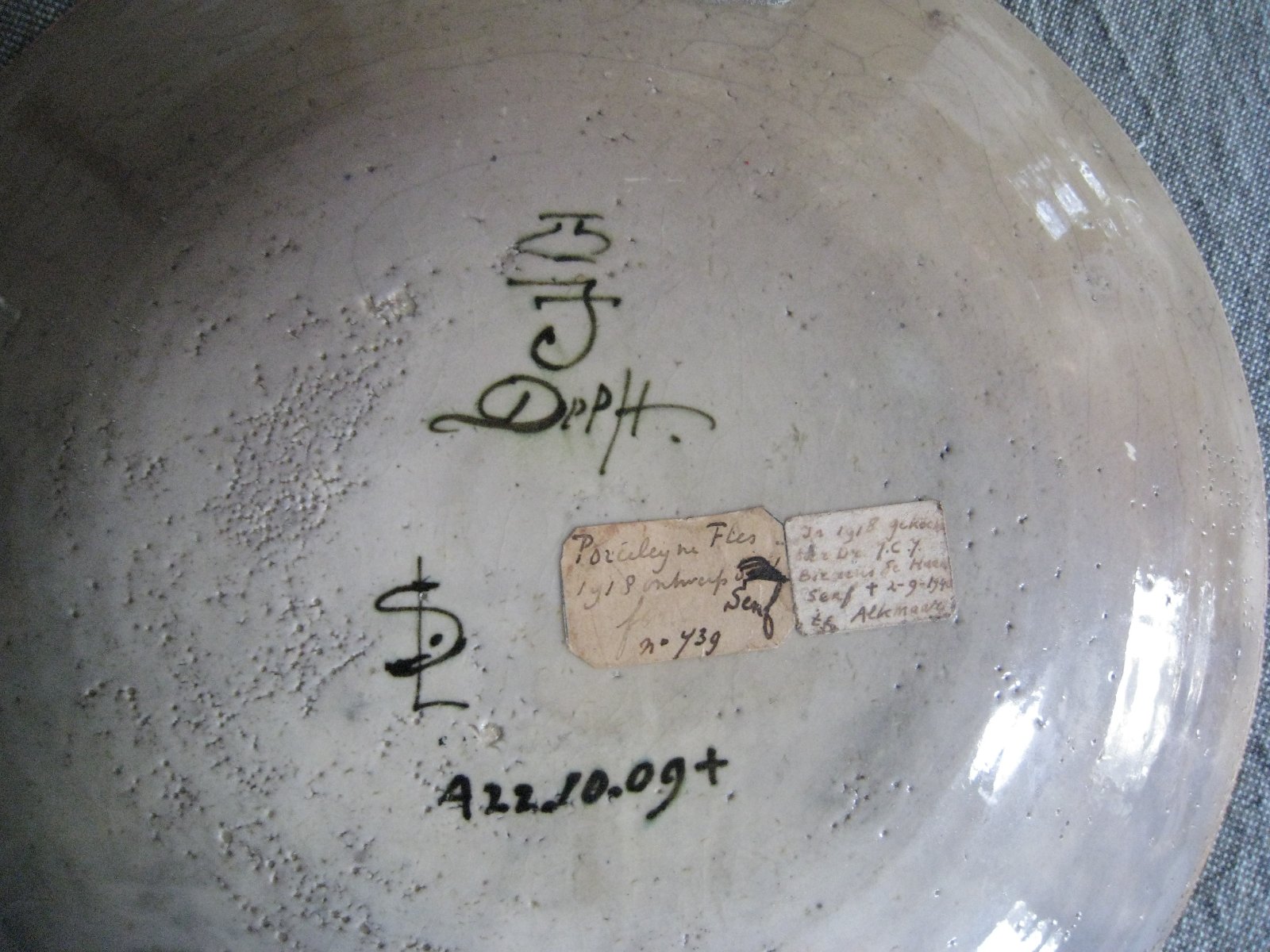
- →Examine the base for any maker's marks or labels, though these are uncommon on simple carved alabaster.
- →Check for any hairline cracks or chips, particularly around the rim and base.
- →Assess the interior for signs of use, such as water residue, if intended for live flowers.
ESTIMATED VALUE
Updated: Feb 27, 2026
- Market comparables from auctions & retail
- Condition, completeness & craftsmanship
- Current collector demand & trends
- Low = quick sale, high = patient seller
For informational purposes only, not a formal appraisal.
ABOUT DECORATIVE OBJECTS
Ceramics, silver, porcelain, glassware, and decorative arts.
Browse all Decorative ObjectsSHARE THIS CURIOSITY
Have your own curiosities to discover?
Scan Your Curiosity
COMMENTS
No comments yet. Be the first to share your thoughts!
Sign in to leave a comment