Victorian Heart-Shaped Pendent Watch c.1890
Authenticity
VICTORIAN HEART-SHAPED PENDENT WATCH C.1890: IDENTIFICATION
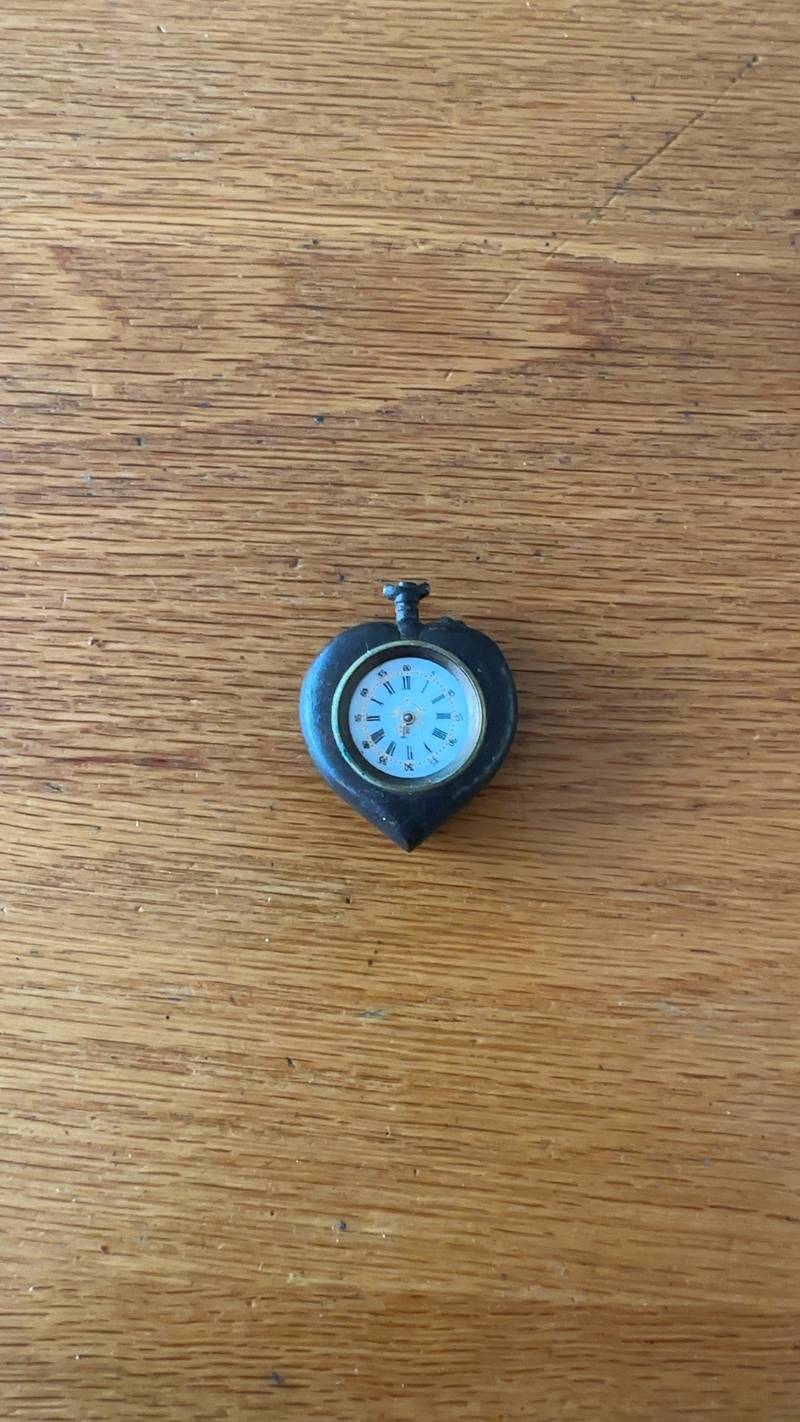
A miniature novelty pendant watch housed in a heart-shaped gunmetal or patinated steel case. The dial is white enamel with black Roman numerals for the hours and an outer track of Arabic numerals at five-minute intervals. It features gilt Louis XIV style hands and a gold-tone minute track of raised dots. The onion-style crown is positioned at the top center of the heart, suggesting a cylinder escape movement common in Swiss miniature horology of the late 19th century.
CROSS-CULTURAL PARALLELS
Where This Object Echoes
Sentimental jewelry often utilized the heart motif as a 'memento' or romantic gift.
Ritual & Ceremonial Use
- •Often gifted as a 'sweetheart' token during the burgeoning tourism era in the Swiss Alps.
Meaning Through Time
A functional fashion accessory indicating status and punctuality.
A decorative curiosity or 'steampunk' aesthetic object.
PRODUCTION & REFERENCE HISTORY
COLLECTOR NOTES
The miniature movements in these heart watches are often less than 20mm in diameter, requiring specialized 'baguette' or small round calibers.
SCARCITY
Genuine antiques with fewer examples on the market. Named makers, documented provenance, or early production examples.
Typical Characteristics
- Limited production
- Named makers
- Growing collector demand
Confidence Factors
- Case wear patterns and oxidation are consistent with late 19th-century gunmetal
- Dial typography and hand style are period-correct for Swiss export pieces
WATCHMAKER'S ASSESSMENT
Vintage Watchmaker & Horology Specialist
The form factor and materials are highly specific to the late 19th-century Swiss trade, though the lack of movement photos prevents a higher confidence level regarding technical quality.
KEY EVIDENCE
- 1Gunmetal (oxidized steel) case material is diagnostic of the 1880-1910 period.
- 2White enamel dial with 'Louis' style gilt hands is standard for Swiss novelty watches.
- 3Arabic five-minute track outside the Roman hour track is a common 1890s dial configuration.
- 4Onion-style crown and stem location indicate a top-wind configuration common in pendants.
UNCERTAINTIES
- •Missing crystal exposes fragile hands to damage
- •External verdigris suggests potential interior rust on the movement
WHAT WOULD IMPROVE CERTAINTY
- →Inspect the inner case back for Swiss hallmarks or manufacture stamps (e.g., '0.800' or 'Gunmetal').
- →Macro photo of the movement to identify if it is a cylinder or lever escapement.
- →Check if the movement 'ticks' when wound slightly to assess balance wheel integrity.
CONDITION & GRADE
Grading breakdown
The presence of verdigris suggests moisture exposure, which likely affects the internal steel pinions. Enamel dial is the best-preserved element.
Condition
The gunmetal finish shows significant wear and surface oxidation (verdigris) around the bezel. The hands are present but the crystal appears missing or heavily recessed. The crown shows heavy wear to the knurling.
WATCH MARKET VALUE
Updated: May 10, 2026
Similar gunmetal heart watches by makers like Moeris or generic Swiss workshops frequently sell on eBay and at regional auctions for $200-$400 depending on movement functionality.
Who buys this
Collectors of Victorian sentimental jewelry and enthusiasts of 'black' jewelry or novelty horology.
What increases value
- •Condition of the enamel dial (no 'spider' cracks)
- •Originality of the gilt hands
- •Functionality of the mechanical movement
What lowers value
- •Extreme internal rust due to evident moisture exposure
- •Cost of servicing a miniature cylinder movement often exceeds the watch value
What makes top-tier examples
- •Silver-gilt (vermeil) accents on the case
- •Original matching gunmetal neck chain
Grade & condition
Case oxidation level, dial cleanliness, and presence of original crystal.
Rarity & demand
For informational purposes only, not a formal appraisal.
ABOUT WATCHES
Wristwatches, pocket watches, clocks, and timepieces from all eras.
Watches value and rarity guideSHARE THIS CURIOSITY
Have your own curiosities to discover?
Scan Your Curiosity
COMMENTS