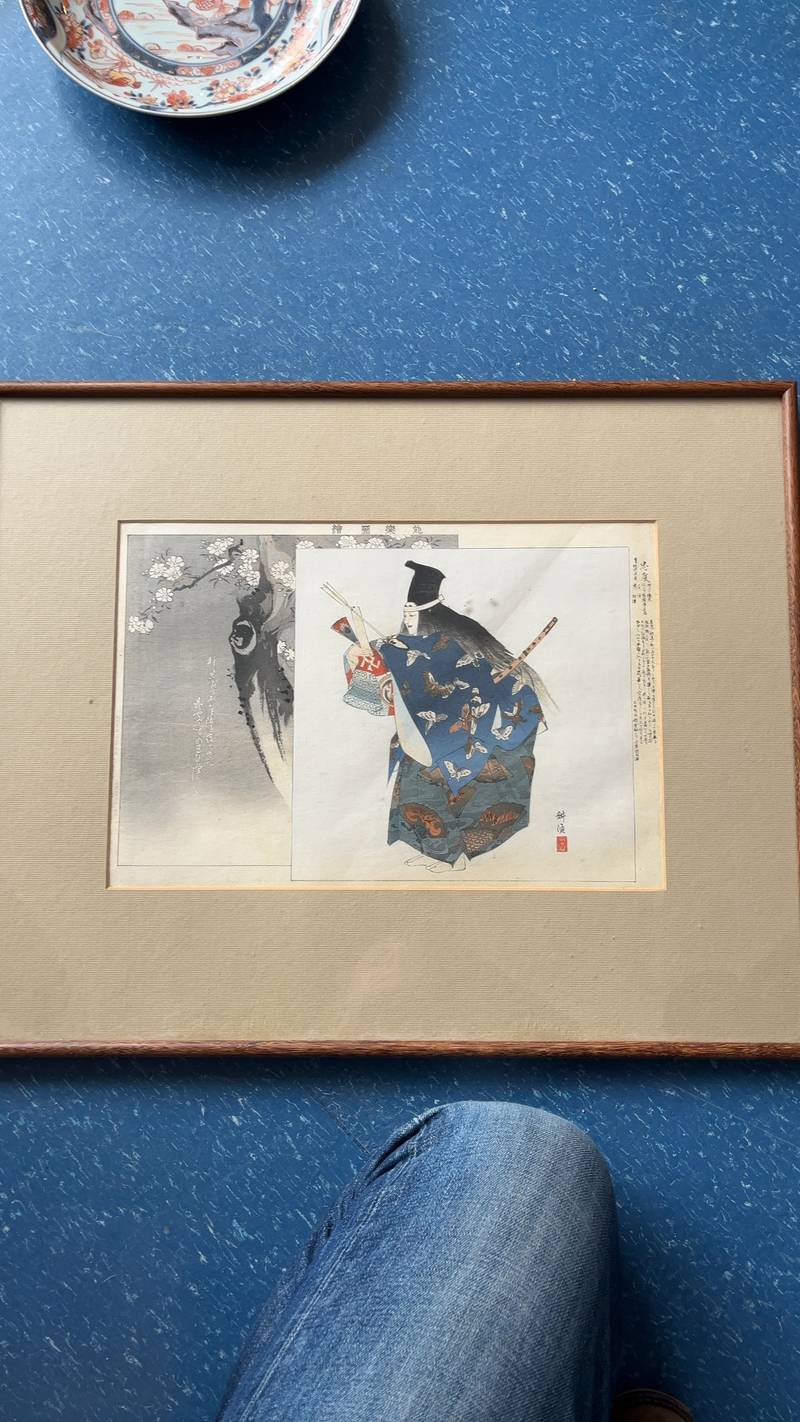
Tsukioka Kōgyo (Japanese, 1869-1927) - Nohga Zue: Tadanori, Woodblock Print, c. 1897-1902
Estimated value
$250 - $600Rarity
Uncommon(5/10)Category
Prints & PostersEra
late 19th to early 20th centuryOrigin
JapanArtist / Creator
Tsukioka KōgyoAuthenticity
TSUKIOKA KŌGYO (JAPANESE, 1869-1927) - NOHGA ZUE: TADANORI, WOODBLOCK PRINT, C. 1897-1902: IDENTIFICATION
A Japanese polychrome woodblock print (nishiki-e) depicting a scene from the Noh play 'Tadanori'. The print features a Noh performer in character as the ghost of Taira no Tadanori, dressed in a voluminous blue kimono adorned with butterfly motifs and carrying a flute (fue) tucked into his belt. To the left, a poetic plum blossom branch is rendered in wash-like grey tones with white pigment highlights. The upper margin bears the series title 'Nōga Zue' (Pictures of Noh Plays), and the specific play title 'Tadanori' is visible in the right-hand text block alongside the artist's signature 'Kōgyo' and a red artist seal at the lower right.
CROSS-CULTURAL PARALLELS
Where This Object Echoes
The transition from Ukiyo-e (pictures of the floating world) to the more refined, academically focused theater prints of the late 19th century.
Ritual & Ceremonial Use
- •Noh theater performance, specifically the 'shura-mono' or warrior-ghost play category.
Meaning Through Time
Traditional theater evolved from popular entertainment into a symbol of high-status national heritage under Emperor Meiji.
PRINT LINEAGE
SCARCITY
Genuine antiques with fewer examples on the market. Named makers, documented provenance, or early production examples.
Typical Characteristics
- Limited production
- Named makers
- Growing collector demand
Confidence Factors
- Signature and seal are consistent with known Kōgyo woodblocks from the Nōga Zue series
- Paper quality and visible ink penetration from the woodblocks align with Meiji-era production
- Specific Noh play text and series headers match documented catalog examples
PRINT SPECIALIST'S TAKE
Museum-Trained Art Historian
Identification is highly certain due to the clear presence of Kōgyo's signature, series title, and known stylistic traits of the Nōga Zue woodblocks. The condition is the primary variable.
KEY EVIDENCE
- 1Artist signature 'Kōgyo' and red seal accurately placed at lower right.
- 2Series title 'Nōga Zue' printed in the upper center margin.
- 3Polychrome printing includes characteristic Meiji dyes like Prussian blue and deep umber.
- 4Text block on the right identifies the play as 'Tadanori', a standard entry in the series.
UNCERTAINTIES
- •Visible foxing (acidic moisture spots) in the background necessitates professional deacidification.
WHAT WOULD IMPROVE CERTAINTY
- →Examine the paper reverse for archival hinges or glue residue that may affect value.
- →Inspect under magnification to confirm the grainy texture of woodblock ink versus modern photographic reproduction.
- →Consult a paper conservator regarding the removal of foxing spots in the upper margin.
CONDITION & GRADE
Grading breakdown
The print maintains strong registration and color, but value is affected by visible foxing in the sky area and minor mat burn along the edges.
Condition
Moderate foxing (brown spotting) is visible in the upper background area above the figure's head. The paper shows slight toning consistent with 120-plus years of age, though the primary pigments including the deep Prussian blue remains saturated.
PRINT MARKET VALUATION
Updated: May 10, 2026
Similar prints from the Nōga Zue series sold at Heritage and Bonhams for $300-$500 in 2023.
Who buys this
Collectors of Meiji-era woodblocks, Noh theater enthusiasts, and Japanese art specialists.
What increases value
- •Vibrancy of the blue pigments
- •Correct identification of the specific Noh play
- •Association with the prestigious Nōga Zue series
What lowers value
- •Foxing and staining in the negative space
- •Potential trimming of the original margins
What makes top-tier examples
- •Usage of metallic pigments or mica
- •Perfect registration of the woodblocks
- •Provenance from an early 20th-century collection
Grade & condition
Paper integrity, foxing presence, color saturation, and margin width.
Rarity & demand
For informational purposes only, not a formal appraisal.
ABOUT PRINTS & POSTERS
Vintage prints, posters, advertising signs, and graphic art.
Prints & Posters value and rarity guideSHARE THIS CURIOSITY
Have your own curiosities to discover?
Scan Your Curiosity
COMMENTS