American 30-Hour Brass Wall or Shelf Clock Movement (c. 1850-1880)
Estimated value
$25 - $65Rarity
Ordinary(3/10)Category
Mechanical & IndustrialEra
1850-1880Origin
United StatesAuthenticity
AMERICAN 30-HOUR BRASS WALL OR SHELF CLOCK MOVEMENT (C. 1850-1880): IDENTIFICATION
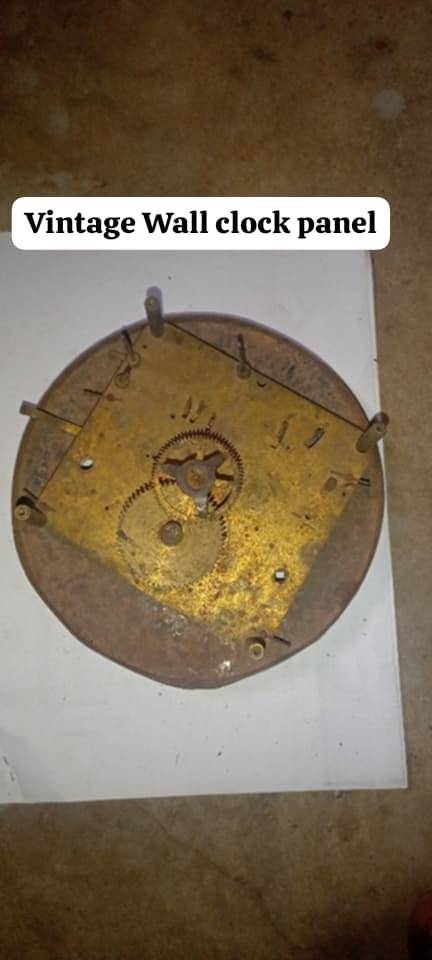
This is a weight-driven, 30-hour brass clock movement, likely of American origin from the mid-to-late 19th century. The movement features square brass plates typically associated with manufacturers like Seth Thomas or Ansonia. It includes a visible center wheel and cannon pinion assembly for clock hands. The movement is currently separated from its case and dial, with visible surface oxidation on the brass and steel pivots.
CROSS-CULTURAL PARALLELS
Where This Object Echoes
The transition from artisan craft to interchangeable parts and mass production.
Ritual & Ceremonial Use
- •Daily domestic winding of the clock, typically performed every morning to ensure consistent timekeeping across a 30-hour cycle.
Meaning Through Time
A essential household tool for coordinating labor and transport.
A source of parts for horological restoration or 'steampunk' decorative art.
PRODUCTION PERIOD
COLLECTOR NOTES
By 1850, American brass movements were so inexpensive they were often sold in the UK for less than the cost of a single handmade English clock gear.
The 30-hour movement required daily winding, a domestic ritual that was replaced by 8-day movements as manufacturing efficiency improved after 1880.
SCARCITY
Standard antiques commonly found at estate sales and flea markets. Plentiful supply meets modest demand.
Typical Characteristics
- Moderate production runs
- Common at estate sales
- Entry-level collectibles
Confidence Factors
- Construction techniques (pillars and pinions) are consistent with mid-19th century American manufacturing
- Natural patina and oxidation patterns align with the age of the materials
ENGINEERING APPRAISER'S TAKE
Vintage Technology Restorer & Historian
Identification of the movement type and era is high based on plate design and material; however, the lack of a visible maker's mark and incomplete state limits a more specific brand attribution.
KEY EVIDENCE
- 1Square brass plate construction common in post-1840 American factory clocks.
- 2Presence of mounting pillars for securing the front and back plates.
- 3Central gear train layout typical of 1-day/30-hour weight-driven movements.
- 4Steel-to-brass pivot points showing expected wear for a century-old mechanism.
UNCERTAINTIES
- •Absence of maker marks suggests this may have been a generic movement supplied to various case makers.
- •Condition of steel arbors suggests potential internal corrosion beyond what is visible.
WHAT WOULD IMPROVE CERTAINTY
- →Search for stamped numbers or logos on the rear side of the back plate.
- →Check for signs of 'bushings' (round brass inserts) which would indicate previous professional repairs.
- →Test mechanical movement of the gears to assess if any teeth are stripped or bent.
CONDITION & GRADE
Grading breakdown
Standard horological grading is not applicable to an incomplete, unhoused movement in this state of oxidation.
Condition
The movement is incomplete, lacking a dial, hands, pendulum, and weights. Pivots and bushings show substantial wear and verdigris, requiring a full ultrasonic cleaning and likely bushing replacement for functional restoration.
Weight & feel
Estimated between 0.8 and 1.2 kg; a dense assembly of solid brass plates and steel arbors.
INDUSTRIAL ARTIFACT VALUE
Updated: May 10, 2026
Similar 'as-found' 30-hour movements frequently sell on eBay for $20-$40, while serviced examples with cases reach $150-$300.
Who buys this
Horological hobbyists looking for donor parts or steampunk artists seeking authentic industrial components.
What increases value
- •Originality of the gear train
- •Presence of intact teeth on todos gears
What lowers value
- •Missing weights and pendulum significantly lower value to clock collectors
- •Extensive rust on steel components may prevent restoration
What makes top-tier examples
- •Named maker mark (e.g., Seth Thomas, Elias Ingraham)
- •High level of movement cleanliness
- •Inclusion of original hands or pendulum bob
Grade & condition
Mechanical completeness and level of surface corrosion.
Rarity & demand
For informational purposes only, not a formal appraisal.
ABOUT MECHANICAL & INDUSTRIAL
Vintage machines, industrial objects, tools, and mechanical curiosities.
Mechanical & Industrial value and rarity guideSHARE THIS CURIOSITY
Have your own curiosities to discover?
Scan Your Curiosity
COMMENTS