Mid-Century Compass Saw (Keyhole Saw) with Molded Bakelite or Resin Handle
Estimated value
$10 - $35Rarity
Common(2/10)Category
Mechanical & IndustrialEra
Circa 1950-1975Origin
InternationalAuthenticity
MID-CENTURY COMPASS SAW (KEYHOLE SAW) WITH MOLDED BAKELITE OR RESIN HANDLE: IDENTIFICATION
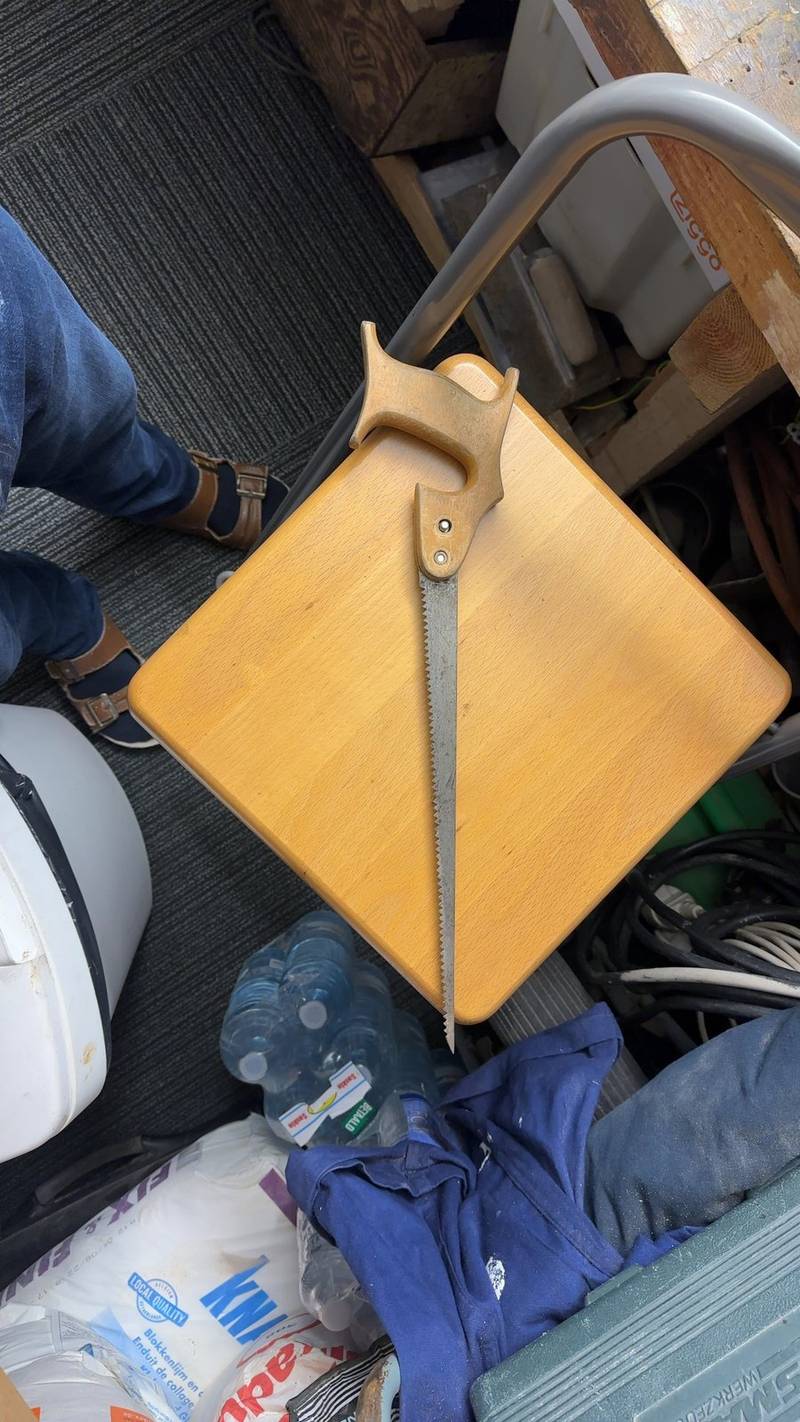
This is a narrow-blade compass saw designed for eccentric cuts and starting holes. The object features a tapered steel blade measuring approximately 30 cm in length, secured to a distinctive pistol-grip handle by two slotted steel bolts. The handle is fashioned from an early synthetic polymer, likely Bakelite or a high-density phenolic resin, showing a characteristic mottled ochre surface common to mid-century industrial tools. The blade terminates in a sharp point to allow for plunge starts in wallboard or wood panels.
CROSS-CULTURAL PARALLELS
Where This Object Echoes
The ergonomic streamlining of the handle reflects the post-war shift toward human-centric machine design.
Ritual & Ceremonial Use
- •Mid-century DIY home maintenance and woodcraft culture.
Meaning Through Time
Saws were primarily professional craft instruments with wooden handles.
The advent of plastic handles symbolized the democratization of tools for the weekend homeowner.
PRODUCTION PERIOD
COLLECTOR NOTES
The 1955 Montgomery Ward catalog listed similar polymer-handled saws as virtually indestructible compared to their wooden predecessors.
SCARCITY
Older mass-produced items still widely available. Easy to find on eBay, antique malls, and estate sales in large quantities.
Typical Characteristics
- Mass produced historically
- High survival rate
- Readily available everywhere
Confidence Factors
- Standard industrial construction consistent with mid-century mass production
- Oxidation and wear patterns align with age and workshop storage conditions
ENGINEERING APPRAISER'S TAKE
Vintage Technology Restorer & Historian
Identification of the tool type and era is certain based on handle material and fastener style, though the specific manufacturer remains unconfirmed due to lack of visible logos.
KEY EVIDENCE
- 1Narrow, tapered blade geometry diagnostic of a compass/keyhole saw.
- 2Molded phenolic resin handle with characteristic 1950s-70s color and texture.
- 3Slotted bolt attachment allows for blade replacement, a common feature in mid-market tools.
- 4Scale relative to the stool and human feet confirms standard portable hand-tool dimensions.
UNCERTAINTIES
- •Lack of visible maker's mark on the blade or handle plate, common in lower-cost or private-label tools.
WHAT WOULD IMPROVE CERTAINTY
- →Clean the blade with steel wool to reveal any etched brand logos or patent dates.
- →Inspect the handle for small molded numbers or country of origin marks on the inner grip.
- →Verify the blade's 'set' and sharpness to determine if it is original or a later replacement.
CONDITION & GRADE
Condition
The steel blade exhibits significant surface rust (patina) and blunted tooth profiles. The polymer handle shows edge wear and structural staining but remains free of major stress fractures.
INDUSTRIAL ARTIFACT VALUE
Updated: May 11, 2026
Unbranded mid-century keyhole saws typically sell for $10-20 on platforms like eBay, while branded Disston examples can reach $40-60.
Who buys this
General tool collectors and enthusiasts of mid-century industrial design.
What increases value
- •Originality of the polymer handle
- •Potential for restoration to working order
What lowers value
- •Heavy surface rust on the blade
- •Lack of a recognizable brand name like Disston or Atkins
What makes top-tier examples
- •Crocus-polished blade finish
- •Intact manufacturer's etching
- •New Old Stock (NOS) condition
Grade & condition
Blade straightness, tooth integrity, and absence of cracks in the resin handle.
Rarity & demand
For informational purposes only, not a formal appraisal.
ABOUT MECHANICAL & INDUSTRIAL
Vintage machines, industrial objects, tools, and mechanical curiosities.
Mechanical & Industrial value and rarity guideSHARE THIS CURIOSITY
Have your own curiosities to discover?
Scan Your Curiosity
COMMENTS