
Mid-Century 14K White Gold Modernist Star Ring
Estimated value
$400 - $800Rarity
Average(4/10)Category
JewelryBrand
Treasure ChestEra
1960s-1970sOrigin
United StatesVisual assessment
Photo analysis
Save to revisit in your watchlist. This does not add the object to your own collection.
Mid-Century 14K White Gold Modernist Star Ring
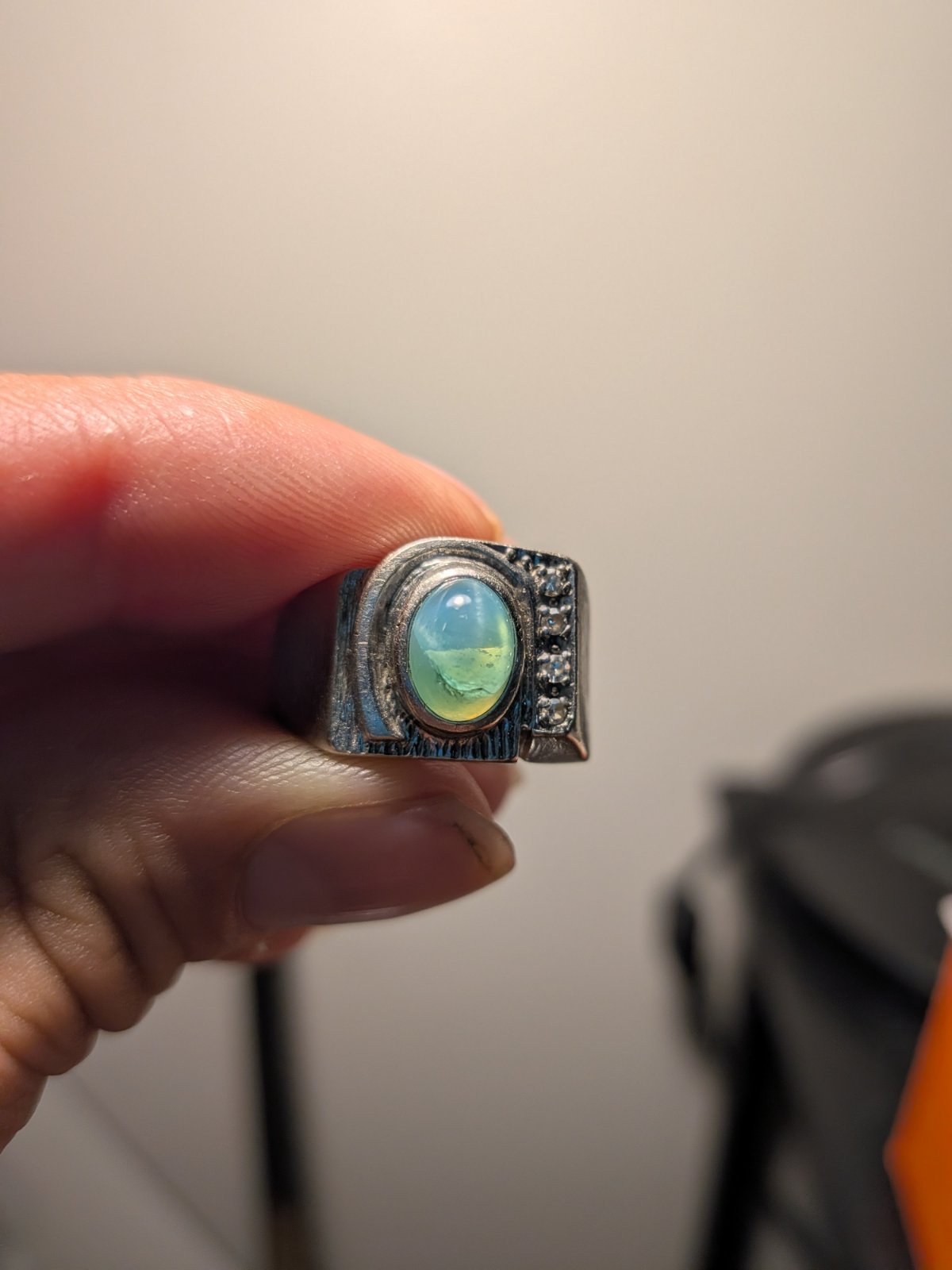
Men's asymmetrical ring cast in 14K white gold, featuring a bezel-set pale translucent oval cabochon (visually estimated at 8x6mm) and three channel-set round accent stones. The face utilizes a stepped, brutalist-inspired textured background contrasting with a high-polish shank. The interior band is stamped "14K" alongside a right-pointing arrow maker's mark and the text "TREASURE CHEST".
Related traditions
American Post-War Middle Class
1960s-1970s
The embrace of synthetic gems allowed middle-class men to wear 'star' stones previously reserved for high-end bespoke jewelry.
Use and ceremony
1970s
Transitioned men's rings from traditional symmetrical, heraldic signets to expressive, architectural modernist forms.
Origins and context
During the 1960s and 1970s, men's jewelry shifted from symmetrical signet styles to modernist, asymmetrical forms featuring textured gold and optical-phenomenon stones. The commercialization of synthetic star sapphires allowed retail brands to mount chatoyant or asterism-displaying cabochons in heavy 14K white gold architectural settings for the American middle-class market.
Further details
The United States Patent and Trademark Office records the 'TREASURE CHEST' jewelry trademark as first used in commerce around 1930, appearing frequently on mid-century retail catalog jewelry.
Synthetic star sapphires, showing the 'lined star' effect, were produced in such massive quantities that Union Carbide manufactured millions of carats between 1947 and 1974.
Attribution and evidence
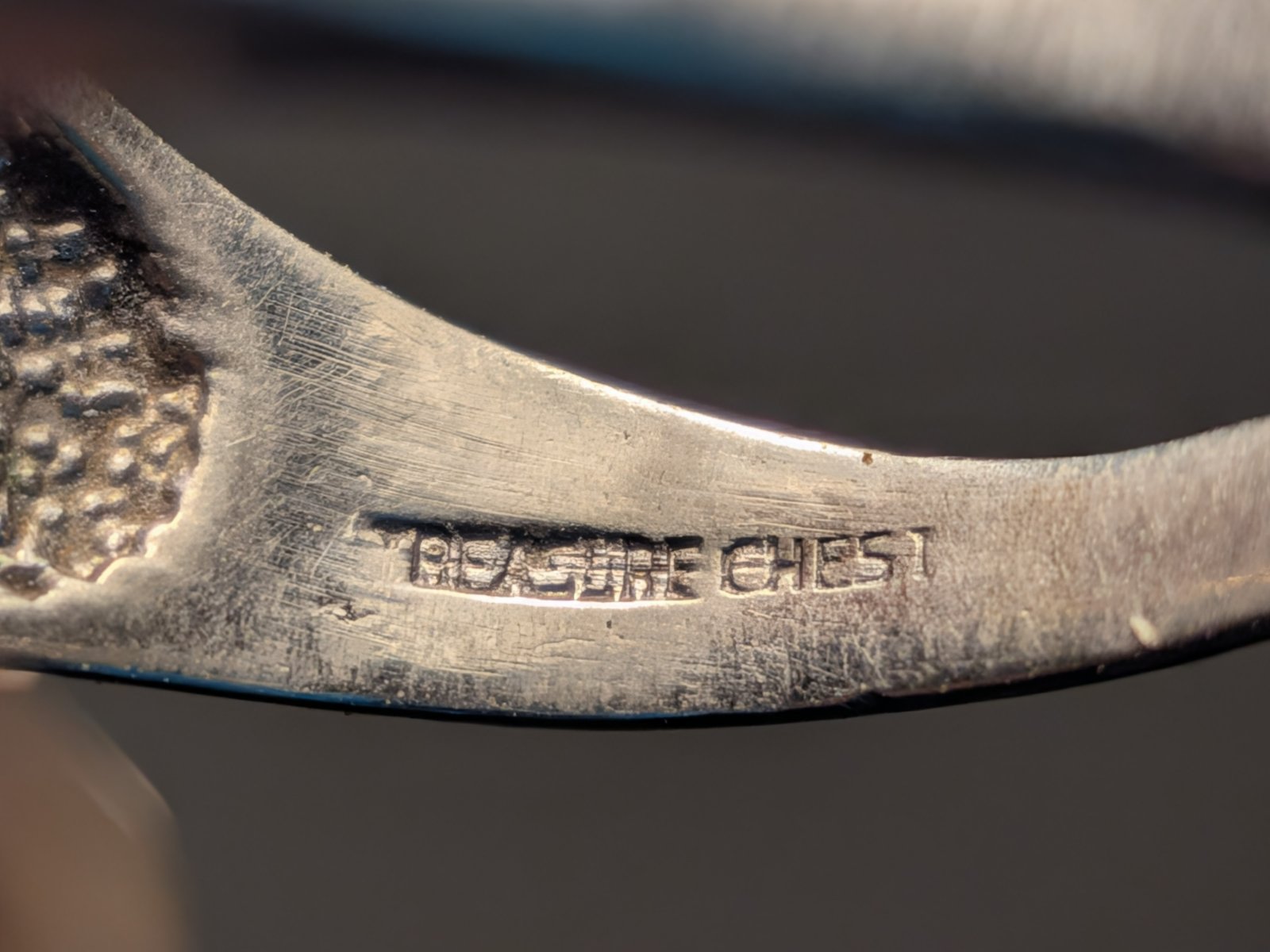
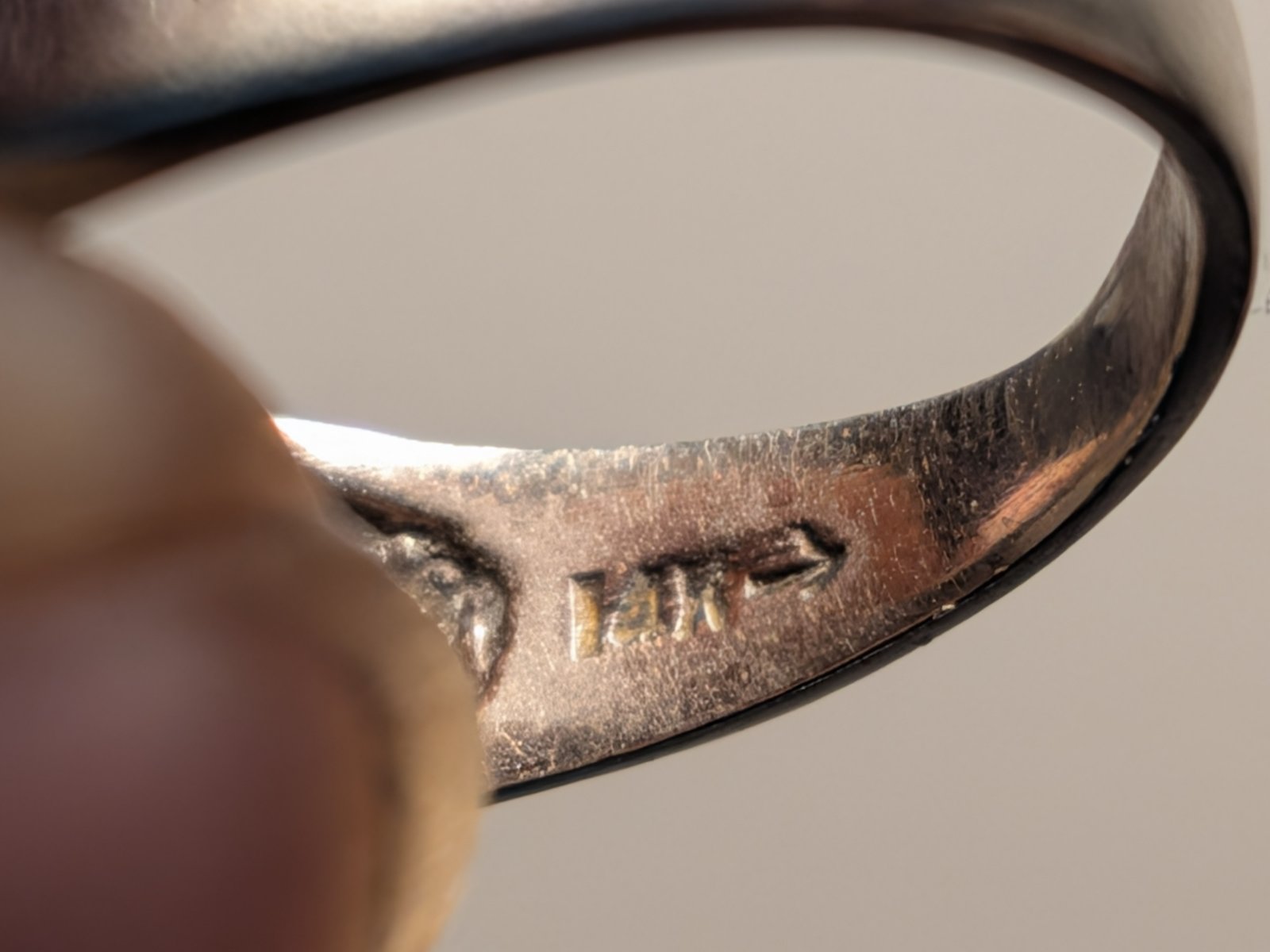
Maker marks and purity stamps are clearly legible, directly dating and characterizing the mount, though definitive gemological identification requires physical refractive index and magnification testing.
Identifying details
- 1Clear '14K' purity hallmark located on the inner shank.
- 2'TREASURE CHEST' retail brand stamp visible inside the band.
- 3Asymmetrical, textured gold setting indicative of 1960s-1970s modernist design.
- 4Presence of an optical phenomenon stone (asterism) corroborated by user's 'lined star' description.
Open questions
- •Exact nature of the cabochon (natural vs. laboratory-grown synthetic) cannot be determined definitively from surface photos without microscopic examination.
Photographs that would help
- Weigh the ring on a digital jeweler's scale to determine the core intrinsic scrap value of the 14K gold.
- Examine the cabochon under a 10x loupe to check for microscopic gas bubbles or curved striae (indicating synthetic) versus silk inclusions (indicating natural).
- Test the three small accent stones with a diamond tester to confirm identity.
Terms in this record
- Cabochon
- A gemstone that has been shaped and polished into a smooth, rounded dome rather than faceted.
- Asterism
- An optical phenomenon where a star-shaped concentration of light appears across the surface of a polished gemstone, typically caused by intersecting needle-like inclusions.
- Channel Setting
- A technique where stones are suspended between two parallel tracks of metal rather than being held by individual prongs.
Wear and preservation
Stones remain securely set with intact metal channels and bezels; metal shows standard wear but retains structural integrity and clear hallmarks.
Band shows moderate surface scratching consistent with age and typical wear. Cabochon surface appears smooth without severe abrasion. Interior stamps '14K' and 'TREASURE CHEST' remain crisp and fully legible.
Materials and construction
Contrasting finishes featuring a high-polish white gold shank and a stippled, cast-texture asymmetric faceplate surrounding the primary bezel.
Recorded physical details
Substantial men's ring construction, visually estimated between 8 and 12 grams of solid 14K gold.
Scarcity and surviving examples
Average · 4/10 estimated rarity
This is a qualitative collection score, not a measured survival count, market percentile or proof of authenticity.
What the photographs establish
Interpretation of the photographs and supplied context. This does not authenticate the object.
- 14K purity stamp and maker's marks are struck definitively with age-appropriate wear inside the band.
- The casting style and stone setting technique are textbook examples of mass-produced 1970s commercial jewelry.
Value and its basis
Estimate recorded: May 22, 2026
How we estimate value
Estimate context (not a documented sale): eBay sold listings from 2023-2024 show typical unmarked 14K white gold mid-century synthetic star men's rings achieving $350 to $650, heavily dependent on the exact melt weight of the gold.
Collectors and interest
Collectors of 1970s modernist men's jewelry and buyers seeking heavy 14K white gold vintage rings for daily wear.
What supports the estimate
- •Solid 14K gold construction and overall gram weight
- •Intact optical phenomenon (asterism) in the center stone
- •Surviving channel-set accent stones without chipping
What could change it
- •If the cabochon is discovered to be heavily worn or scratched, replacement cost often exceeds the value of the setting.
- •If the gold weight is unexpectedly light or hollow-cast.
Comparing quality
- •Natural, unheated star sapphires with sharp, well-centered asterism rather than synthetic stones.
- •High gram weights exceeding 12 grams of solid gold.
The effect of condition
Shank thickness, crispness of the textured face, intact prong/bezel metal over the stones, and legibility of interior hallmarks.
Market interest
For informational purposes only, not a formal appraisal.
The collector’s account
Supporting details
- User's observation of a 'lined star' aligns directly with an asterism-displaying cabochon, highly typical of mid-century gents' rings.
- User's time period estimate of 'Mid Century' is supported by the asymmetrical modernist setting style popular between 1960 and 1975.
Related objects
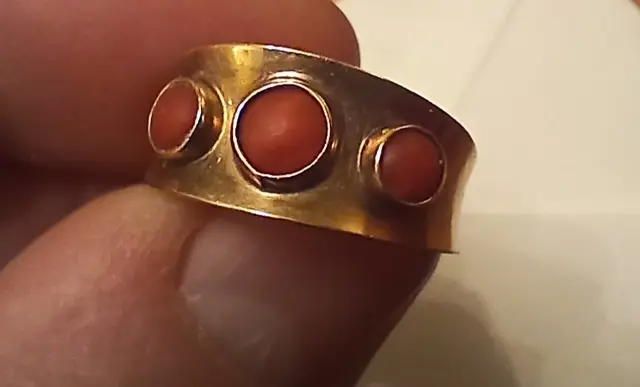
Mid-20th Century Gold Ring with Coral Cabochons
Shared title details

Chinese White Nephrite Jade 'Twin Fish' Pendant, late 20th Century
Shared title details
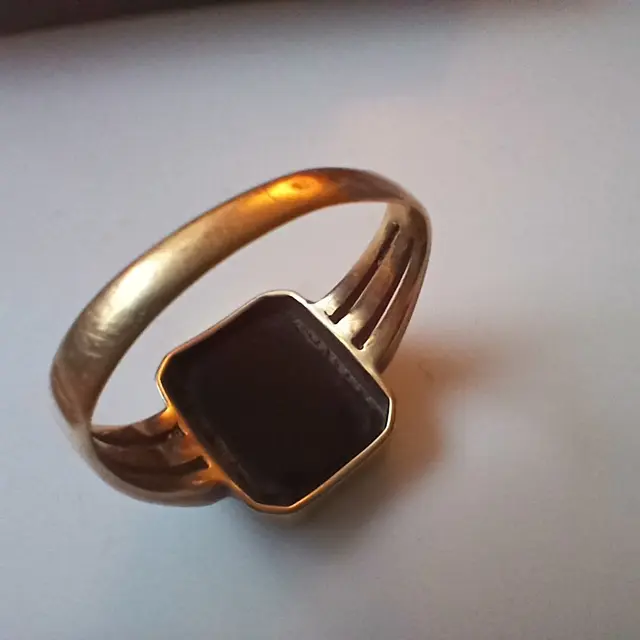
Gentleman's Gold-Tone Signet Ring with Dark Inlay
Shared title details
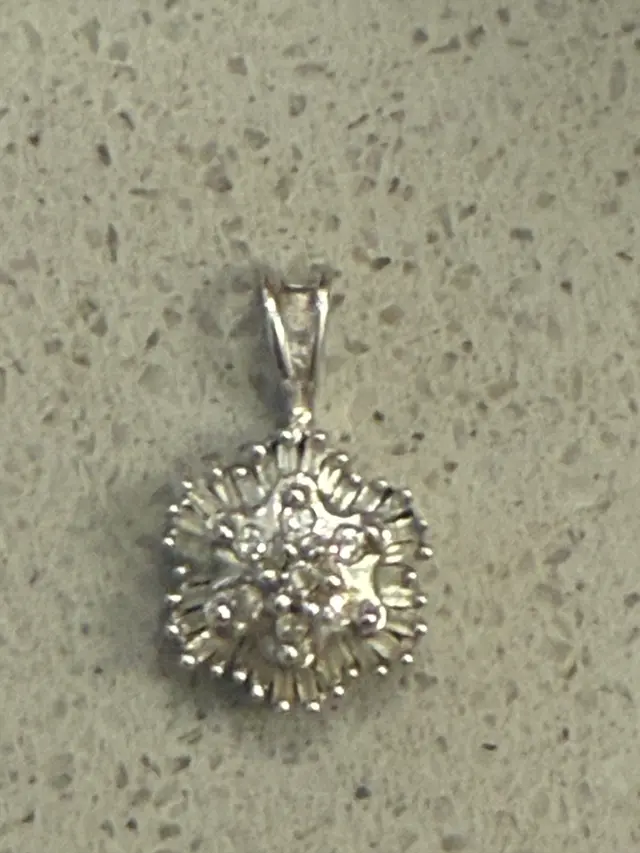
14K White Gold Cluster Pendant
Shared title details
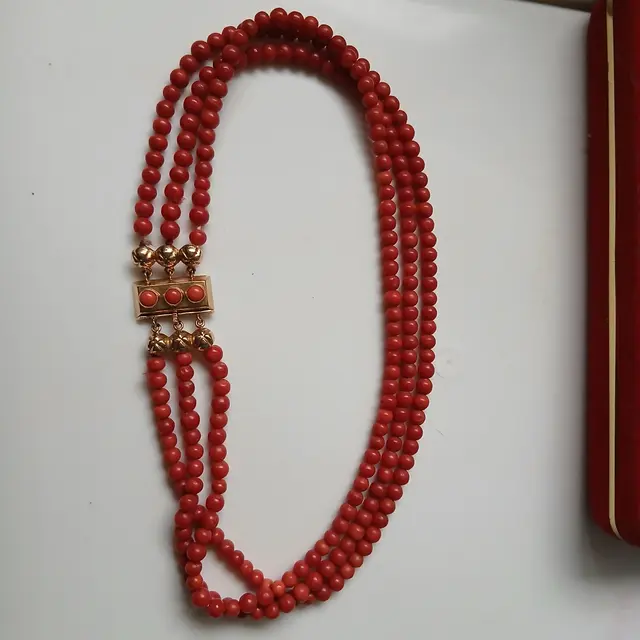
Triple-Strand Coral Bead Necklace with Gold-Tone Box Clasp
Same category
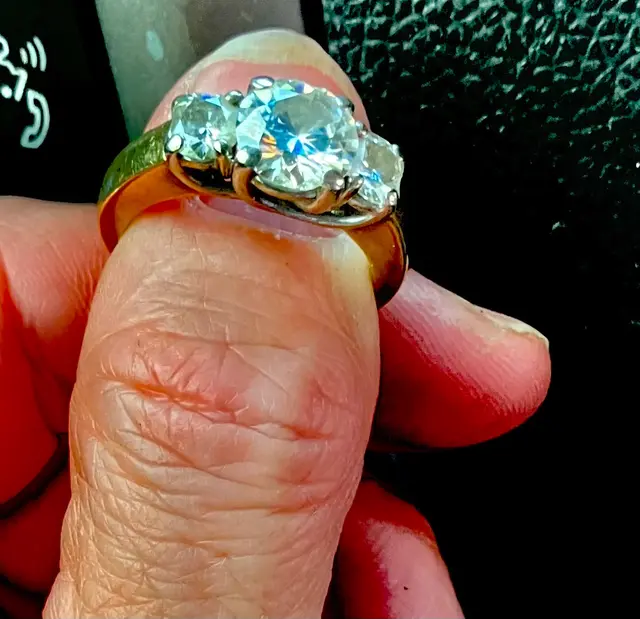
Three-Stone Moissanite Ring
Same category
Explore Jewelry
Fine jewelry, costume pieces, rings, necklaces, bracelets, and brooches.
Jewelry value and rarity guideShare this find
A place for your jewelry
Keep its photographs, maker’s marks and the story you know in one object record. Start with a photo.
Create an account for 10 free scans. No credit card needed.
Join the conversation