
Intricately Filigreed Silver-Tone Brooch or Pendant
Estimated value
$75 - $250Rarity
Average(4/10)Category
JewelryEra
Early 20th Century to Mid-20th CenturyOrigin
InternationalVisual assessment
Photo analysis
Save to revisit in your watchlist. This does not add the object to your own collection.
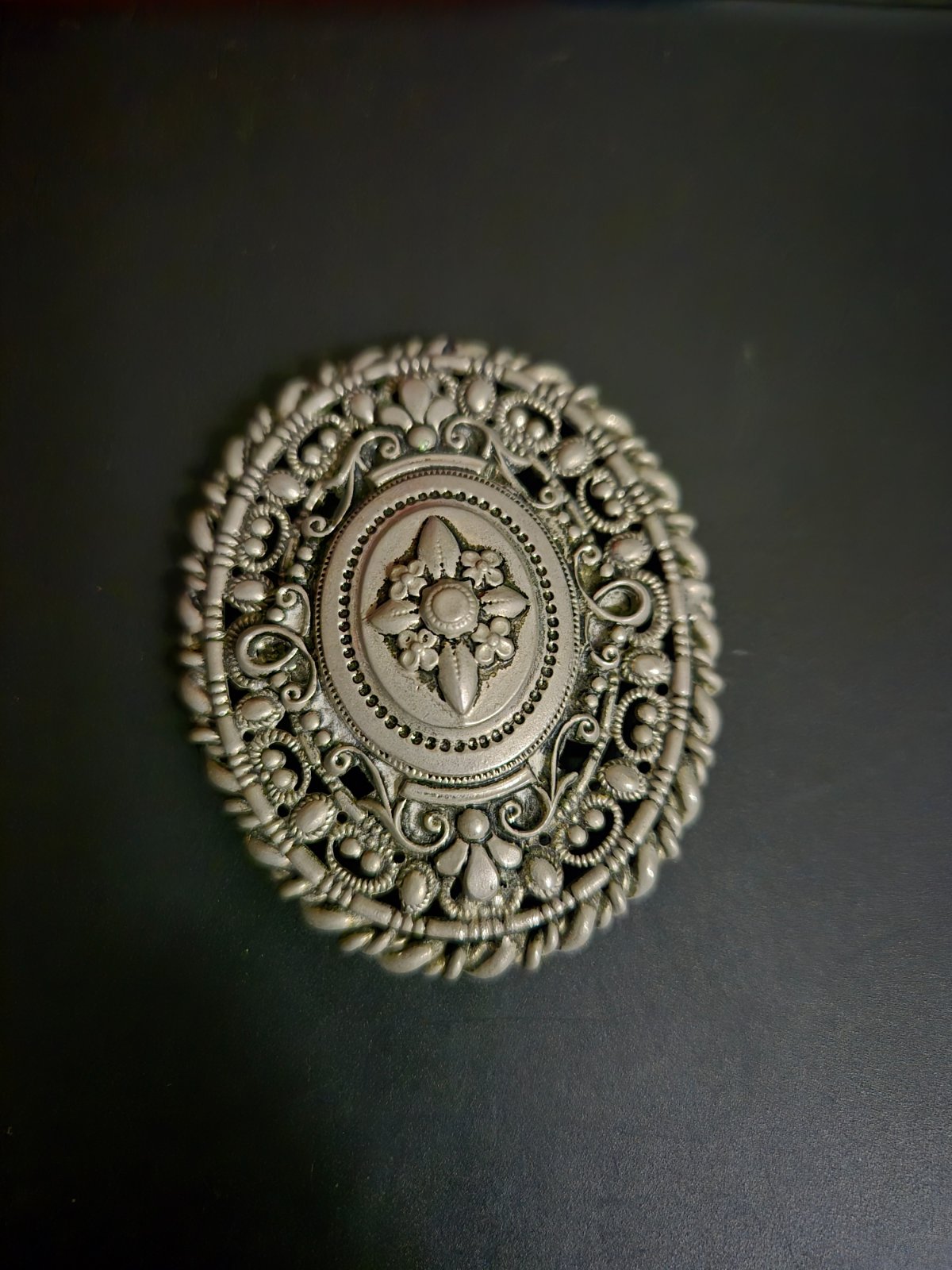
Intricately Filigreed Silver-Tone Brooch or Pendant
This appears to be a large, oval-shaped brooch or pendant, crafted with significant attention to filigree and granulated detailing. The piece features a central raised medallion with a floral or starburst motif, encircled by a rope-like border and an outer ring of beaded and scrolled filigree work. The overall aesthetic suggests it is made from silver or a silver-toned base metal, possibly due to its substantial patina which highlights the intricate design.
Related traditions
Ottoman / Middle Eastern
18th-20th Century
Rich tradition of intricate silver filigree and granulation in jewelry, often with floral and geometric motifs.
Indian / Southeast Asian
19th-20th Century
Traditional jewelry often features ornate silver work with similar stylistic elements, including mandalas and elaborate floral patterns.
Use and ceremony
Historical periods (ancient to modern)
Ornate jewelry has symbolized wealth, social status, and cultural identity.
Victorian to Art Deco eras
The resurgence of historical and 'exotic' design elements became popular, influencing jewelry styles to incorporate intricate details.
Origins and context
Decorative objects with complex filigree and granulation techniques are found across various cultures and historical periods, particularly in regions with rich traditions in metalwork, such as Southeast Asia, the Middle East, and parts of Europe, often with influences from Byzantine or Ottoman styles. This specific design language, with its dense floral and geometric motifs, points towards a historical context where fine metal craftsmanship was highly valued for personal adornment.
Further details
Filigree, the art of creating intricate designs with tiny beads or twisted threads of metal, is an ancient technique believed to have originated in Mesopotamia and was perfected by various civilizations throughout history.
Granulation is another ancient decorative technique used in jewelry making, where small spheres of metal are fused onto a metal surface, requiring immense skill and precision.
Attribution and evidence
Confidence is good regarding the object type and estimated era based on the visible design elements and craftsmanship. However, material identification and exact origin are uncertain due to the lack of visible hallmarks and images of the reverse.
Identifying details
- 1Intricate filigree and granulation work, indicative of traditional metalworking techniques.
- 2Oval shape with central medallion and floral/starburst motif, common in historic decorative jewelry.
- 3Patinated silver-tone appearance, suggesting silver or a silver-plated base metal with age.
- 4Lack of visible gemstones, focusing the design on metal craftsmanship.
Open questions
- •Absent visible hallmarks, making metal identity and origin uncertain.
- •Functionality (brooch pin or pendant bail) cannot be assessed without viewing the reverse side.
Photographs that would help
- A clear, well-lit photograph of the reverse side to identify any hallmarks, maker's marks, or the type of clasp/bail.
- An acid test or XRF analysis to confirm metal composition (e.g., sterling silver, silver plate, pewter).
- Weight measurement would help assess its material density.
Terms in this record
- Filigree
- Ornamental work of fine (often gold or silver) wire formed into delicate tracery.
- Granulation
- A technique where a surface is covered in tiny spheres or granules of precious metal, fused without solder.
- Patina
- A surface layer that develops over time, usually on metals, due to oxidation, often valued for its aesthetic appeal and indicator of age.
Wear and preservation
The item appears to be in good vintage condition, exhibiting a natural patina consistent with age. There are no obvious signs of significant damage such as breaks in the filigree or missing components. Further inspection would be needed to assess wear on any potential pin mechanism or bail.
Materials and construction
The surface exhibits a patinated, matte silver-tone finish that beautifully accentuates the raised filigree and granulated textures. The intricate details are sharp, indicating either good preservation or a casting process that faithfully replicated a detailed original. Some areas show deeper oxidation in recesses, providing contrast.
Recorded physical details
Based on its size and apparent metal construction, it likely has a moderate, substantial weight, typical for a well-made piece of this decorative style. It would not feel flimsy or overly lightweight.
Scarcity and surviving examples
Average · 4/10 estimated rarity
This is a qualitative collection score, not a measured survival count, market percentile or proof of authenticity.
What the photographs establish
Interpretation of the photographs and supplied context. This does not authenticate the object.
- Lack of visible hallmarks or maker's marks, which are crucial for definitive material and origin identification.
- Without examination of the reverse side, it's difficult to verify construction methods (e.g., modern casting vs. hand-finished traditional techniques).
- Material cannot be definitively confirmed as silver from images alone; it could be silver-plated base metal.
Value and its basis
Estimate recorded: Feb 27, 2026
How we estimate value
- No documented comparable sales are shown for this estimate
- Condition, completeness & craftsmanship
- Demand assumptions may not reflect current transactions
- The range is an estimate, not an asking price or sale result
For informational purposes only, not a formal appraisal.
Related objects
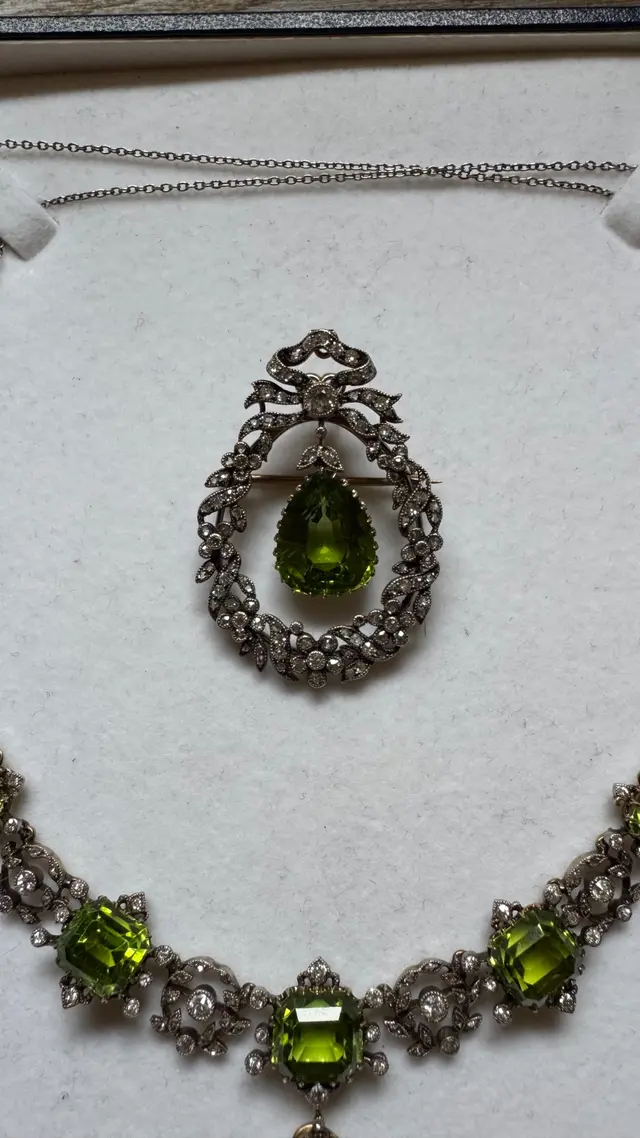
Edwardian Peridot & Diamond Garland Brooch/Pendant c.1905
Shared title details
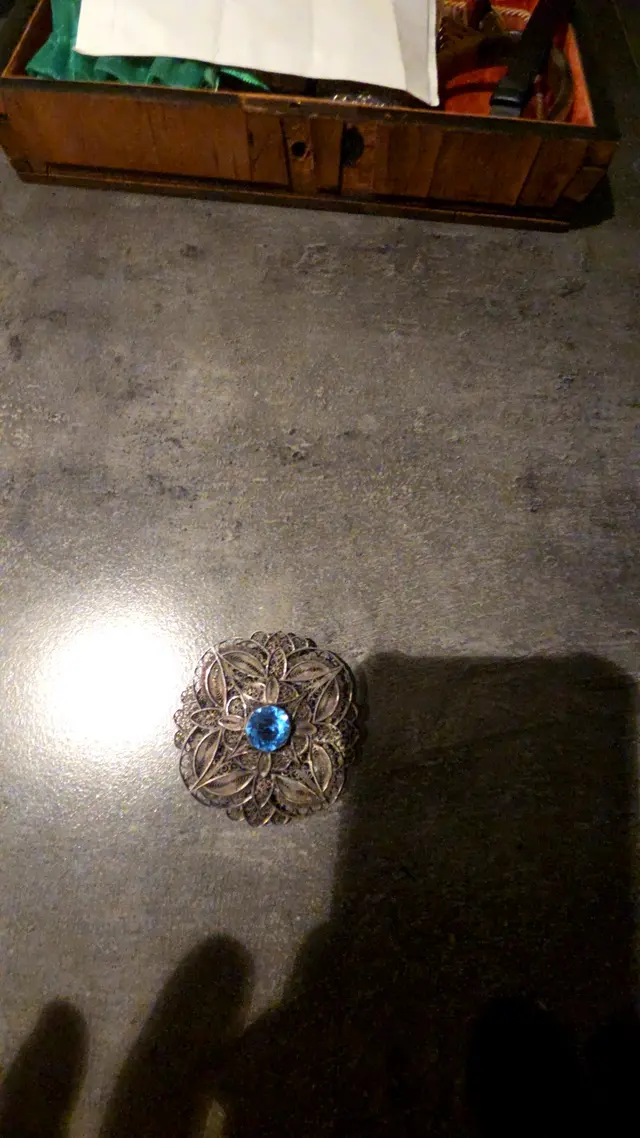
Silver Filigree Brooch with Blue Paste or Glass Centerpiece
Shared title details
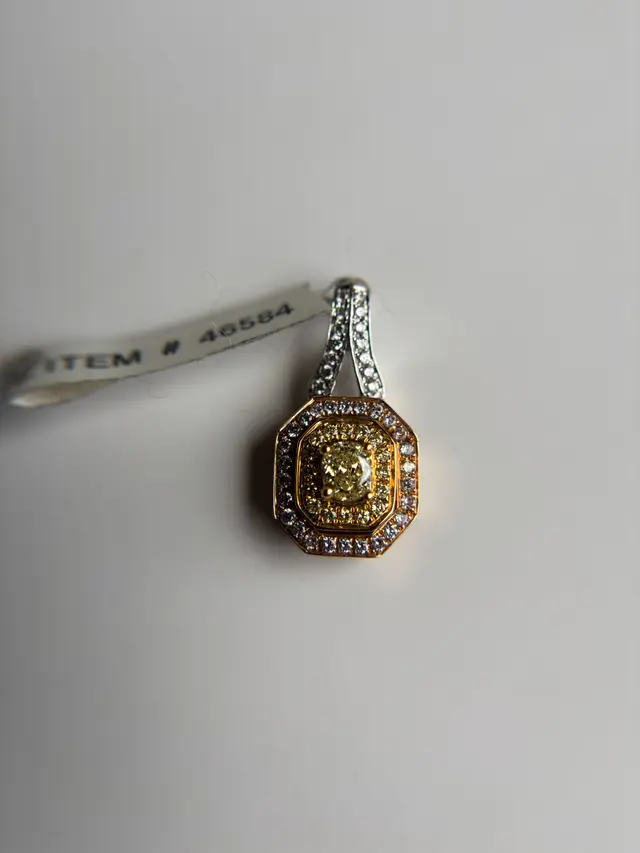
18K Two-Tone Gold Double Halo Pendant by RI
Shared title details
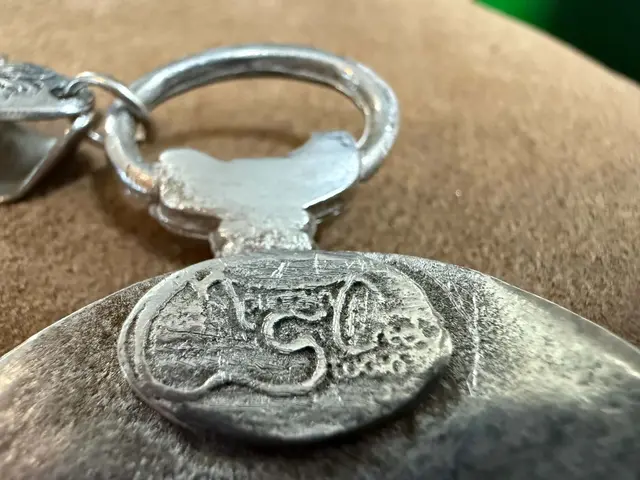
Artisan Studio Silver Pendant with Applied Maker Cartouche
Shared title details
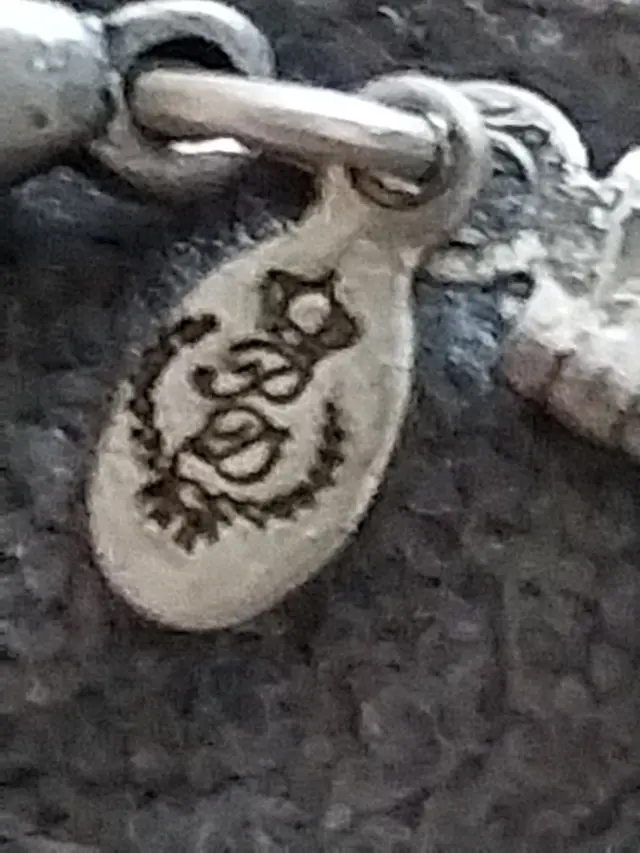
1928 Jewelry Company Silver-Tone Logo Hang Tag
Shared title details
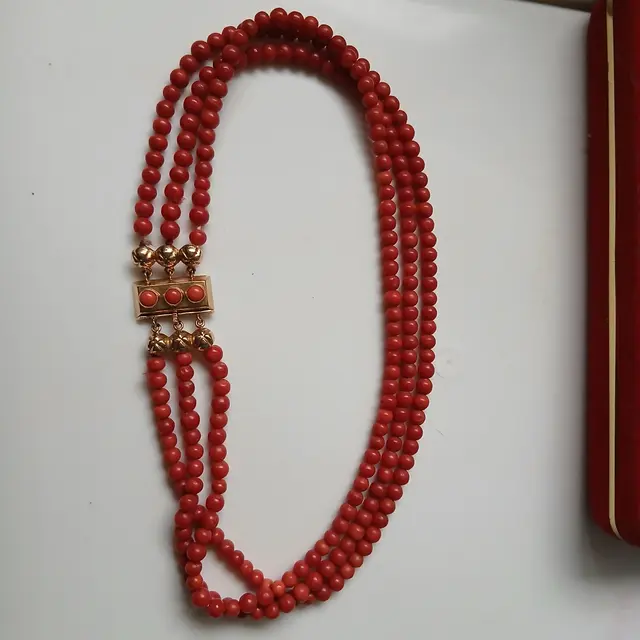
Triple-Strand Coral Bead Necklace with Gold-Tone Box Clasp
Same category
Explore Jewelry
Fine jewelry, costume pieces, rings, necklaces, bracelets, and brooches.
Jewelry value and rarity guideShare this find
A place for your jewelry
Keep its photographs, maker’s marks and the story you know in one object record. Start with a photo.
Create an account for 10 free scans. No credit card needed.
Join the conversation