Chinese Ding-type Yaozhou Celadon or Shufu-style Bowl, Southern Song to Yuan Dynasty (1127-1368)
Estimated value
$250 - $650Rarity
Uncommon(5/10)Category
Ceramics & PotteryEra
circa 1150-1350Origin
ChinaAuthenticity
CHINESE DING-TYPE YAOZHOU CELADON OR SHUFU-STYLE BOWL, SOUTHERN SONG TO YUAN DYNASTY (1127-1368): IDENTIFICATION
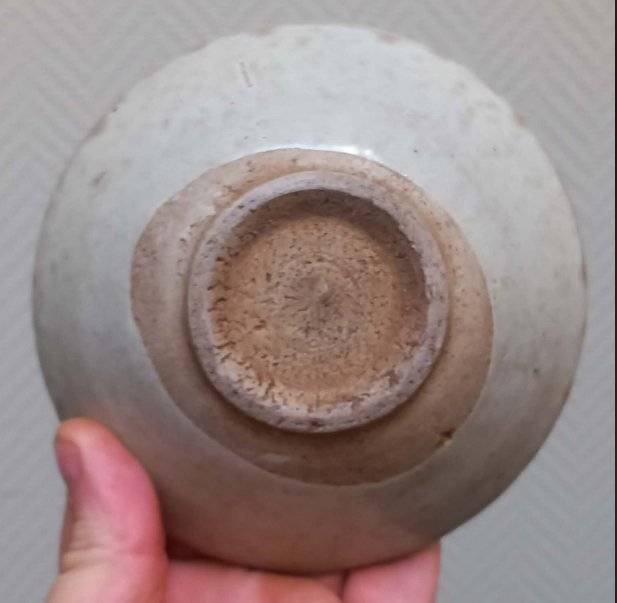
A conical stoneware bowl featuring a slightly flared rim and an unglazed, carved footrim typical of provincial Song and Yuan dynasty production. The vessel is covered in a pale, greyish-white 'moon white' (yuebai) glaze that terminates unevenly above the foot, revealing a buff-colored, granular clay body. The interior exhibits subtle radial moldings or 'bi' (disc) style fluting around the cavetto, a common feature in kilns from the Shaanxi or Fujian regions.
SCARCITY
Genuine antiques with fewer examples on the market. Named makers, documented provenance, or early production examples.
Typical Characteristics
- Limited production
- Named makers
- Growing collector demand
Confidence Factors
- High frequency of 20th-century reproductions of Song 'monochrome' wares
- Patina and kiln grit appear consistent with period examples but require tactile confirmation
- Rim damage is common in genuine pieces but easily simulated in modern fakes
CERAMICIST'S ASSESSMENT
Asian Art Specialist
The morphology and foot treatment are highly characteristic of early Southern Chinese wares, though the lack of a macro-view of the glaze bubbles precludes a higher confidence level.
KEY EVIDENCE
- 1Unglazed, knife-cut footrim exposing granular buff stoneware body
- 2Opaque, pale yuebai (moon white) glaze with characteristic Song-style pinholing
- 3Conical form typical of 12th-14th century tea bowl morphology
- 4Presence of kiln accretions (sand/grit) on the base plate
UNCERTAINTIES
- •The evenness of the glaze degradation could be chemically induced
- •Lack of 'spur marks' on the interior center which are often present in similar Northern wares
WHAT WOULD IMPROVE CERTAINTY
- →Conduct a 'wet-test' to check for the distinctive earthy odor of ancient excavated stoneware
- →Examine the rim chips under 20x magnification to see if the oxidation within the break matches the exterior wear
- →Check for signs of a 'ring' sound when tapped, which indicates a high-fired stoneware body
CONDITION & GRADE
Grading breakdown
Grading is based on visible rim loss and the degree of glaze degradation; the unglazed foot is expectedly rough for this period.
Condition
Significant rim chips are visible at the 1 o'clock and 4 o'clock positions, with smaller nicks along the entire circumference. Structural integrity remains sound despite surface abrasions consistent with burial or long-term handling.
CERAMICS MARKET VALUE
Updated: May 11, 2026
Who buys this
Specialist collectors of early Chinese monochrome ceramics and academic scholars of Song dynasty kiln sites.
What increases value
- •The age and period attribution to the Song/Yuan transition
- •Authenticity of the base and kiln evidence
What lowers value
- •Extensive rim chipping significantly reduces the ceiling price for top-tier collectors
- •Presence of any hairline cracks not visible in current images
What makes top-tier examples
- •Thinness of the potting ('eggshell' quality)
- •Uniformity and depth of the glaze color without inclusions
Grade & condition
Condition of the rim, clarity of the glaze, and the sharpness of the foot cut.
Rarity & demand
For informational purposes only, not a formal appraisal.
ABOUT CERAMICS & POTTERY
Pottery, porcelain, stoneware, earthenware, and kiln-fired objects.
Ceramics & Pottery value and rarity guideSHARE THIS CURIOSITY
Have your own curiosities to discover?
Scan Your Curiosity
COMMENTS