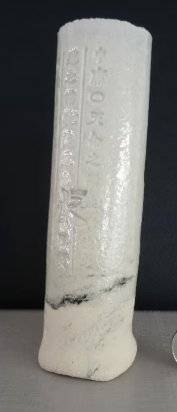
Chinese Shino-Glazed Cylindrical 'Bamboo' Vase, 20th Century
Estimated value
$45 - $120Rarity
Ordinary(3/10)Category
Ceramics & PotteryEra
Circa 1970-2010Origin
ChinaAuthenticity
CHINESE SHINO-GLAZED CYLINDRICAL 'BAMBOO' VASE, 20TH CENTURY: IDENTIFICATION
Cylindrical glazed ceramic vessel featuring relief-molded Chinese characters and a bamboo-culm aesthetic. The form exhibits a pinched, closed base and a slightly irregular rim, characteristic of slab-built or hand-molded studio pottery. The glaze is a thick, milky-white feldspathic 'Shino' style with visible pinholing and a 'crawling' effect where the glaze has pulled back from the body during firing.
PRODUCTION & FIRING
SCARCITY
Standard antiques commonly found at estate sales and flea markets. Plentiful supply meets modest demand.
Typical Characteristics
- Moderate production runs
- Common at estate sales
- Entry-level collectibles
Confidence Factors
- Construction techniques (seam lines) are consistent with modern decorative production
- Material and glaze type align with 20th-century decorative trends
CERAMICIST'S ASSESSMENT
Asian Art Specialist
The identification of the material, glaze type, and construction method is straightforward based on the provided images, though the exact kiln remains unidentifiable without a mark.
KEY EVIDENCE
- 1Visible vertical molding seam indicative of mass-production/commercial molding
- 2Thick Shino-type glaze showing 'crawling' typical of modern studio kilns
- 3Closed, pinched base lacks the refined footrim of authentic period ceramics
- 4Relief characters lack the fluid carving depth associated with hand-incised Ming/Qing wares
UNCERTAINTIES
- •Lack of maker's mark or reign mark on the base
- •Prominent manufacturing seam suggests decorative rather than fine-art origins
WHAT WOULD IMPROVE CERTAINTY
- →Capture a clear, high-resolution photo of the relief characters to determine if they form a coherent poem or are decorative
- →Measure exact height and diameter in millimeters to compare with known export catalog sizes
CONDITION & GRADE
Grading breakdown
Glaze integrity is high with no visible chips; however, the manufacturing seam is prominent and the base exhibits minor kiln-soot staining.
Condition
Significant vertical seam visible on the side indicating mold-forming; the base shows unglazed, coarse clay with some staining and shelf-wear consistent with late 20th-century age.
CERAMICS MARKET VALUE
Updated: May 10, 2026
Who buys this
General interior decorators and collectors of modern Asian-inspired home goods.
What increases value
- •Visual character of the Shino glaze
- •Functionality as a brush pot or vase
What lowers value
- •Presence of visible manufacturing seams significantly reduces value for serious ceramic collectors
- •Anonymity of manufacture (lack of studio mark)
What makes top-tier examples
- •Hand-carved rather than mold-pressed characters
- •Refined, hand-turned footrim
- •Natural ash glaze (Yobitsugi) rather than commercial Shino
Grade & condition
Glaze consistency, absence of chips/cracks, and clarity of the relief molding.
Rarity & demand
For informational purposes only, not a formal appraisal.
ABOUT CERAMICS & POTTERY
Pottery, porcelain, stoneware, earthenware, and kiln-fired objects.
Ceramics & Pottery value and rarity guideSHARE THIS CURIOSITY
Have your own curiosities to discover?
Scan Your Curiosity
COMMENTS