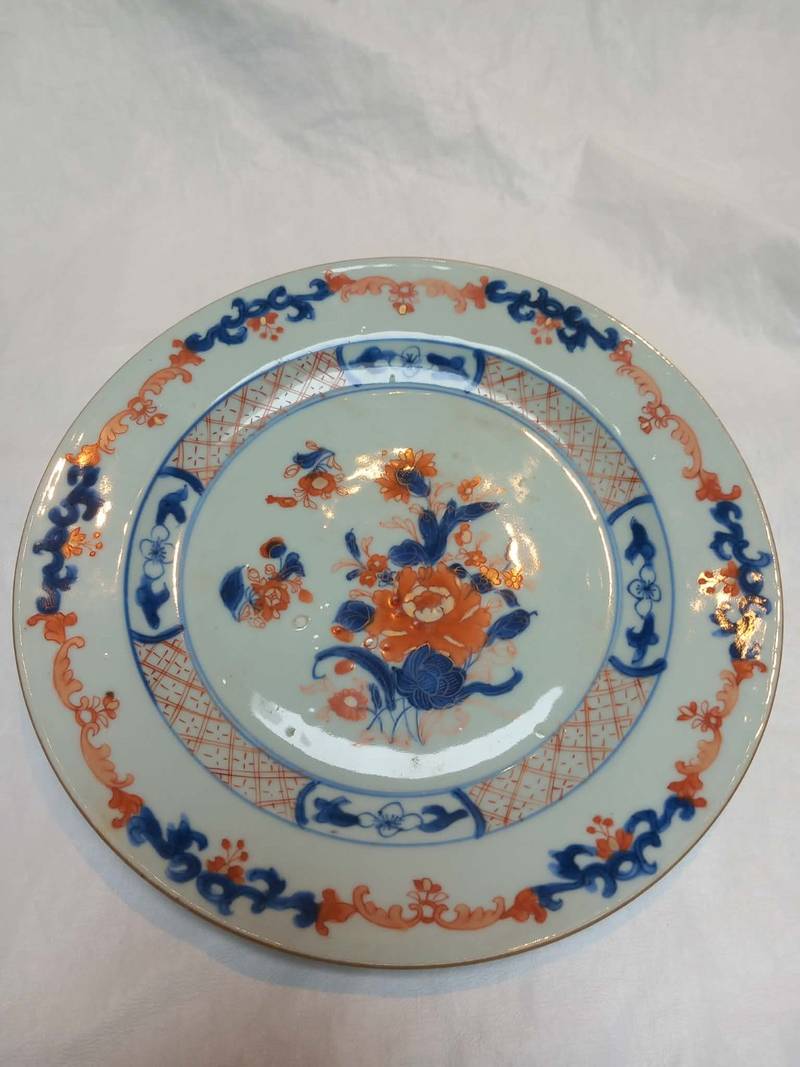
Chinese Export Porcelain Imari Plate
Estimated value
$150 - $350Rarity
Average(4/10)Category
Ceramics & PotteryEra
circa 1740-1770Origin
ChinaAuthenticity
CHINESE EXPORT PORCELAIN IMARI PLATE: IDENTIFICATION
A hard-paste porcelain plate decorated in the Chinese Imari palette of underglaze cobalt blue, overglaze iron red, and gilt highlights. The central medallion features a floral arrangement including a large peony, surrounded by a cavetto with an iron-red diaper pattern trellis and alternating cartouches. The rim is decorated with a continuous scroll of foliate and floral motifs in blue and red. The reverse shows a clean, unglazed footrim characteristic of 18th-century Jingdezhen production, exhibiting a fine, white, sugary paste with minimal kiln grit.
CROSS-CULTURAL PARALLELS
Where This Object Echoes
Original Ko-Imari patterns from Arita provided the visual template for this Chinese competition ware.
Ritual & Ceremonial Use
- •European 'Cabinet of Curiosities' display and formal aristocratic dining service.
Meaning Through Time
A symbol of high status and access to the lucrative East Indies trade.
An academic specimen of the first era of globalized trade and industrial espionage.
PRODUCTION & FIRING
SCARCITY
Typical antique shop fare. Requires some searching but regularly available. This is where most genuine antiques fall.
Typical Characteristics
- Standard antique shop items
- Regularly available
- Moderate collector interest
Confidence Factors
- Footrim characteristics and paste color are perfectly consistent with 18th-century Jingdezhen production
- Oxidation patterns on the iron red enamel suggest significant age rather than modern chemical distressing
CERAMICIST'S ASSESSMENT
Ceramics Historian & Kiln Specialist
Identification is high due to the clear diagnostic features of the footrim, glaze color, and specific 'Chinese Imari' decorative program which is well-documented in the works of Howard and Ayers concerning export porcelain.
KEY EVIDENCE
- 1Unglazed footrim shows the fine, white 'sugary' texture of Jingdezhen hard-paste porcelain.
- 2Presence of 'pinholes' and slight glaze contraction in the center is a known firing characteristic of 18th-century kilns.
- 3The specific palette of iron-red and cobalt blue with a blue-toned glaze is diagnostic of Qianlong-era export ware.
- 4Hand-painted nature visible in the slight variations of the trellis diaper pattern.
UNCERTAINTIES
- •The 6 o'clock hairline requires careful monitoring as it compromises structural integrity.
WHAT WOULD IMPROVE CERTAINTY
- →Perform a 'tap test' with a wooden stick to check for a clear ring versus a dull thud, which would indicate hidden cracks.
- →View the plate under UV light to ensure the rim hasn't been ground down or repaired with overpainted resin.
CONDITION & GRADE
Grading breakdown
Downgraded from Very Good due to the visible hairline crack and moderate loss of the decorative gilding on the central peony.
Condition
A tight hairline crack is visible extending from the 6 o'clock position inward toward the cavetto. Minor gilt loss is apparent on the flower petals and rim edge, consistent with age and stacking wear.
CERAMICS MARKET VALUE
Updated: May 11, 2026
Who buys this
Specialist collectors of Chinese Export Porcelain and interior designers seeking authentic 18th-century display pieces.
What increases value
- •Survival of original gilding significantly increases value
- •Richness and depth of the cobalt blue underglaze
- •Clear, well-defined hand-painting in the central medallion
What lowers value
- •Hairline cracks typically devalue porcelain by 40-60% compared to 'mint' examples
- •Dishwasher damage or chemical cleaning stripping the overglaze red
What makes top-tier examples
- •Armorial bearings (family crests) in the center
- •Larger diameters (over 12 inches) command significant premiums
- •Extensive, thick 'mercury' gilding
Grade & condition
Chips (nibbles) to the rim, presence of hairlines, glaze scratches from cutlery, and retention of gold leaf.
Rarity & demand
For informational purposes only, not a formal appraisal.
ABOUT CERAMICS & POTTERY
Pottery, porcelain, stoneware, earthenware, and kiln-fired objects.
Ceramics & Pottery value and rarity guideSHARE THIS CURIOSITY
Have your own curiosities to discover?
Scan Your Curiosity
COMMENTS