Chinese Molded Porcelain Snuff Bottle, late Qing Dynasty (1850-1912)
Estimated value
$150 - $450Rarity
Average(4/10)Category
Ceramics & PotteryEra
Late 19th to early 20th centuryOrigin
ChinaAuthenticity
CHINESE MOLDED PORCELAIN SNUFF BOTTLE, LATE QING DYNASTY (1850-1912): IDENTIFICATION
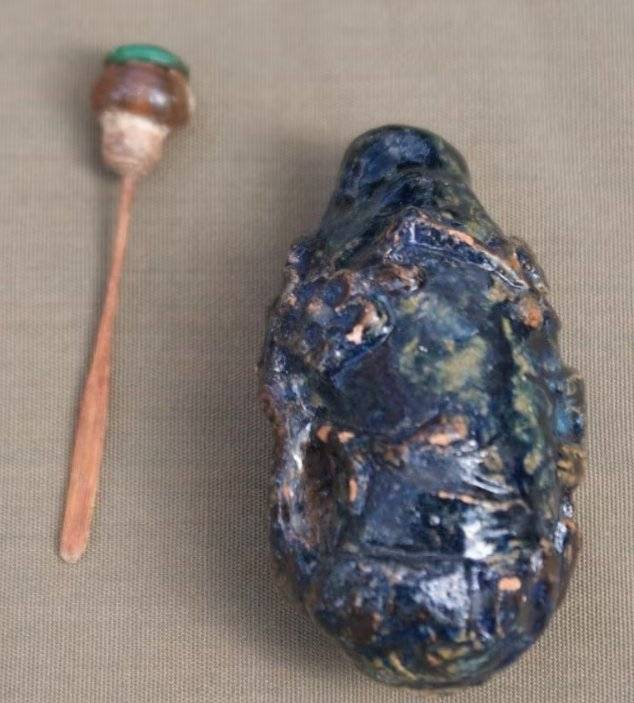
A Chinese molded porcelain snuff bottle featuring high-relief 'Prunus' (Plum Blossom) or mountain landscape motifs. The vessel is finished with a variable, dappled blue and tea-dust green glaze, likely a transition or 'flambé' derivative intended to mimic the appearance of weathered stone or lapis lazuli. The stopper includes a green glass or soapstone cabochon set into a brownish-red collar, with an integral wood or bone spoon for the distribution of powdered tobacco.
PRODUCTION & FIRING
COLLECTOR NOTES
The use of 'tea-dust' glazes on small vessels was a direct attempt to replicate the archaic bronze patinas highly valued by the Qianlong-era literati and later collectors (Christie's 2018).
SCARCITY
Typical antique shop fare. Requires some searching but regularly available. This is where most genuine antiques fall.
Typical Characteristics
- Standard antique shop items
- Regularly available
- Moderate collector interest
Confidence Factors
- Glaze dripping patterns suggest a later, 20th-century mass-production technique rather than individual hand-finishing.
- Stopper material (glass/plastic look) often points to a later replacement or modern export production.
- Porcelain body color visible in chips is consistent with late 19th-century Jingdezhen clay, but lacks the refinement of mid-Qing examples.
CERAMICIST'S ASSESSMENT
Asian Art Specialist
The form and glaze are very typical for the late 19th-century commercial market. While authentic to the period, it represents standard export-quality work rather than a rare Imperial piece.
KEY EVIDENCE
- 1Molded high-relief Prunus/Plum blossom motifs characteristic of 19th-century Jingdezhen production.
- 2Glaze coloration imitating Lapis Lazuli or 'Robin's Egg' variants found in late Qing and early Republic periods.
- 3Presence of an integral bone or bamboo spoon typical of functional snuffing sets.
- 4Exposed clay body at chips shows a dry, granular texture consistent with late-period firing.
UNCERTAINTIES
- •The haphazard application of the glaze suggests a lower-tier commercial workshop rather than a high-status commission.
- •Possible adhesive residue around the stopper/neck join.
WHAT WOULD IMPROVE CERTAINTY
- →Examine the footrim under magnification for evidence of kiln grit or a hand-carved reign mark.
- →Verify if the stopper cabochon is jadeite or green glass using a 10x jeweler's loupe for bubbles.
- →Check the spoon material (bone vs. plastic) to better date the assembly.
CONDITION & GRADE
Grading breakdown
Heavy surface wear and pitting on the relief elements prevent a higher grade. The stopper appears mismatched or a later utilitarian replacement.
Condition
Significant glaze loss and abrasions are visible on the high points of the relief carving. The spoon appears intact, though the collar and cabochon show signs of adhesive reinforcement or later assembly.
CERAMICS MARKET VALUE
Updated: May 11, 2026
Who buys this
Entry-level collectors of Chinese snuff bottles and individuals interested in late-period Qing decorative arts.
What increases value
- •Tactile appeal of the high-relief molding
- •Completeness of the stopper and spoon assembly
- •Vibrancy of the cobalt-toned glaze
What lowers value
- •Visible chips to the high-relief elements significantly reduce value
- •The 'muddled' appearance of the glaze may be seen as lower quality by traditionalist collectors
What makes top-tier examples
- •Crisp, hand-finished molding that shows individual petal definition
- •Implicit or explicit reign marks from the Kangxi or Qianlong periods
Grade & condition
Condition of relief edges, glaze clarity, and authenticity/material of the stopper.
Rarity & demand
For informational purposes only, not a formal appraisal.
ABOUT CERAMICS & POTTERY
Pottery, porcelain, stoneware, earthenware, and kiln-fired objects.
Ceramics & Pottery value and rarity guideSHARE THIS CURIOSITY
Have your own curiosities to discover?
Scan Your Curiosity
COMMENTS