Rose Medallion Porcelain Saucer
Authenticity
ROSE MEDALLION PORCELAIN SAUCER: IDENTIFICATION
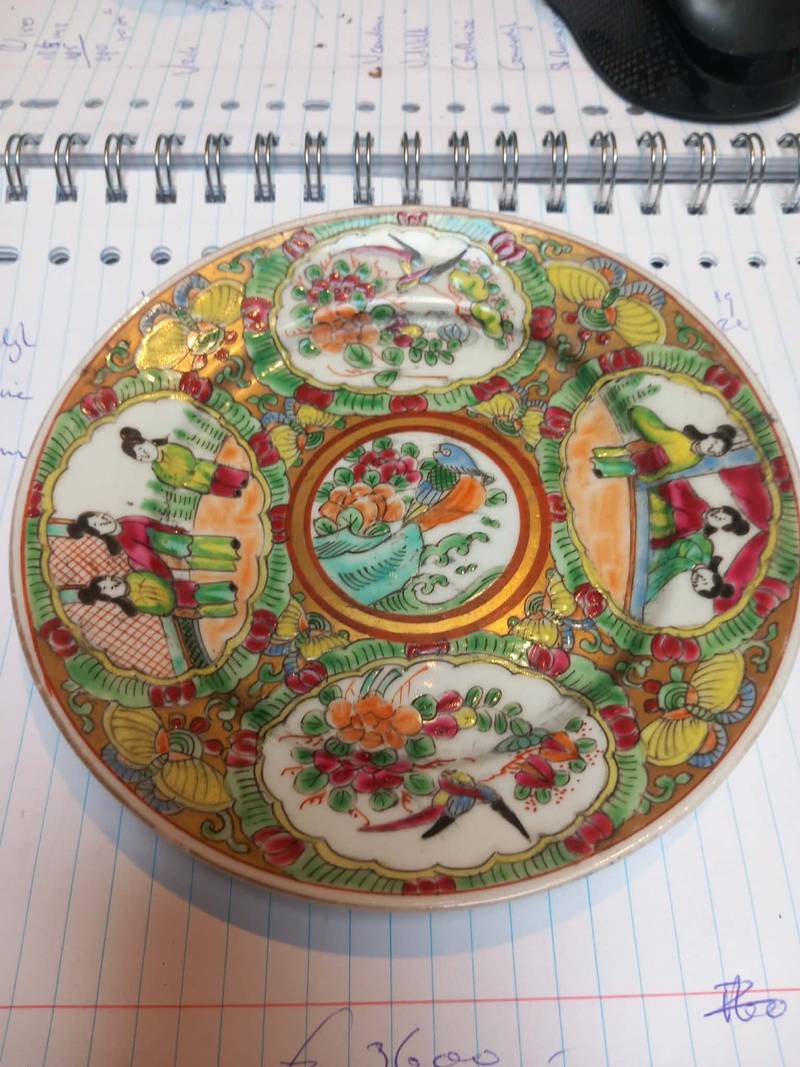
This Chinese export porcelain saucer features the traditional Rose Medallion pattern, characterized by a central medallion containing a bird and peony, surrounded by four alternating reserves. Two reserves depict courtly figures in domestic settings, while the other two display floral motifs with birds and butterflies. The decoration is executed in famille rose enamels over a white porcelain body. The panels are separated by scrolled gold-ground borders enriched with green vines and stylized butterflies. The lack of 'Made in China' or 'Hong Kong' stamps on the undecorated, slightly pitted base suggests a production date in the mid-to-late 19th century, likely during the Tongzhi (1862–1874) or Guangxu (1875–1908) periods.
CROSS-CULTURAL PARALLELS
Where This Object Echoes
The 'Chinoiserie' trend made such pieces essential components of upper-middle-class display cabinets and tea services.
Ritual & Ceremonial Use
- •Traditional tea service in the American South and New England maritime families, where these pieces were often held as multi-generational heirlooms.
Meaning Through Time
A symbol of wealth and global trade connectivity through the Canton System.
A staple of traditional interior design and a foundational entry point for Chinese porcelain collectors.
PRODUCTION & FIRING
SCARCITY
Typical antique shop fare. Requires some searching but regularly available. This is where most genuine antiques fall.
Typical Characteristics
- Standard antique shop items
- Regularly available
- Moderate collector interest
Confidence Factors
- Base characteristics including pitting and lack of marks align with 19th-century production
- Enamel palette and wear patterns are consistent with authentic export period examples
- Standardized pattern and high production volume of this era make forgeries of individual saucers less common than for larger vases
CERAMICIST'S ASSESSMENT
Ceramics Historian & Kiln Specialist
Identification is high due to the clear diagnostic features of the Rose Medallion pattern and the standard characteristics of the unmarked base, though a hands-on inspection would confirm the exact thinness of the porcelain paste.
KEY EVIDENCE
- 1Orange-peel glaze texture on the reverse is diagnostic of 19th-century Qing Dynasty export wares.
- 2The palette relies heavily on Cassius purple (pink enamel), confirming its place in the famille rose family.
- 3The unglazed footrim shows an 'oily' or slightly greyish tone common in Canton-finished wares.
- 4Lack of post-1891 'China' mark provides a reliable terminus ante quem.
UNCERTAINTIES
- •The gilding wear is heavy, which significantly impacts the value for top-tier collectors.
- •Slight blurring in the background figures may suggest a later, faster production within the 1880-1900 window.
WHAT WOULD IMPROVE CERTAINTY
- →Perform a 'ring test' by tapping the edge with a fingernail; a clear, high-pitched ring indicates no hidden hairline cracks.
- →Inspect the saucer under long-wave UV light to check for invisible professional repairs to the rim.
CONDITION & GRADE
Grading breakdown
Evidence of significant gold wear (30-40% loss) prevents a 'Fine' or 'Near Mint' grade, though the enamel colors remain vibrant and the structural integrity appears sound.
Condition
Significant rubbing and loss to the gilded highlights on the interior border. The footrim shows accumulated surface dirt and minor edge roughness consistent with age, but no major chips or hairlines are visible in the imagery.
CERAMICS MARKET VALUE
Updated: May 11, 2026
Who buys this
Traditionalist interior decorators and entry-level collectors of Chinese export porcelain.
What increases value
- •Vibrancy of the pink and green enamels
- •Absence of rim chips or structural cracks
- •Clarity of the facial features in the figure reserves
What lowers value
- •Extensive gilding loss on the medalion borders
- •Surface scratches from silverware use in the central well
- •Market saturation of isolated saucers without matching cups
What makes top-tier examples
- •High-density decoration ('heavy' Rose Medallion) with minimal white space
- •Intact thick gilding
- •Larger size or unusual lobed rim shapes
Grade & condition
Condition is determined by enamel flake presence, gilding retention, and the presence of 'kiln crawl' or firing flaws.
Rarity & demand
For informational purposes only, not a formal appraisal.
ABOUT CERAMICS & POTTERY
Pottery, porcelain, stoneware, earthenware, and kiln-fired objects.
Ceramics & Pottery value and rarity guideSHARE THIS CURIOSITY
Have your own curiosities to discover?
Scan Your Curiosity
COMMENTS