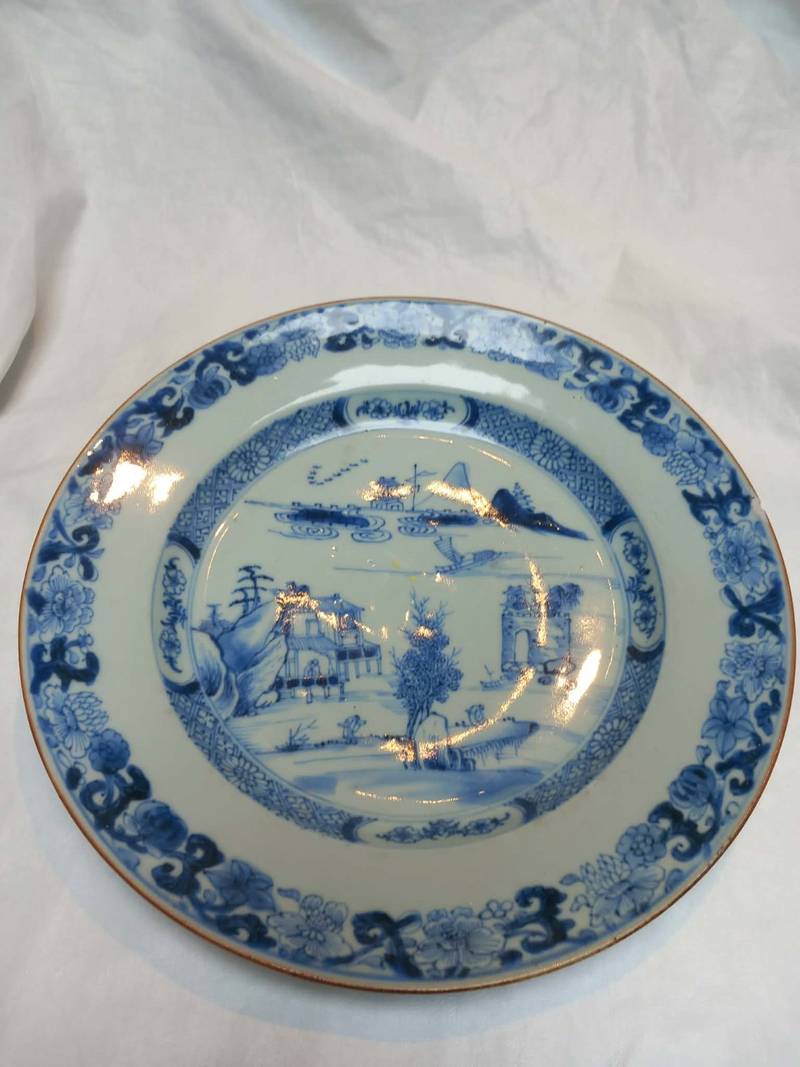
Chinese Export Porcelain Nanking Style Blue and White Plate
Estimated value
$150 - $350Rarity
Average(4/10)Category
Ceramics & PotteryEra
Late 18th Century (circa 1770-1790)Origin
ChinaAuthenticity
CHINESE EXPORT PORCELAIN NANKING STYLE BLUE AND WHITE PLATE: IDENTIFICATION
A hand-painted cobalt blue underglaze porcelain plate featuring a classic river landscape scene. The central medallion depicts a pagoda, mountains, and a sampan boat, surrounded by a diaper-patterned cavetto and a wide floral-and-scroll border on the rim. The reverse reveals three simple hand-drawn floral sprigs and a characteristic unglazed, iron-red tinted footrim.
CROSS-CULTURAL PARALLELS
Where This Object Echoes
Directly inspired the 'Willow Pattern' developed by Thomas Minton around 1780
Ritual & Ceremonial Use
- •Elaborate dinner party services in 18th-century colonial American and European merchant households
Meaning Through Time
Luxury status symbol and evidence of participation in global trade
Classical design staple and historical artifact representing East-West exchange
PRODUCTION & FIRING
Produced in Jingdezhen during the Qianlong period (1736-1795) specifically for the Western market, this 'Nanking' pattern became a staple of Chinese Export trade. The use of cobalt 'blue and white' was highly prized in 18th-century Europe and America before the widespread success of English transferware inspired by these very designs.
SCARCITY
Typical antique shop fare. Requires some searching but regularly available. This is where most genuine antiques fall.
Typical Characteristics
- Standard antique shop items
- Regularly available
- Moderate collector interest
Confidence Factors
- Unglazed footrim shows correct gritty texture and iron-oxidation typical of 18th-century Jingdezhen kilns
- Brushwork exhibits the fluid, rapid execution seen in period export workshops
- Glaze 'pitting' and iron spots are consistent with period firing techniques
CERAMICIST'S ASSESSMENT
Ceramics Historian & Kiln Specialist
Identification is high based on clear images of the reverse side and footrim, which provide the most diagnostic evidence for dating Chinese export porcelain.
KEY EVIDENCE
- 1Hand-painted cobalt underglaze with visible brush strokes in the landscape
- 2Unglazed, slightly recessed footrim with orange-brown skin from iron in the clay
- 3Presence of 'kiln grit' (small sandy particles) fused into the glaze on the base
- 4Typical 'orange peel' texture to the glaze surface when viewed under oblique light
UNCERTAINTIES
- •None; the piece displays all technical characteristics of a period export landscape plate
WHAT WOULD IMPROVE CERTAINTY
- →Perform a 'tap test' with a fingernail; a clear bell-like ring confirms structural integrity without hidden cracks
- →Conduct a UV light test to check for professional overpainting or invisible restoration on the rim
CONDITION & GRADE
Grading breakdown
Presence of 'pinholes' and kiln debris is a natural manufacturing artifact of the period rather than damage; no visible hairline cracks or significant rim fritting observed.
Condition
Significant kiln grit and iron spots visible in the central landscape. The footrim shows expected abrasive wear and minor chipping consistent with 200+ years of domestic use.
CERAMICS MARKET VALUE
Updated: May 11, 2026
Who buys this
Collectors of 18th-century maritime history and Chinese Export porcelain specialists.
What increases value
- •Condition of the rim, specifically the lack of 'fritting' or large chips
- •Completeness of the central landscape composition
- •Presence of the café-au-lait rim line
What lowers value
- •Hidden hairline cracks visible only under UV/transmitted light
- •Staining or discoloration from old food oils seeping into kiln pinholes
What makes top-tier examples
- •Larger size (platters over 12 inches)
- •Vivid, deep cobalt 'inky' blue color
- •Rare features like armorial crests in the center
Grade & condition
Absence of chips, cracks, and the amount of surface scratching from cutlery.
Rarity & demand
For informational purposes only, not a formal appraisal.
ABOUT CERAMICS & POTTERY
Pottery, porcelain, stoneware, earthenware, and kiln-fired objects.
Ceramics & Pottery value and rarity guideSHARE THIS CURIOSITY
Have your own curiosities to discover?
Scan Your Curiosity
COMMENTS