Impressionistic Street Scene with Figures
QUICK FACTS
Categories
Era
c. 1900-1950
Origin
🌍 International
Artist/Maker
Jan Rijslaardam
Rarity
Average (4/10)
Discovered
Feb 3, 2026
3 weeks ago
DESCRIPTION
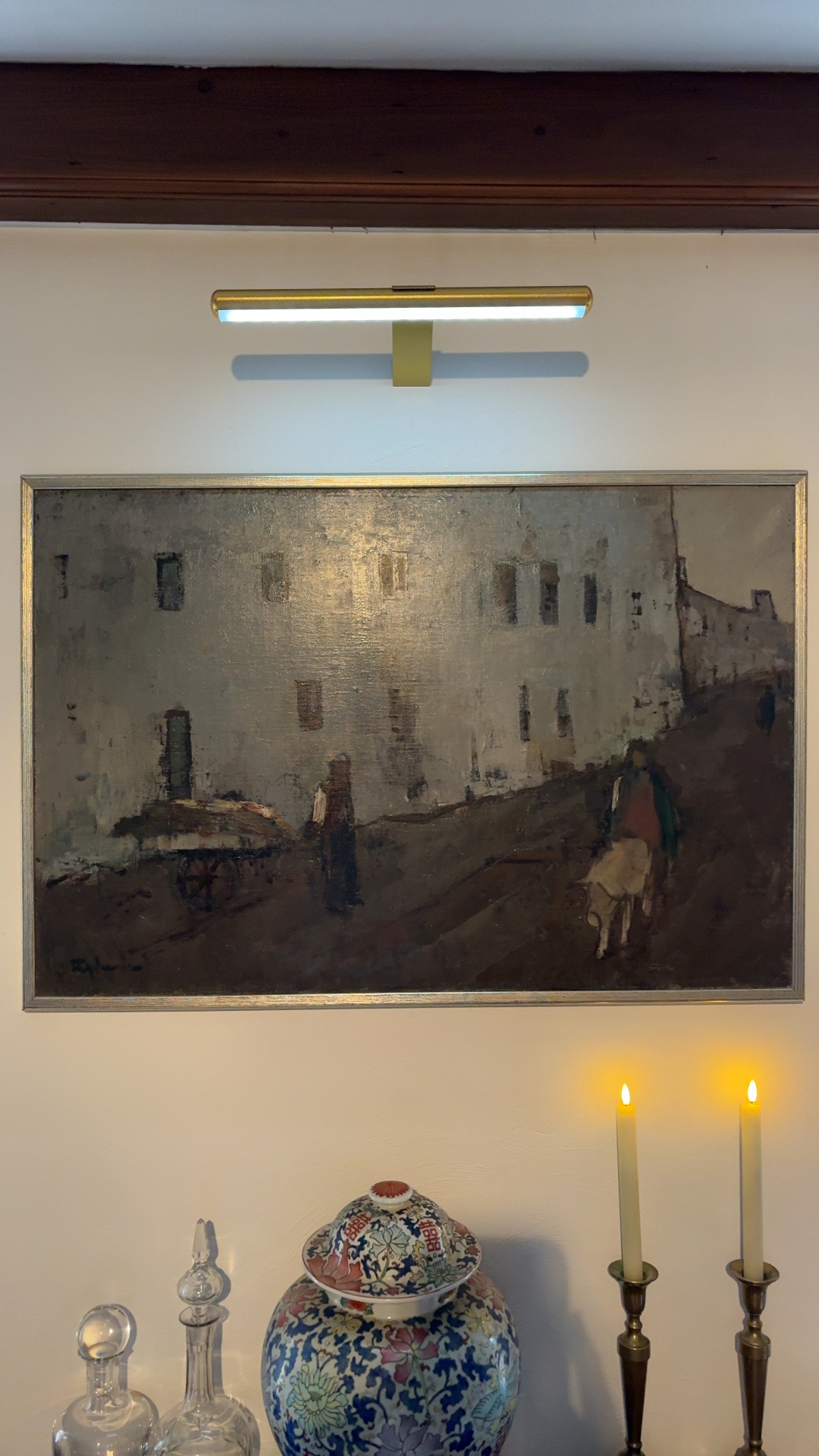
This is an oil painting depicting a muted street scene, likely in a European town or village, characterized by a rough, impasto brushwork. The composition features a prominent light-colored building with multiple windows on the left, contrasting with a darker, more textured foreground and right side. Figures, including one with what appears to be a burro or donkey, populate the street, suggesting daily life. The overall impression is one of atmosphere and mood over detailed realism, aligning with impressionistic or post-impressionistic sensibilities.
CULTURAL ECHOES
Where This Object Echoes
The emphasis on capturing the momentary effect of light and atmosphere, loose brushwork, and everyday subject matter aligns with movements prevalent in late 19th and early 20th century European art.
While not strictly a Goya work, the depiction of common people and street life could loosely echo themes in Spanish 'costumbrismo' art, which often represented local customs and everyday life, though the style is distinctly different from Goya's.
Ritual & Ceremonial Use
- •The artwork serves as a decorative focal point in a domestic setting, inviting contemplation and adding an aesthetic dimension to the living space.
- •Collecting art of this style often participates in the ritual of discovering and preserving cultural heritage, reflecting personal taste and an appreciation for traditional painting techniques.
Meaning Through Time
Street scenes like this were seen as reflections of modern life, capturing the essence of urban or rural environments as dynamic, living spaces, contrasting with more idealized or historical subjects.
Such paintings are appreciated for their aesthetic value, historical charm, and often evoke a sense of nostalgia for simpler times or picturesque European locales.
HISTORICAL STORY
DID YOU KNOW?
While not readily identifiable, the signature 'E. Goya' at the lower left might refer to a lesser-known artist, or it could be a reference to a 'follower of Goya' given the stylistic distance from Francisco Goya's known works.
Many artists from the late 19th and early 20th centuries across Europe explored similar townscape themes, capturing the unique character of their local environments, which often makes precise geographical identification challenging without further clues.
MATERIAL & CONDITION
Surface
The canvas exhibits a considerable amount of impasto, particularly in the rendition of the building and the ground, suggesting a substantial application of oil paint. The brushstrokes are loose and visible, contributing to the atmospheric quality. There appears to be some surface grime and possible minor flaking or cracking of the paint in areas, consistent with age.
Weight & Feel
Given its size and the apparent thickness of paint, the framed artwork would likely feel moderately heavy, suggesting a wooden stretcher and a decent quality canvas.
Condition
The painting appears to be in fair to good condition for its age, exhibiting some minor surface irregularities and what might be craquelure, particularly visible in the darker areas. A small area of possible damage or flaking is noticeable near the bottom center. The frame exhibits some wear consistent with handling over time.
RARITY ANALYSIS
Typical antique shop fare. Requires some searching but regularly available. This is where most genuine antiques fall.
Typical Characteristics
- Standard antique shop items
- Regularly available
- Moderate collector interest
EXPERT ANALYSIS
Museum-Trained Art Historian
Confidence is good for the medium, general style, and era based on visual characteristics. However, the lack of clear, identifiable provenance markers and the ambiguous signature reduce confidence in specific attribution.
KEY EVIDENCE
- 1The painting is executed in oil on canvas, indicated by the visible weave and paint texture.
- 2The brushwork is loose and impressionistic, with thick impasto, particularly on the building.
- 3A signature, possibly 'E. Goya', is visible in the lower left corner.
- 4The subject matter is a European-style street scene with figures, typical of genre painting during the early to mid-20th century.
UNCERTAINTIES
- •The signature is unclear and does not immediately correspond to a widely known artist. Without further research, definitive attribution is not possible.
- •The apparent cracking or flaking in some areas warrants closer inspection for past restorations or stability concerns.
WHAT WOULD IMPROVE CERTAINTY
- →A high-resolution photograph of the signature for clearer analysis and comparison to known artist signatures.
- →Photographs of the reverse of the canvas and stretcher for any labels, stamps, or inventory numbers.
- →A UV light examination to detect any old repairs, overpainting, or restoration work.
- →Physical inspection by a qualified conservator to assess the stability of the paint layer and overall condition.
- →Research into obscure artists named 'Goya' or 'E. Goya' who worked in a similar style during the period.
ESTIMATED VALUE
Updated: Feb 27, 2026
- Market comparables from auctions & retail
- Condition, completeness & craftsmanship
- Current collector demand & trends
- Low = quick sale, high = patient seller
For informational purposes only, not a formal appraisal.

SHARE THIS CURIOSITY
Have your own curiosities to discover?
Scan Your Curiosity
COMMENTS
No comments yet. Be the first to share your thoughts!
Sign in to leave a comment