Figurative Sculpture of Woman on Bicycle
QUICK FACTS
Categories
Era
Late 20th to Early 21st Century
Origin
null
Brand
null
Artist/Maker
null
Rarity
Uncommon (5/10)
Discovered
Jan 11, 2026
1 months ago
DESCRIPTION
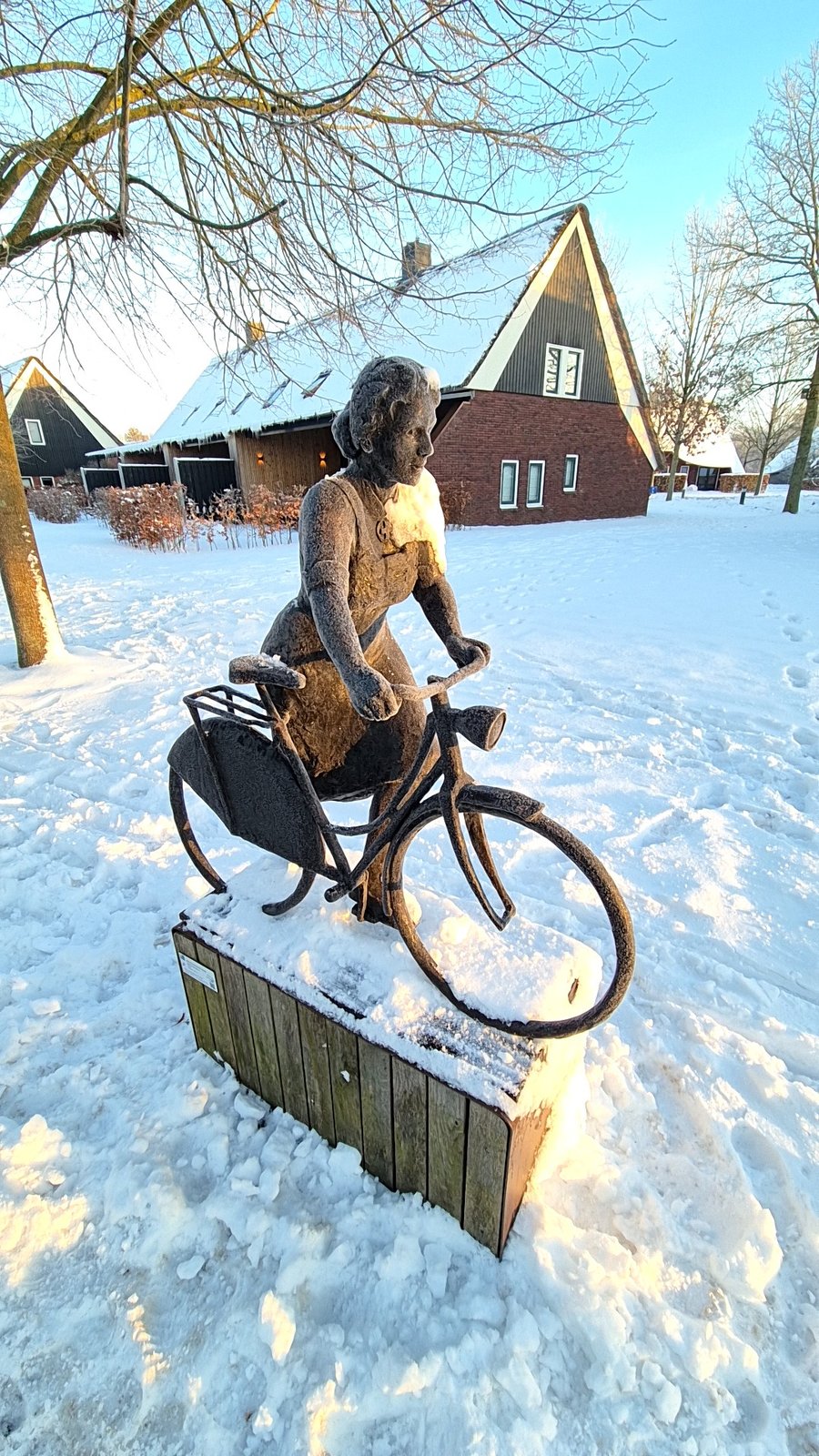
This appears to be a figurative bronze sculpture depicting a woman riding a bicycle. The style is notably naturalistic, capturing a moment in motion, perhaps a daily commute or a leisurely ride. The surface exhibits a textured, somewhat weathered patina, consistent with an outdoor installation exposed to elements, here notably covered in a dusting of snow.
CULTURAL ECHOES
Where This Object Echoes
Figurative sculptures depicting everyday life, historical figures, or local traditions are common in European public spaces, often serving as cultural markers or points of interest.
The naturalistic depiction of a common person engaged in a mundane activity aligns with elements of social realism, which often aims to portray ordinary life and people with authenticity.
Ritual & Ceremonial Use
- •The placement of such sculptures in public spaces often integrates them into the daily routines of a community, becoming subjects for local folklore, meeting points, or even seasonal decoration (as seen here with snow).
Meaning Through Time
The bicycle symbolized burgeoning personal freedom and social change, especially for women, offering mobility and independence from traditional constraints.
For many, the bicycle evolved from a symbol of freedom to a prosaic mode of transport, yet it retains an enduring charm and connection to active, environmentally conscious living.
HISTORICAL STORY
DID YOU KNOW?
Many bronze sculptures, especially those displayed outdoors, develop a natural patina over time due to oxidation, which can range in color from green to brown and is often intentionally encouraged by artists for aesthetic and protective purposes.
The bicycle, a symbol of liberation and progress, particularly for women, has been a recurring motif in art and public sculpture since its popularization in the late 19th and early 20th centuries.
MATERIAL & CONDITION
Surface
The sculpture's surface is heavily textured, providing a tactile quality that suggests the hand of the artist in its molding or casting. There is a dark, likely natural, bronze patina visible where the snow has not completely adhered, indicating outdoor exposure and age. The fine adherence of frost highlights every minute detail of the surface.
Weight & Feel
Given its material and size, this sculpture would be quite substantial, likely weighing several hundred pounds, requiring specialized equipment for transport and installation.
Condition
The overall condition appears stable, with the patina characteristic of an outdoor bronze sculpture. There are no obvious signs of significant damage, though a closer inspection would be needed to assess any superficial scratches or localized corrosion. The presence of snow makes a full assessment difficult.
RARITY ANALYSIS
Genuine antiques with fewer examples on the market. Named makers, documented provenance, or early production examples.
Typical Characteristics
- Limited production
- Named makers
- Growing collector demand
EXPERT ANALYSIS
Museum-Trained Art Historian
The visual evidence strongly supports the identification as an outdoor bronze figurative sculpture from a contemporary period. Confidence is high regarding material and general style, but moderate concerning specific attribution due to the absence of clear marks in the provided images.
KEY EVIDENCE
- 1Material appears to be bronze, noted by the dark, weathered patination.
- 2Figurative subject matter of a woman on a bicycle, rendered naturalistically.
- 3Textured surface detailing suggests a direct casting process, possibly sand casting or lost-wax method.
- 4The sculpture is clearly a public art installation, indicated by its scale and outdoor setting on a plinth.
UNCERTAINTIES
- •Lack of visible artist signature or foundry marks, which would aid in attribution and dating.
- •The presence of snow obscures fine surface details, making a full condition assessment challenging from images alone.
WHAT WOULD IMPROVE CERTAINTY
- →Obtain clear, close-up photographs of the sculpture's base and any potential areas for a signature or foundry mark.
- →Inquire about local public art registries or community records for commissioning details.
- →If accessible, inspect the sculpture for any plaques or labels on the plinth that might provide artist or foundry information.
ESTIMATED VALUE
Updated: Feb 26, 2026
- Market comparables from auctions & retail
- Condition, completeness & craftsmanship
- Current collector demand & trends
- Low = quick sale, high = patient seller
For informational purposes only, not a formal appraisal.
SHARE THIS CURIOSITY
Have your own curiosities to discover?
Scan Your Curiosity
COMMENTS
No comments yet. Be the first to share your thoughts!
Sign in to leave a comment