Contemporary Dichroic Grid Sculpture, Attributed to Paolo Pio Paterno
QUICK FACTS
Type
Museum Object
Categories
Era
c. 2015-2025
Origin
🇺🇸 United States
Artist/Maker
Paolo Pio Paterno
Rarity
Scarce (6/10)
Discovered
Jan 25, 2026
1 months ago
DESCRIPTION
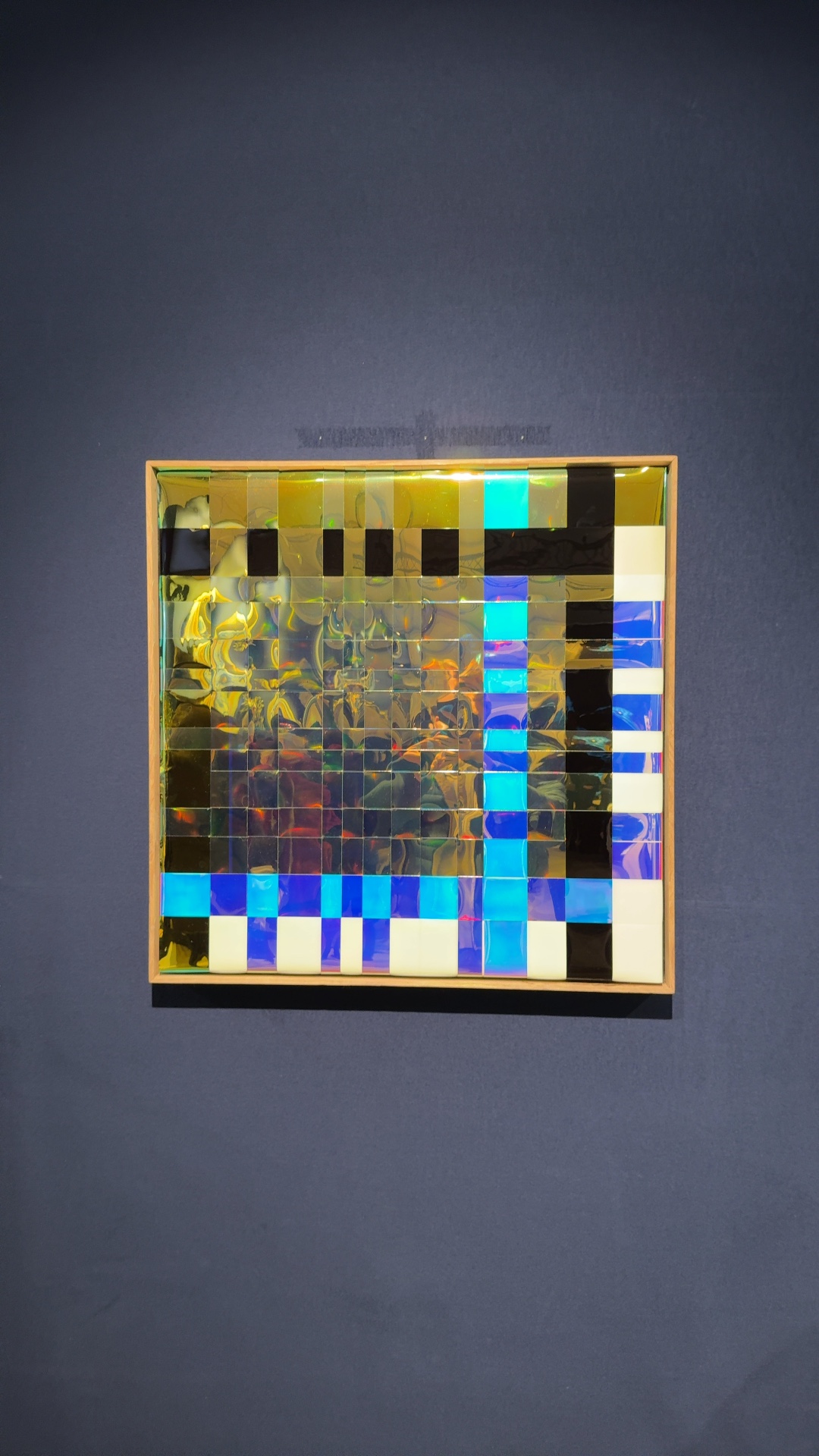
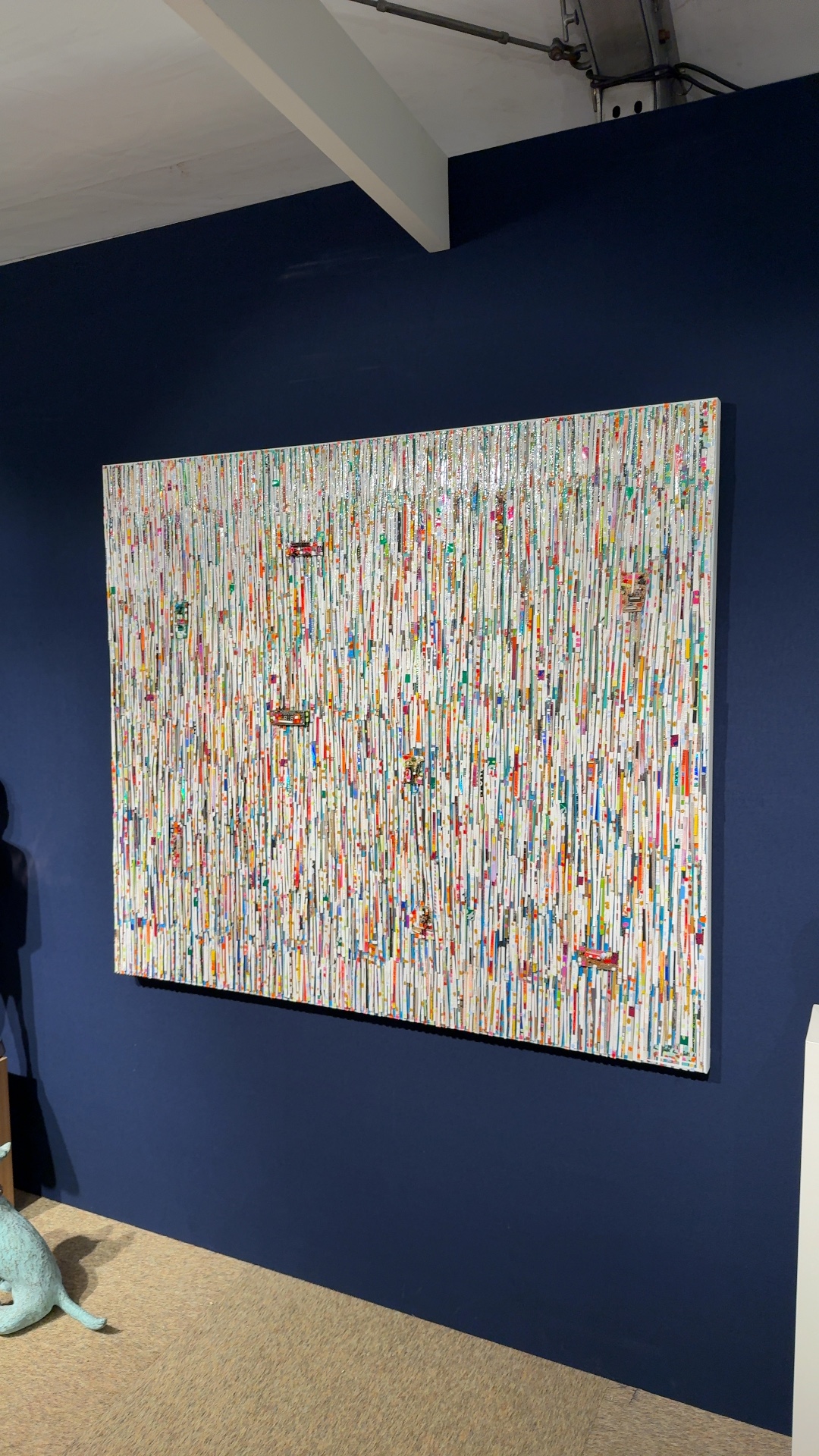
This is a sophisticated contemporary wall sculpture, characteristic of the 'Spectrum' series by the Los Angeles-based artist Paolo Pio Paterno. The work is an exemplar of process-driven, geometric abstraction. It consists of a precise grid of thermoformed plastic tiles, many of which are coated with a dichroic film. This industrial material, combined with the underlying geometry of the grid, creates a dynamic tension between rigid structure and fluid, perceptual phenomena. The work is not static; its chromatic character shifts from warm golds and oranges to cool cyans and magentas based entirely on the viewer's position and the ambient light. It is a piece that demands interaction and rewards close viewing.
CULTURAL ECHOES
Where This Object Echoes
Artists in 1960s Southern California explored perception using new industrial materials like glass and resin to manipulate light, volume, and color, a direct precursor to this work's methodology.
A movement focused on creating optical illusions of movement and vibration through precise geometric compositions. This work's grid and disorienting reflections fit squarely in that tradition.
The work's strict grid format and interplay of color recall the abstract textile designs of artists like Anni Albers, who explored the structural and aesthetic possibilities of the warp and weft.
Ritual & Ceremonial Use
- •The 'slow look' in a gallery setting, where the viewer must physically move and change position to fully experience the work's shifting colors and fractured reflections, turning viewing into a performative act.
Meaning Through Time
The grid symbolized rationality, order, and utopian structure, as seen in the work of Piet Mondrian.
The grid becomes synonymous with the pixel, the screen, and the structure of digital information, forming our primary visual interface with the world.
In this work, the grid acts as a container for fluid, almost chaotic optical phenomena, creating a dialogue between rigid order and dynamic flux.
HISTORICAL STORY
DID YOU KNOW?
The shimmering, color-shifting material is dichroic film, a technology originally developed by NASA in the 1960s for use in astronaut helmet visors and satellite mirrors.
Though appearing highly technical, each pillow-like tile in works of this type is often individually heated and shaped by the artist in a process called thermoforming.
MATERIAL & CONDITION
Surface
The surface is a mosaic of specular, glossy tiles. Many exhibit a pronounced dichroic effect, with shifting chromaticity across their convex forms, while others provide a stable counterpoint in solid black or white. The overall effect is one of fractured, luminous reflection.
Weight & Feel
Moderately substantial for its size, designed for secure wall-mounting. Likely constructed on a stable backer board, giving it a solid, well-crafted feel.
Condition
From the images, the work appears to be in excellent, gallery-ready condition. The fragile, highly reflective surfaces show no visible scuffs, scratches, or delamination, which is critical for a piece whose value is tied to its optical perfection.
RARITY ANALYSIS
Genuinely harder to find. Perhaps only dozens come to market annually. Collectors actively watch for these pieces.
Typical Characteristics
- Dozens per year at market
- Documented provenance valued
- Active collector pursuit
EXPERT ANALYSIS
Museum-Trained Art Historian
Confidence is strong because the combination of materials, construction technique (thermoformed dichroic tiles), and visual language are highly specific and align perfectly with Paolo Pio Paterno's well-documented 'Spectrum' series. The lack of a visible signature or provenance prevents near-certainty.
KEY EVIDENCE
- 1Precise grid of individually thermoformed tiles, creating a 'pillowed' surface.
- 2Systematic use of dichroic film to create shifting color fields based on viewing angle.
- 3The aesthetic and technique are highly characteristic of the 'Spectrum' series by artist Paolo Pio Paterno.
- 4The work clearly engages with the historical legacies of Op Art and the Light and Space movement.
- 5The simple, light-colored wood strip frame is a typical finishing choice for this artist.
- 6The combination of solid black/white tiles with dichroic tiles is a recurring compositional strategy in Paterno's work.
UNCERTAINTIES
- •Attribution is entirely stylistic and requires confirmation, as no signature or documentation is visible.
- •The reverse of the artwork has not been examined for gallery labels, inventory numbers, or an artist's signature.
WHAT WOULD IMPROVE CERTAINTY
- →Photograph the reverse of the artwork for a signature, date, title, or gallery labels.
- →Measure the precise dimensions (height, width, depth) of the work.
- →If a signature or title is found, research it in the artist's catalogue raisonné or gallery archives.
- →Contact a contemporary art gallery that represents Paolo Pio Paterno to confirm the attribution.
ESTIMATED VALUE
Updated: Feb 27, 2026
- Market comparables from auctions & retail
- Condition, completeness & craftsmanship
- Current collector demand & trends
- Low = quick sale, high = patient seller
For informational purposes only, not a formal appraisal.

SHARE THIS CURIOSITY
Have your own curiosities to discover?
Scan Your Curiosity
COMMENTS
No comments yet. Be the first to share your thoughts!
Sign in to leave a comment