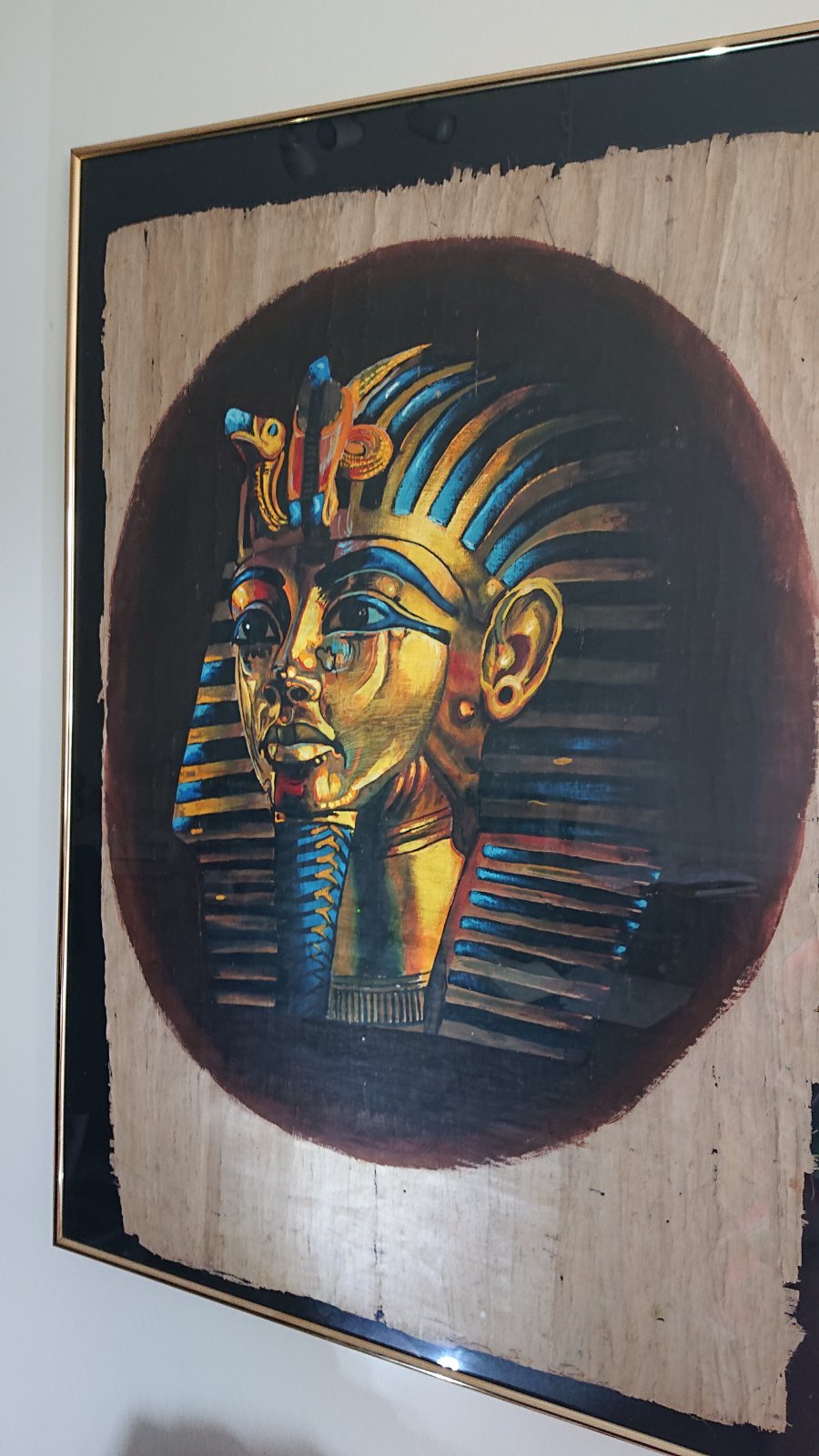
Contemporary Papyrus Painting of Tutankhamun's Mask
QUICK FACTS
Categories
Era
c. 2000
Origin
🇪🇬 Egypt
Artist/Maker
unsigned artist
Rarity
Average (4/10)
Discovered
Mar 1, 2026
Today
DESCRIPTION
This appears to be a contemporary painting on papyrus, likely utilizing traditional Egyptian iconography, specifically the iconic golden burial mask of Tutankhamun. The artwork depicts the pharaoh's stylized golden face with the distinctive blue and gold striped nemes headdress, featuring the uraeus (cobra) and vulture symbols. The execution is vibrant, with bold colors and a somewhat abstract, expressive rendering of the metallic sheen and details. The papyrus substrate, with its visible fibrous texture, provides an authentic, ancient feel to what is a modern artistic interpretation.
CULTURAL ECHOES
Where This Object Echoes
The central motif, Tutankhamun's death mask, is a direct homage to the artistry and religious significance of funerary art from the New Kingdom period.
The enduring global fascination with ancient Egypt has led to countless interpretations and reproductions of its iconic imagery in art and decorative objects since the 18th century, particularly after archeological discoveries.
Meaning Through Time
The mask of Tutankhamun was part of the deceased pharaoh's burial rites, a sacred object meant to preserve his identity in the afterlife and channel his divine power.
The mask became a global symbol of ancient Egyptian mystique, wealth, and sophisticated artistry, widely reproduced as art, decorative items, and commercial products.
HISTORICAL STORY
DID YOU KNOW?
The golden mask of Tutankhamun, depicted here, is one of the most famous artifacts from ancient Egypt, crafted from solid gold and inlaid with various semi-precious stones and glass paste to represent the pharaoh's divinity.
Papyrus, the 'paper' of ancient Egypt, is made from the pith of the papyrus plant, sliced into thin strips, soaked, pressed, and dried, creating a durable and unique surface for writing and drawing.
MATERIAL & CONDITION
Surface
The painting is executed on a papyrus sheet, characterized by its naturally variegated, fibrous, and somewhat irregular surface, indicating the handcrafted nature of the substrate. The colors appear vibrant and glossy in areas, suggesting acrylic or oil paints, with some textural buildup visible in the gold and blue elements.
Weight & Feel
Due to its papyrus base and framing, the object would be relatively lightweight. The papyrus itself is insubstantial, but the frame would add a modest amount of heft, making it easy to handle and hang.
Condition
The visual evidence supports the 'Mint' condition claim, with no obvious signs of tearing, staining, fading, or damage to the papyrus or the painted surface. The framing appears intact and protective.
RARITY ANALYSIS
Typical antique shop fare. Requires some searching but regularly available. This is where most genuine antiques fall.
Typical Characteristics
- Standard antique shop items
- Regularly available
- Moderate collector interest
EXPERT ANALYSIS
Cabinet of Curiosities Generalist
Confidence is high based on the clear visual evidence of papyrus as the medium, the style consistent with modern Egyptian decorative art, and the specific user context provided regarding its purchase and era.
KEY EVIDENCE
- 1Visible fibrous texture of the papyrus substrate, indicating authenticity of the medium.
- 2Artistic style consistent with modern interpretive renderings of ancient Egyptian motifs, often found in Egyptian galleries.
- 3Framing appears contemporary and protective, supporting its display as a finished artwork.
- 4Iconography is clearly that of Tutankhamun's death mask, a popular subject for Egyptian art and souvenirs.
UNCERTAINTIES
- •Without closer inspection of the papyrus itself, it's difficult to ascertain specific age-related characteristics of the material beyond its general type.
WHAT WOULD IMPROVE CERTAINTY
- →A high-resolution macro shot of the papyrus fibers to better assess its composition and potential aging characteristics.
- →A close-up image of any hidden markings or gallery stickers on the back of the frame, which might offer further provenance details.
- →If possible, examination out of the frame could reveal further material details or signatures on the edges of the papyrus.
ESTIMATED VALUE
Updated: Mar 1, 2026
- Market comparables from auctions & retail
- Condition, completeness & craftsmanship
- Current collector demand & trends
- Low = quick sale, high = patient seller
For informational purposes only, not a formal appraisal.
CONTEXT ANALYSIS
How your provided context compares with Curiosa.com scanner findings.
What Aligned
- The visual evidence strongly aligns with the user's belief that it is an 'Original/Authentic' painting, appearing hand-painted on genuine papyrus.
- The aesthetic and likely production location are consistent with an 'Origin/Language: Egypt'.
- The 'Time Period: around year 2000' is credible given the style of painting and common practices for producing such art.
- The 'Condition: Mint' is visually supported, as the artwork appears well-preserved within its frame.
- The user's note about its purchase 'in a real art gallery in Egypt around year 2000 for a price of 400 $' provides valuable context for both origin and initial value.
SHARE THIS CURIOSITY
Have your own curiosities to discover?
Scan Your Curiosity
COMMENTS
No comments yet. Be the first to share your thoughts!
Sign in to leave a comment