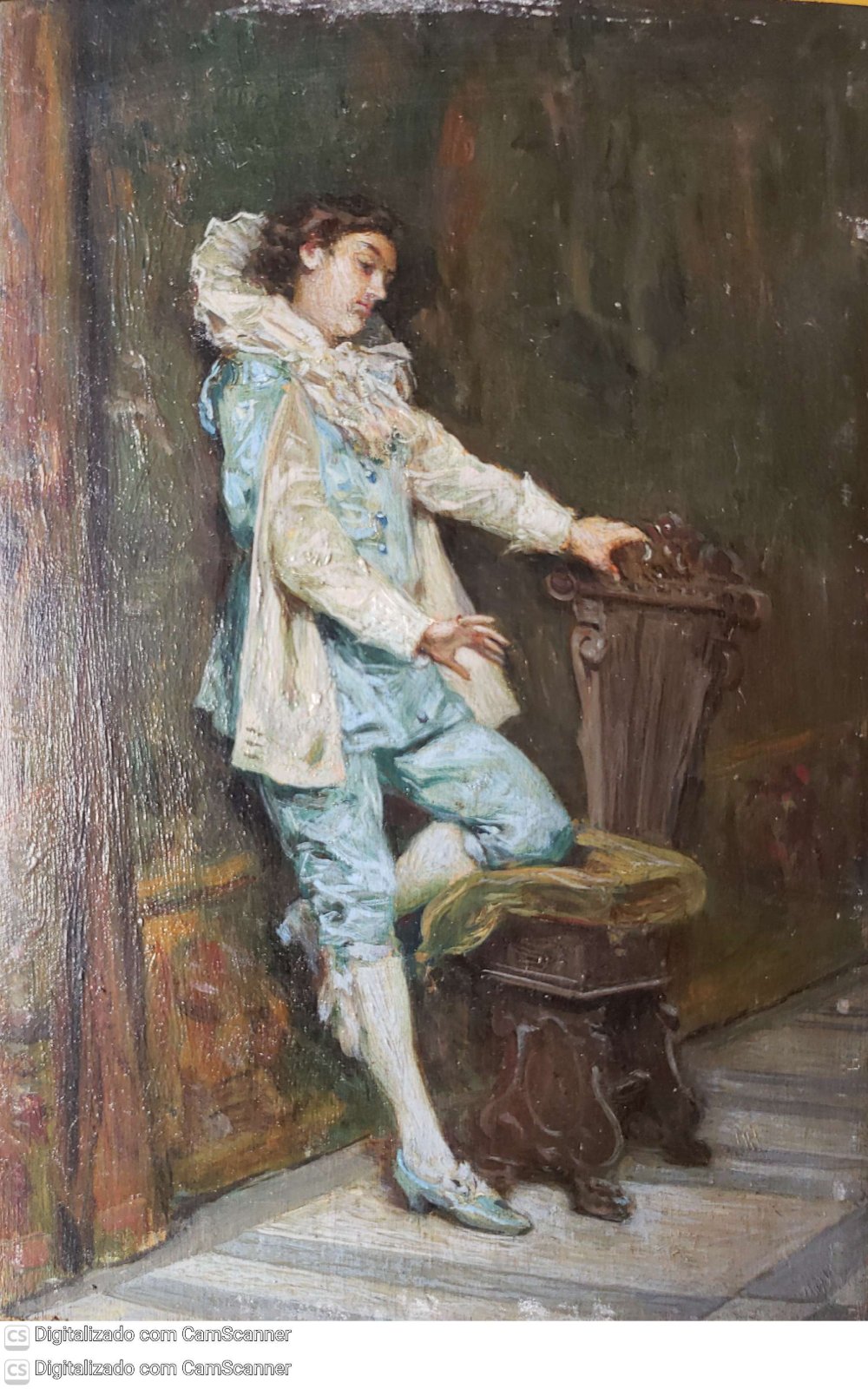
Portrait of a Man in 18th-Century Attire
QUICK FACTS
Categories
Era
Late 19th - Early 20th Century
Origin
🌍 International
Rarity
Average (4/10)
Discovered
Feb 20, 2026
1 weeks ago
DESCRIPTION
This is an oil painting depicting a young man in what appears to be late 18th-century fashion, characterized by the frilled cravat, powdered wig (implied by the style), and pastel blue suit with knee breeches. The figure is rendered with a loose, painterly hand, focusing on capturing the light and texture of the clothing. The composition suggests a sentimental or romanticized approach to historical portraiture, a common theme in 19th-century salon painting.
CULTURAL ECHOES
Where This Object Echoes
The costume and romanticized air echo the portraits and genre scenes of 18th-century French artists like Watteau and Fragonard, albeit filtered through a later artistic lens.
The interest in historical costume and sentimental narrative was a recurring theme in European academic painting during these periods.
Ritual & Ceremonial Use
- •The practice of 'fancy dress' balls or costumed portraiture, popular in various social strata, which celebrated historical romanticism.
- •The tradition of collecting and displaying paintings that evoke a sense of history, romance, and artistic skill in domestic settings.
Meaning Through Time
The attire would have signified status, contemporary fashion, and occasionally, specific social roles within aristocratic circles.
When this painting was likely created, the costume would have evoked nostalgia for a perceived era of elegance and romance, rather than current fashion.
HISTORICAL STORY
DID YOU KNOW?
The 'Rococo Revival' in the 19th century saw a resurgence of interest in 18th-century art, fashion, and interiors, influencing artists like those who might have painted this piece.
Loose, expressive brushwork, as seen in this painting, became a hallmark of academic realism and even early impressionism, suggesting a painterly technique popular around the turn of the 20th century.
MATERIAL & CONDITION
Surface
The surface exhibits impasto brushwork, particularly noticeable in the whites of the cravat and the texture of the clothing, indicating an oil medium. There's a subtle craquelure pattern visible in the darker areas, consistent with the aging of oil paint.
Weight & Feel
Likely of moderate weight, typical for an oil painting on canvas or panel, depending on the support chosen.
Condition
The painting shows signs of age, including accumulated surface dirt and potential discoloration of the varnish layer. Minor abrasions or paint losses are visible along the edges and in the upper portions, with some surface irregularities and possibly a small tear or dent in the upper right. The canvas appears to have some slack.
RARITY ANALYSIS
Typical antique shop fare. Requires some searching but regularly available. This is where most genuine antiques fall.
Typical Characteristics
- Standard antique shop items
- Regularly available
- Moderate collector interest
EXPERT ANALYSIS
Museum-Trained Art Historian
My confidence is good for the period and genre based on stylistic analysis and material indications, but the lack of a visible signature or clear provenance limits a more precise attribution.
KEY EVIDENCE
- 1Loose, visible brushwork characteristic of late 19th/early 20th-century academic or genre painting.
- 2Subject matter of a romanticized historical figure, popular during the Rococo Revival period.
- 3The costume details, particularly the cravat and cut of the coat, point to an 18th-century inspiration.
- 4Visible craquelure and surface patina consistent with an oil painting of this estimated age.
UNCERTAINTIES
- •Absence of a visible signature makes attribution challenging.
- •The support (canvas or panel) is not discernible, affecting a precise dating or manufacturing context.
- •Presence of possible surface abrasions or minor damage.
WHAT WOULD IMPROVE CERTAINTY
- →Examine the reverse of the painting for any labels, stenciled numbers, or inscriptions that might indicate provenance or artist.
- →Utilize UV light examination to detect any overpainting, repairs, or restorations that might affect the value and authenticity.
- →Obtain high-resolution detail shots of potential signature areas and paint quality.
- →Determine the exact medium and support (e.g., oil on canvas, oil on panel) for more precise art historical comparison.
ESTIMATED VALUE
Updated: Feb 27, 2026
- Market comparables from auctions & retail
- Condition, completeness & craftsmanship
- Current collector demand & trends
- Low = quick sale, high = patient seller
For informational purposes only, not a formal appraisal.
SHARE THIS CURIOSITY
Have your own curiosities to discover?
Scan Your Curiosity
COMMENTS (1)
Watteau?
Sign in to leave a comment