Swiss Triple Calendar Skeletonized Pocket Watch
Estimated value
$800 - $2,200Rarity
Scarce(6/10)Category
WatchesEra
Circa 1890-1910Origin
🇨🇭 SwitzerlandAuthenticity
SWISS TRIPLE CALENDAR SKELETONIZED POCKET WATCH: IDENTIFICATION
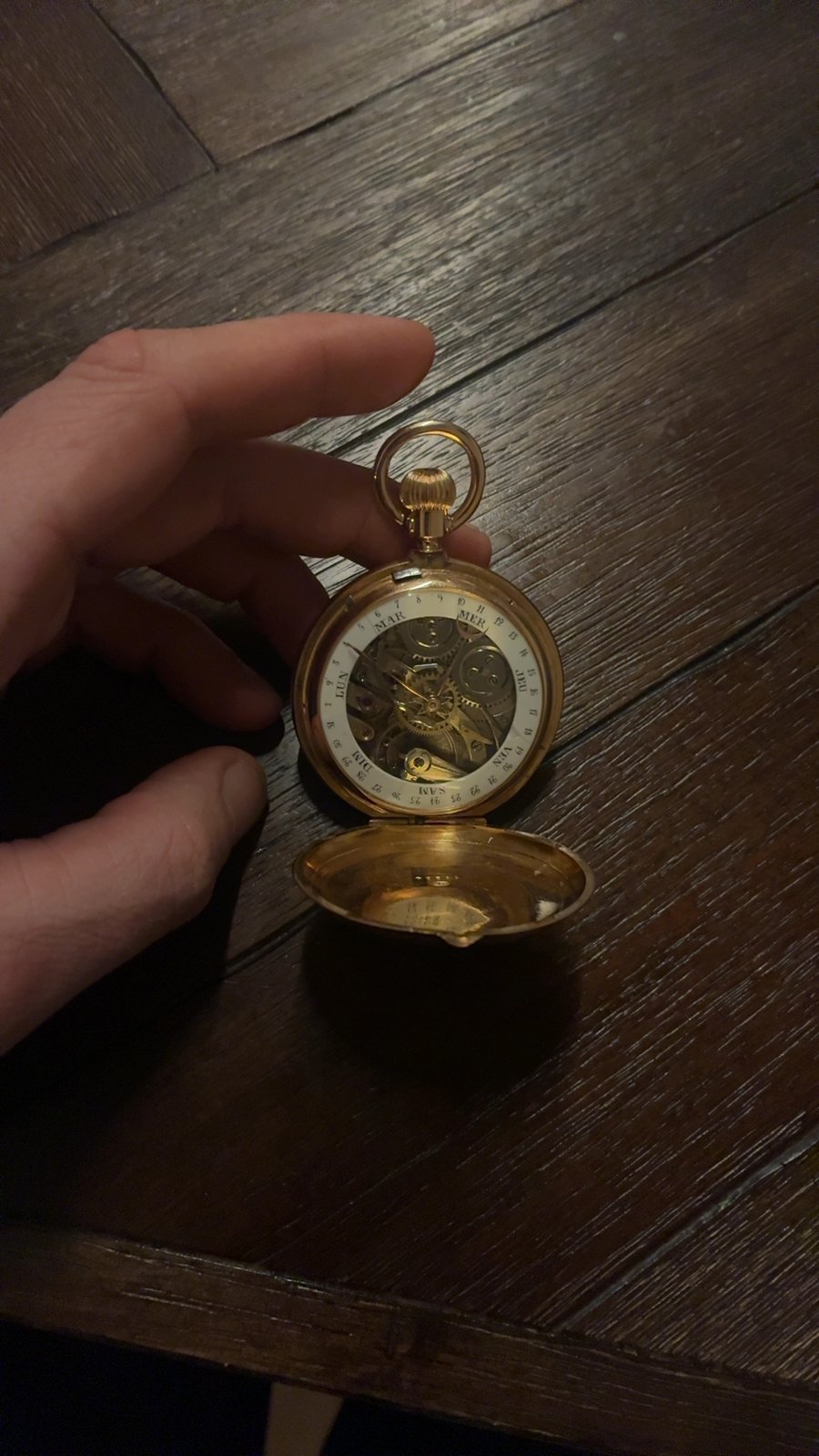
A late 19th-century hunter-cased pocket watch featuring a dual-sided display. The primary face consists of an enamel dial with Roman numerals, Louis XIV-style gold hands, and a small seconds sub-dial at the 3 o'clock position (sideways configuration typical of hunter cases). The reverse features a skeletonized movement visible through a glazed aperture, surrounded by a white chapter ring displaying a triple calendar complication with French day abbreviations (LUN, MAR, MER, JEU, VEN, SAM, DIM) and a 31-day outer date track.
Compare with other watches in the archive: Angus & Coote 'Faithful Lever' Pocket Watch (Elgin Movement) c.1915, Baume & Mercier Geneve Ladies Wristwatch c.1970s, Baume & Mercier Geneva Vintage Square Dress Watch c.1970.
CROSS-CULTURAL PARALLELS
Where This Object Echoes
The movement toward 'demonstrator' or skeletonized objects mirrored the public's obsession with visible engineering, similar to the ironwork of the Eiffel Tower (1889).
Ritual & Ceremonial Use
- •Traditional gift for military officers or professionals requiring precise date tracking before the advent of wristwatches.
Meaning Through Time
Symbol of technocratic status and high social standing.
Horological collectible valued for mechanical transparency and historical craftsmanship.
PRODUCTION & REFERENCE HISTORY
SCARCITY
Genuinely harder to find. Perhaps only dozens come to market annually. Collectors actively watch for these pieces.
Rarity 6/10. Curiosa currently catalogues 1 watches item at rarity 6 or higher.
Typical Characteristics
- Dozens per year at market
- Documented provenance valued
- Active collector pursuit
Confidence Factors
- Construction and screw-head profiles are consistent with late 19th-century Swiss manufacturing
- Patina and wear patterns on the internal gears match the exterior case aging
- Skeletonization was a popular boutique feature during the 1890-1910 period for higher-end complications
WATCHMAKER'S ASSESSMENT
Vintage Watchmaker & Horology Specialist
High confidence in the era and origin due to clear complication layouts and architectural markers, though lack of internal hallmark photos limits definitive brand attribution or metal purity verification.
KEY EVIDENCE
- 1French calendar abbreviations indicate production for the Francophone market.
- 2Skeletonized architecture reveals a standard Swiss lever escapement and bimetallic compensation balance.
- 3Louis XIV hands are period-correct for the late 19th-century Swiss aesthetic.
- 4Sideways sub-dial confirms hunter-case layout (Ref. Christie's 2021 pocket watch survey).
- 5Screw-set jewels and tempered blue screws suggest mid-to-high grade production quality.
UNCERTAINTIES
- •Internal case markings are not clearly visible in photos, preventing confirmation of gold purity (solid vs. gold-filled).
- •The presence of hairlines on the enamel dial significantly impacts value for purist collectors.
WHAT WOULD IMPROVE CERTAINTY
- →Open the inner dust cover (cuvette) to look for maker hallmarks or serial numbers.
- →Perform a non-invasive lift of the movement to check for a brand signature on the pillar plate.
- →Check for karat hallmarks (e.g., 0.585 or 0.750) on the inside of the case lids.
CONDITION & GRADE
Grading breakdown
Enamel hairline cracks and oxidation on the hands prevent a 'Fine' or 'Very Fine' grade, though the movement appears complete and the hinges show correct alignment.
Condition
The enamel dial shows a visible hairline fracture extending from the center toward the 7 o'clock mark. The calendar ring appears clean, but the blueing on the calendar pointer hand shows minor oxidation. The case edges show softening of the original profile, suggesting periodic polishing over the last century.
Weight & feel
Based on a diameter of approximately 50mm, the watch likely weighs between 90g and 110g, conveying a substantial density consistent with high-grade brass plates and a multi-layered case construction.
WATCH MARKET VALUE
Updated: May 11, 2026
Who buys this
Complication collectors and enthusiasts of mechanical transparency (skeletonization) who prioritize visual movement interest over brand name.
What increases value
- •Functionality of the triple calendar complication
- •Condition of the skeletonized movement and engraving quality
- •Gold content of the case (14k/18k vs. gold-filled)
What lowers value
- •Enamel dial hairlines can reduce value by 20-30%
- •Mechanical parts for these early calendars are often custom-made, making repairs expensive
What makes top-tier examples
- •Presence of a Moonphase complication alongside the triple calendar
- •Signed movement by a known maker like Patek Philippe, Vacheron Constantin, or Audemars Piguet
Grade & condition
Smoothness of the calendar advancement mechanism, clarity of the enamel, and crispness of the movement engraving.
Rarity & demand
For informational purposes only, not a formal appraisal.
SIMILAR CURIOSITIES
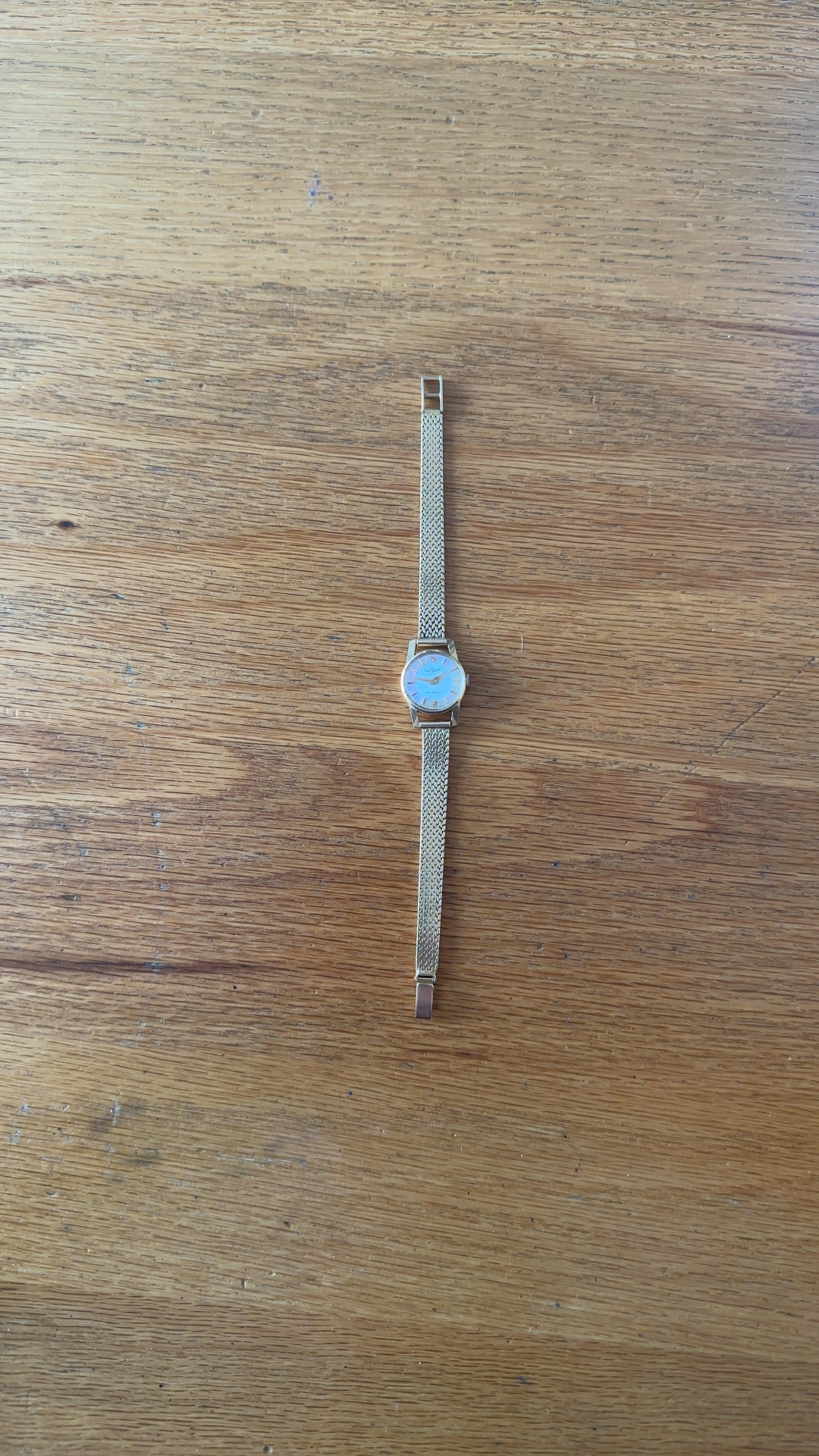
Tavernier 18K Gold Manual Wind Ladies Watch c.1960s

Victorian Heart-Shaped Pendent Watch c.1890

Universa 2000 Sterling Silver Fashion Watch c.1970s
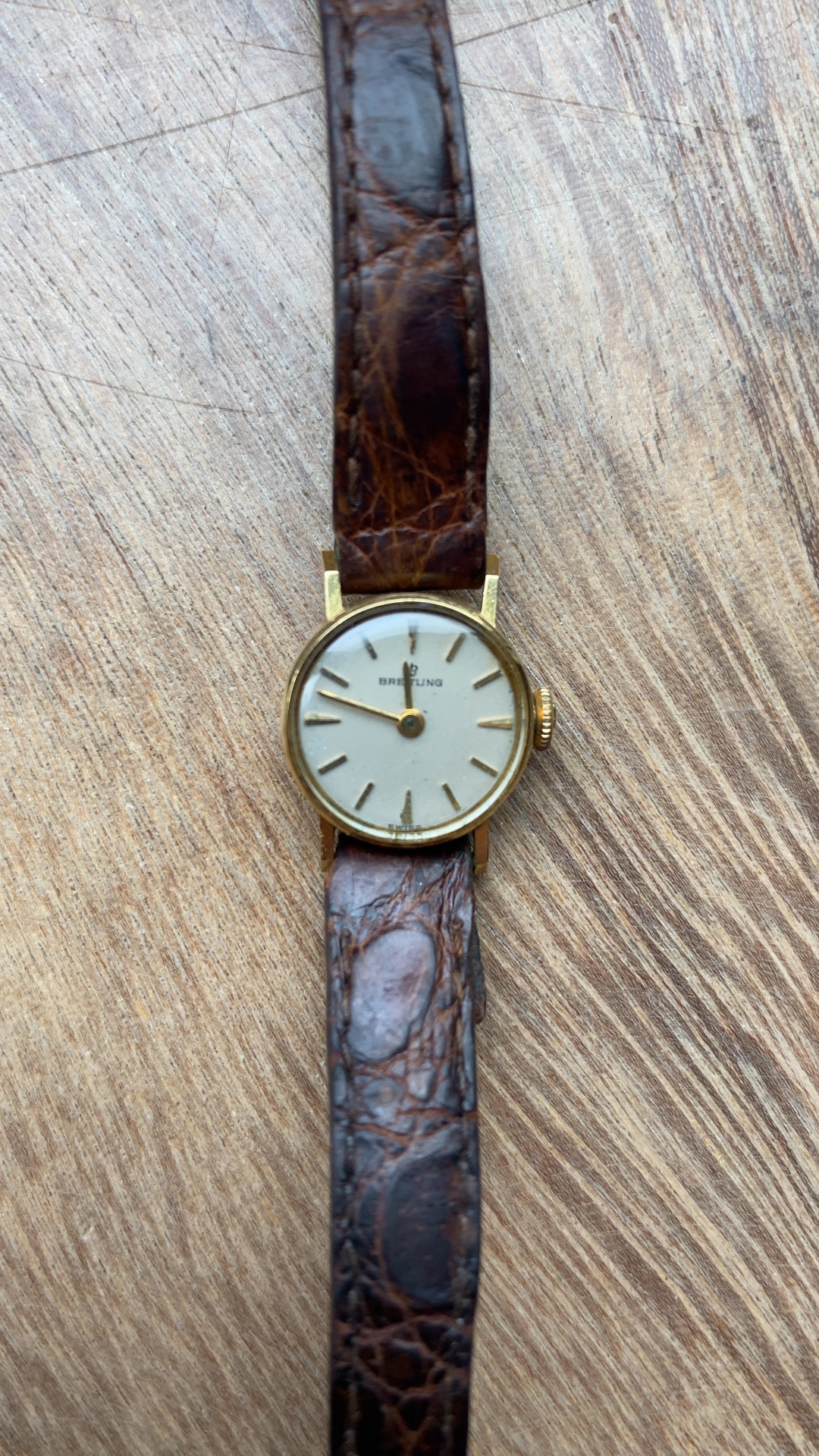
Vintage Breitling Ladies Cocktail Watch in 18K Yellow Gold Ref. 5605
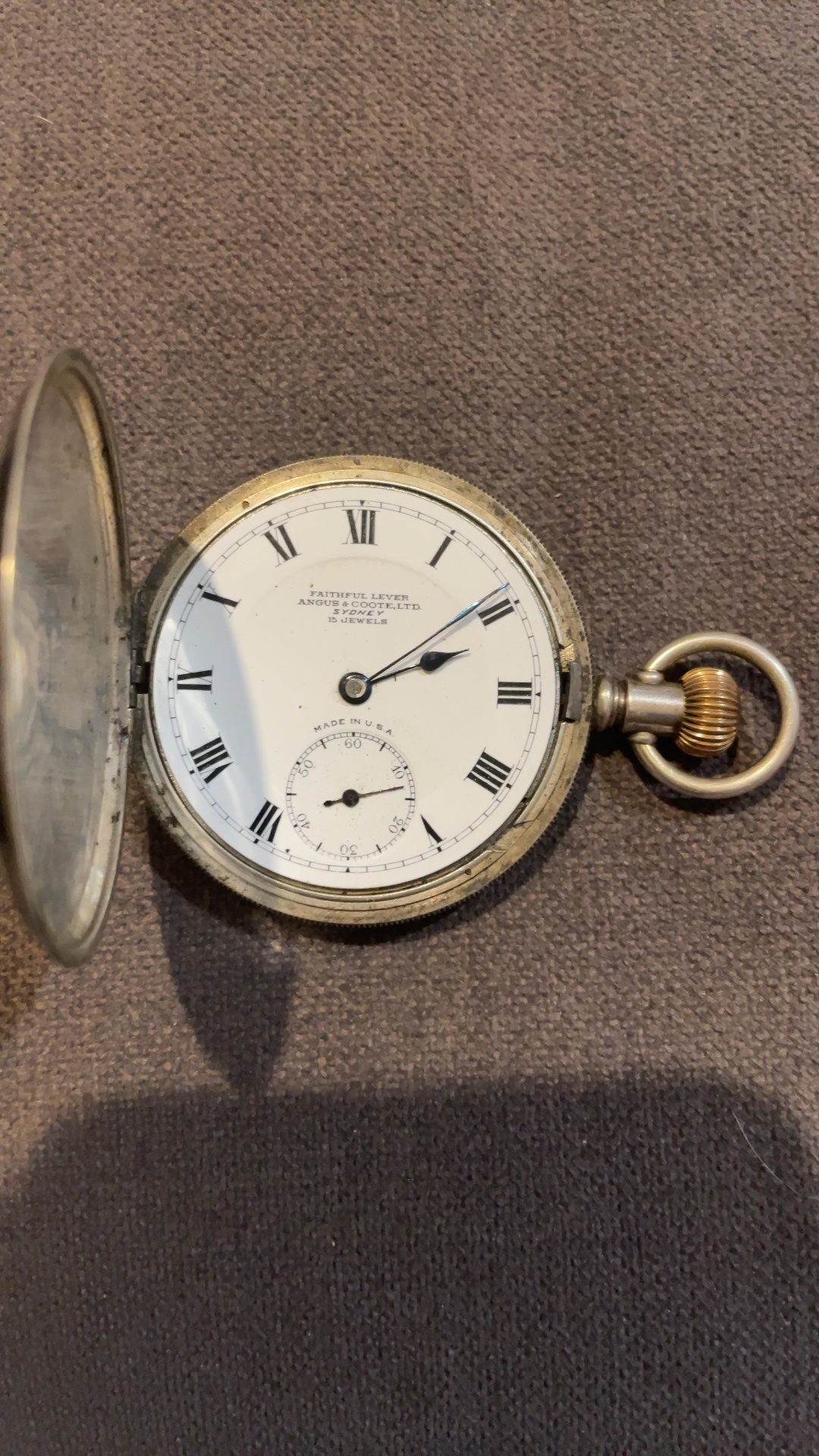
Angus & Coote 'Faithful Lever' Pocket Watch (Elgin Movement) c.1915
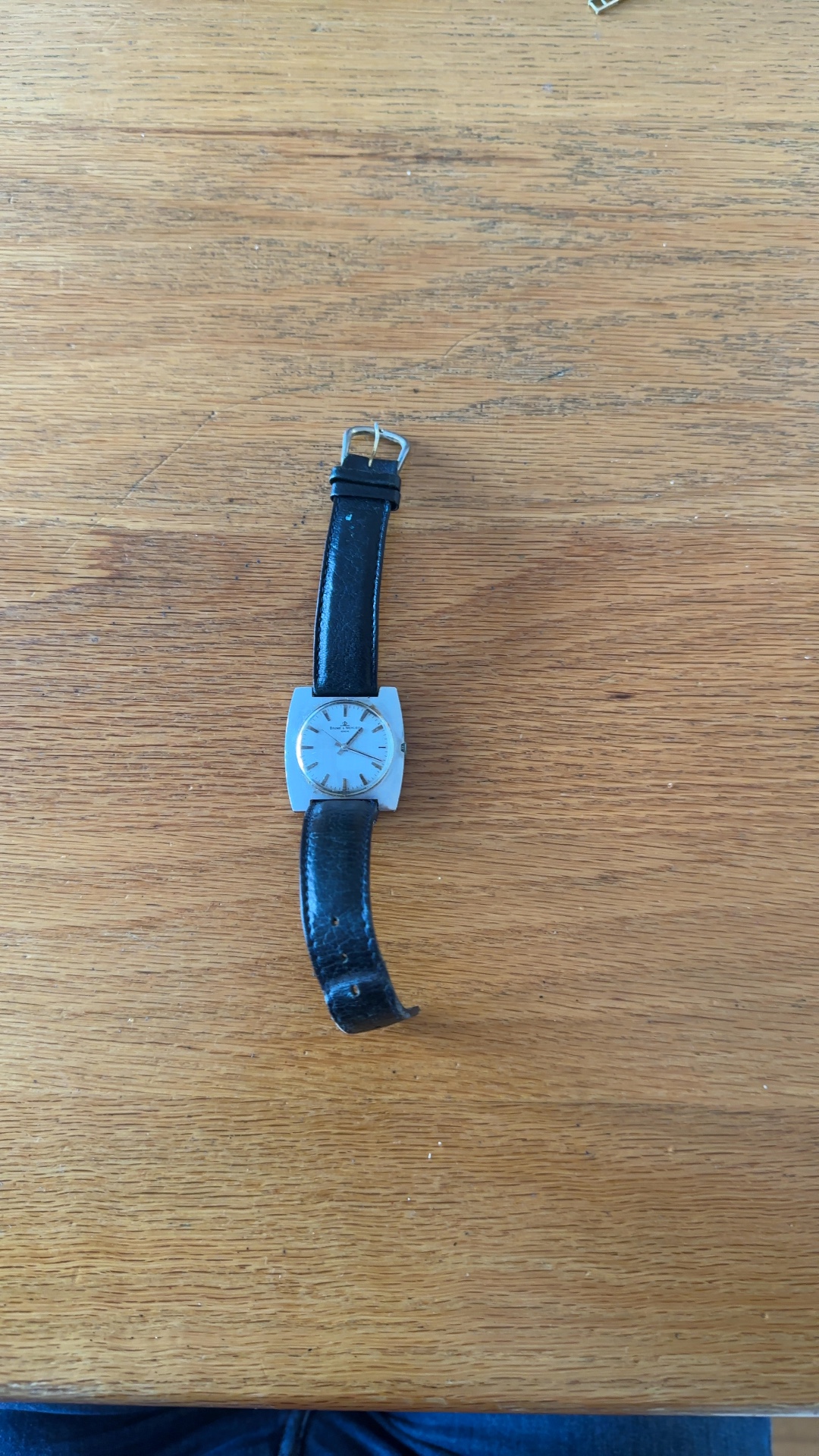
Baume & Mercier Geneva Vintage Square Dress Watch c.1970
ABOUT WATCHES
Wristwatches, pocket watches, clocks, and timepieces from all eras.
Watches value and rarity guideSHARE THIS CURIOSITY
Have your own curiosities to discover?
Scan Your Curiosity
COMMENTS
No comments yet. Be the first to share your thoughts!
Sign in to leave a comment