Abstract Expressionist Landscape Painting
QUICK FACTS
Categories
Era
Mid-20th Century to Contemporary (c. 1950s-2020s)
Origin
🌍 International
Rarity
Average (4/10)
Discovered
Feb 15, 2026
2 weeks ago
DESCRIPTION
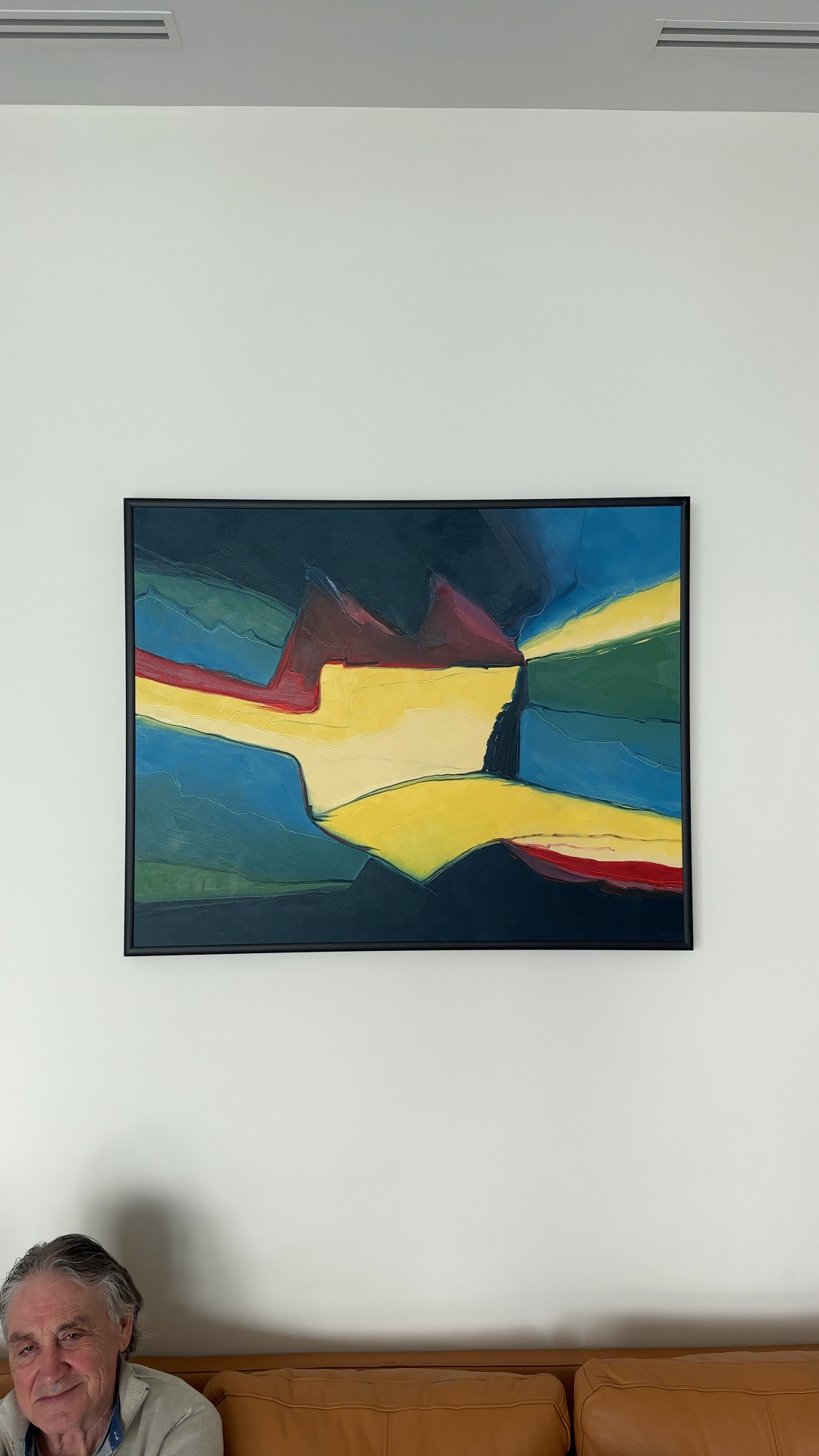
This appears to be an oil or acrylic painting executed in an abstract expressionist style, possibly alluding to a fragmented landscape or geological forms. The composition is characterized by bold, interlocking fields of color – predominantly yellows, blues, reds, and deep greens – which are delineated by contrasting outlines, in some areas resembling a sgraffito technique or impasto lines. The palette suggests a mid-century or later date, favoring saturated hues and dynamic interplay.
CULTURAL ECHOES
Where This Object Echoes
Artists like Willem de Kooning and Franz Kline utilized bold forms and gestural brushwork to evoke emotional and psychological states, often with an underlying structural component.
Artists developed an expressive, non-geometric abstraction that emphasized fluid forms and rich color, sometimes echoing natural landscapes or organic structures.
Ritual & Ceremonial Use
- •The act of contemplation and subjective interpretation by the viewer, a core ritual in apprehending abstract art.
- •The display of such a work in a contemporary living or corporate space, serving as a focal point and conversation starter.
Meaning Through Time
Abstract art was seen as a radical break from traditional representation, symbolizing freedom, modernity, and individual expression.
Abstract art became integrated into mainstream aesthetics, appreciated for its decorative qualities and ability to complement modern interior design, sometimes overshadowing its original critical or philosophical intentions.
HISTORICAL STORY
DID YOU KNOW?
Abstract expressionist paintings often explore the subconscious and universal emotions, moving away from objective reality towards subjective experience.
The use of 'alla prima' (wet-on-wet) painting, evident in some abstract expressionist works, allows for a rapid, spontaneous application of paint, contributing to their dynamic quality.
MATERIAL & CONDITION
Surface
The paint exhibits notable impasto, with some areas appearing thicker and more textured, suggesting a vigorous application. There are instances where lighter lines appear to be incised into the wet or semi-dry paint, creating a linear structure that overlays the color fields, possibly indicating a mixed technique or sgraffito. The overall finish appears matte or semi-gloss, typical of oil or acrylic.
Weight & Feel
Given the apparent canvas and frame, the painting would likely be of moderate weight, substantial enough to feel significant but not excessively heavy for typical wall mounting.
Condition
From the visible images, the painting appears to be in good condition. There are no obvious signs of abrasions, significant paint loss, or tears. The colors remain vibrant, suggesting minimal fading, and the stretcher appears stable within the modern float frame.
RARITY ANALYSIS
Typical antique shop fare. Requires some searching but regularly available. This is where most genuine antiques fall.
Typical Characteristics
- Standard antique shop items
- Regularly available
- Moderate collector interest
EXPERT ANALYSIS
Museum-Trained Art Historian
My confidence primarily rests on identifying the broad stylistic category and medium based on clear visual cues of brushwork and color application. However, the lack of signature or provenance necessitates a wider range for era and value, leading to a moderate confidence level for definitive identification.
KEY EVIDENCE
- 1Abstract, non-representational composition with interlocking fields of color.
- 2Visible impasto and texture, indicating a robust paint application typical of oil or acrylic.
- 3Modern float frame, which suggests a contemporary presentation or a recent re-framing.
- 4Palette of saturated yellows, blues, reds, and deep greens, consistent with post-WWII abstract art.
UNCERTAINTIES
- •No visible signature or artist's mark on the front surface of the painting.
- •Without further details on scale or reverse examination, it is impossible to determine the artist or specific school within abstract art.
- •The general abstract aesthetic is common, making definitive attribution difficult from images alone.
WHAT WOULD IMPROVE CERTAINTY
- →Examine the reverse of the canvas for any artist's signature, date, title, gallery labels, or inventory stickers.
- →Take detailed, well-lit close-up photographs of the brushwork and texture to better determine the medium (oil vs. acrylic).
- →Measure the precise dimensions of the canvas (sight size).
- →Consult with a specialist in post-war and contemporary art to review high-resolution images and any discovered markings.
ESTIMATED VALUE
Updated: Feb 27, 2026
- Market comparables from auctions & retail
- Condition, completeness & craftsmanship
- Current collector demand & trends
- Low = quick sale, high = patient seller
For informational purposes only, not a formal appraisal.
SHARE THIS CURIOSITY
Have your own curiosities to discover?
Scan Your Curiosity
COMMENTS
No comments yet. Be the first to share your thoughts!
Sign in to leave a comment