Greiner-type Papier-Mâché Doll (mid-to-late 19th Century)
Estimated value
$150 - $350Rarity
Uncommon(5/10)Category
Toys & GamesEra
circa 1858-1875Origin
United StatesAuthenticity
GREINER-TYPE PAPIER-MÂCHÉ DOLL (MID-TO-LATE 19TH CENTURY): IDENTIFICATION
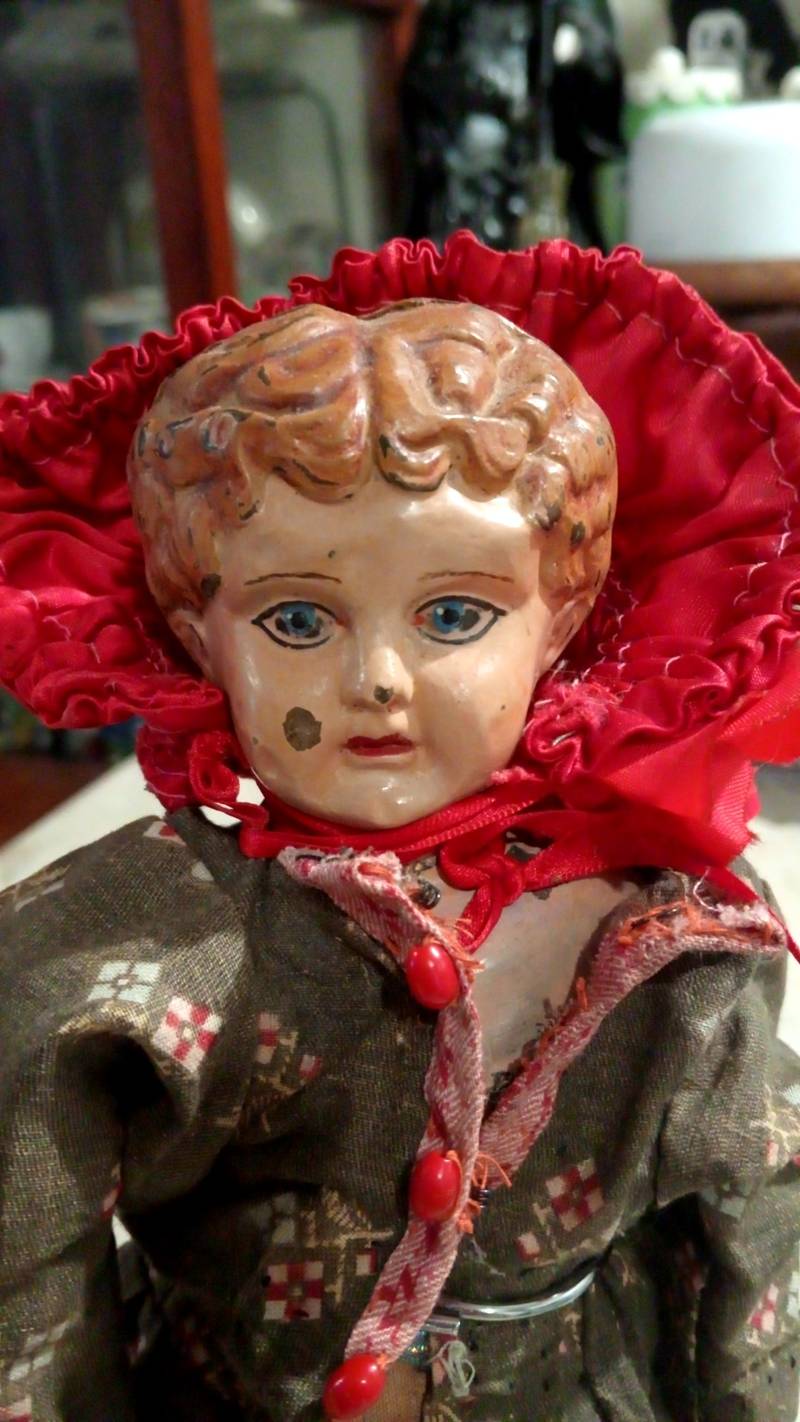
A 19th-century papier-mâché head doll featuring a molded 'covered wagon' hairstyle, typically associated with German or American production from the 1850s-1870s. The head is constructed of oil-painted papier-mâché with characteristic blue painted eyes and a red-bordered mouth. It is mounted on a cloth body with porcelain lower limbs, though the exposed 'PATENT' stamp on the shoulder plate suggests a specific manufacturer like Ludwig Greiner or a contemporary competitor using similar patented head-attachment methods. The doll wears a period-style calico print dress with a prominent red ruffled silk or cotton bonnet.
CROSS-CULTURAL PARALLELS
Where This Object Echoes
Papier-mâché dolls represented the democratization of toys, becoming more affordable for the middle class compared to imported French fashions.
Ritual & Ceremonial Use
- •Domestic education where dolls were used to teach young girls sewing and childcare skills in the 19th-century household.
Meaning Through Time
A durable, functional plaything for all but the poorest children.
An antique artifact primarily valued for its historical 'folk art' aesthetic and manufacturing history.
PRODUCTION & LINE HISTORY
COLLECTOR NOTES
Ludwig Greiner's 1858 patent was the very first patent ever granted for a doll in the United States.
The hairstyle on this doll is called a 'covered wagon' style because the tight curls resemble the canvas ridges of pioneer wagons common in 1860.
SCARCITY
Genuine antiques with fewer examples on the market. Named makers, documented provenance, or early production examples.
Typical Characteristics
- Limited production
- Named makers
- Growing collector demand
Confidence Factors
- Period-accurate 'PATENT' stamp font and placement
- Material-appropriate flaking patterns consistent with 150-year-old oil paint
- Hairstyle is characteristic of documented 1860s molds
TOY SPECIALIST'S TAKE
Toy Historian & Collector-Dealer
High confidence due to the distinct 'PATENT' stamp and the very specific 'covered wagon' hairstyle, both of which are diagnostic for mid-to-late 19th-century production.
KEY EVIDENCE
- 1Visible 'PATENT' stamp on the shoulder plate aligns with Greiner's 1858 patent or similar labels.
- 2The molded hairstyle is a classic 'covered wagon' mold typical of the Civil War era.
- 3The blue painted eyes with black pupils and no iris detail (only a black line) are characteristic of mid-century papier-mâché production.
- 4Painted black hair tips and red lip border follow 1860s decorative standards for German-American dolls.
UNCERTAINTIES
- •Presence of modern hot glue on the chest area suggests a non-professional repair or reassmebly.
- •Significant paint loss on the face can sometimes hide underlying modern repairs, though these chips look authentic to age.
WHAT WOULD IMPROVE CERTAINTY
- →Inspect the back of the shoulder plate for a full Greiner label (if present, value increases).
- →Determine if the porcelain limbs are original to the body; Greiner dolls often had leather or high-quality cloth limbs.
- →Verify the patent stamp under UV light to ensure it hasn't been added later to a generic head.
CONDITION & GRADE
Grading breakdown
Significant paint loss to the face and evidence of non-professional repairs with modern glue significantly lower the grade from 'Excellent' or 'Fine'.
Condition
Heavy surface loss and flaking on the face, particularly a large chip on the right cheek and tip of the nose. The clothing exhibits fraying at the collar and visible hot glue or modern adhesive repairs on the chest area.
TOY MARKET VALUE
Updated: May 10, 2026
Similar Greiner-type dolls with moderate paint loss sold at Theriault's and Morphy Auctions for between $175 and $300 in 2023.
Who buys this
Antique doll collectors specializing in 19th-century American folk toys and German papier-mâché transitions.
What increases value
- •Presence of the 'PATENT' stamp which links it to specific 1850s-70s manufacturing
- •Originality of the cloth body (if confirmed)
What lowers value
- •Heavy paint loss on the face significantly impacts 'displayability' and value
- •The use of modern glue for repairs reduces desirability for high-end purists
What makes top-tier examples
- •Complete original paper labels
- •Mint condition paint with no flaking
- •Original period clothing with lace trim
Grade & condition
Face paint integrity, presence of manufacturer marks, and quality of any visible repairs.
Rarity & demand
For informational purposes only, not a formal appraisal.
ABOUT TOYS & GAMES
Vintage toys, dolls, board games, action figures, and childhood collectibles.
Toys & Games value and rarity guideSHARE THIS CURIOSITY
Have your own curiosities to discover?
Scan Your Curiosity
COMMENTS