Wrought Iron and Carved Wood Rocking Chair
Authenticity
WROUGHT IRON AND CARVED WOOD ROCKING CHAIR: IDENTIFICATION
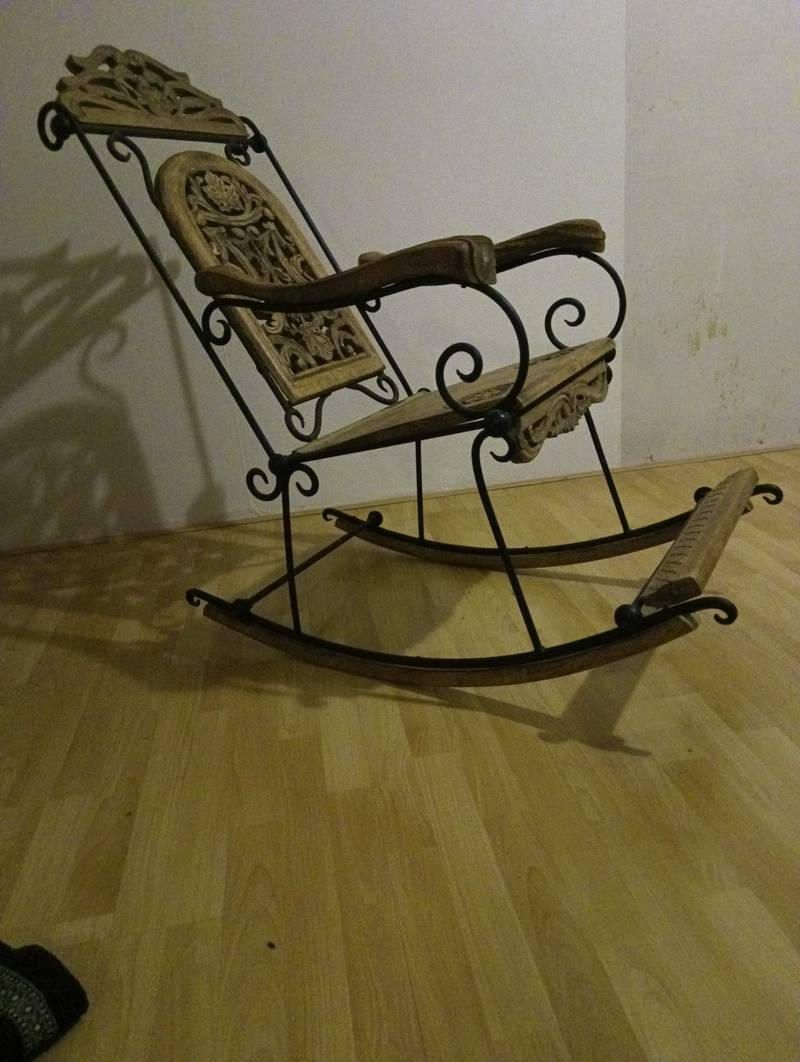
A mixed-material rocking chair featuring a tubular wrought iron frame with decorative scrolls and inset carved wooden panels. The chair includes a headrest, backsplat, seat, and footrest carved with foliate and shell motifs. The ironwork is finished in a dark, likely powder-coated or painted matte black, while the wood appears to be a light-toned hardwood, possibly mango or teak, with a limed or distressed finish common in contemporary global-traditional furniture production.
PRODUCTION PERIOD
SCARCITY
Standard antiques commonly found at estate sales and flea markets. Plentiful supply meets modest demand.
Typical Characteristics
- Moderate production runs
- Common at estate sales
- Entry-level collectibles
Confidence Factors
- Uniformity of the carving suggests modern artisanal production rather than period antique
- Hardware and joinery visible in similar models are typical of recent export manufacturing
DESIGN HISTORIAN'S TAKE
Furniture Historian & Restoration Specialist
Identification is based on highly recognizable material combinations and carving styles typical of the 2000s export market, supported by clear visual evidence of the chair's silhouette and finish.
KEY EVIDENCE
- 1The scrolled iron terminals are consistent with modern MIG welding rather than traditional forge-welding.
- 2The 'limed' wood finish is characteristic of modern export pieces from Southeast Asia and India.
- 3The foliate carving style is standard for Jodhpur workshop outputs from the last 25 years.
- 4The integrated footrest on the rocker rails is a modern design feature rarely seen in true 18th or 19th-century precursors.
UNCERTAINTIES
- •Check for structural stability at the bolt-through points where wood meets iron; these are common failure points.
WHAT WOULD IMPROVE CERTAINTY
- →Examine the underside of the seat for any manufacturer labels or stamped 'Made in India' marks.
- →Check the fasteners (screws/bolts) to see if they are modern metric types, which would confirm recent manufacture.
CONDITION & GRADE
Condition
The wood panels show minor surface wear consistent with household use. The iron frame appears structurally sound, though the junction points should be inspected for weld fatigue common in decorative export pieces.
Weight & feel
Estimated between 18 and 25 kg; the thin iron frame is relatively lightweight, while the solid wood panels provide localized density.
DESIGN MARKET VALUE
Updated: May 11, 2026
Who buys this
Homeowners seeking Mediterranean or 'shabby chic' aesthetic pieces; decorative furniture collectors.
What increases value
- •Intact carving without chips or cracks
- •Clean ironwork without significant rust or paint loss
What lowers value
- •Looseness in the iron-to-wood joints
- •Damage to the rockers rendering the chair unsafe for use
What makes top-tier examples
- •Hand-forged iron vs. cast or machine-bent tube
- •Species-specific hardwoods like Sheesham or Teak vs. softwoods
Grade & condition
Structural integrity, carving detail preservation, and finish originalty.
Rarity & demand
For informational purposes only, not a formal appraisal.
ABOUT INTERIOR
Furniture, lamps, lighting, chandeliers, decorative objects for the home.
Interior value and rarity guideSHARE THIS CURIOSITY
Have your own curiosities to discover?
Scan Your Curiosity
COMMENTS