Art Deco Demi-Lune Club Chair by Studio G. B. Wernicke
Estimated value
$1,200 - $2,500Rarity
Uncommon(5/10)Category
InteriorBrand
Studio G. B. WernickeEra
Circa 1930s-1940sOrigin
GermanyAuthenticity
ART DECO DEMI-LUNE CLUB CHAIR BY STUDIO G. B. WERNICKE: IDENTIFICATION
This appears to be a distinctive demi-lune (half-moon) club chair, characterized by its elegant curved back and arms, constructed from veneered wood, likely mahogany or a similar rich red-brown timber. The upholstery, a dark, possibly black, material, provides a clear contrast to the warm wood tones, typical of the Art Deco aesthetic. The piece's form demonstrates a strong adherence to the sleek, curvilinear lines popular in the mid-20th century.
SCARCITY
Genuine antiques with fewer examples on the market. Named makers, documented provenance, or early production examples.
Typical Characteristics
- Limited production
- Named makers
- Growing collector demand
Confidence Factors
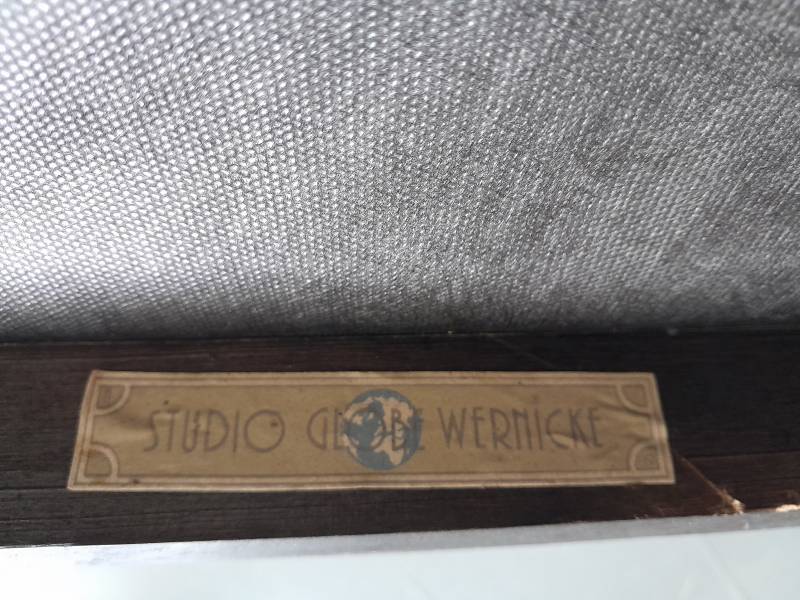
- Studio label clearly visible on the underside for attribution.
- Construction and style are highly consistent with the Art Deco period.
- Wear patterns align with an item of its presumed age.
DESIGN HISTORIAN'S TAKE
Furniture Historian & Restoration Specialist
The clear manufacturer's label, combined with evident Art Deco design characteristics and consistent aging, provides a strong basis for a high confidence assessment. The form language and material usage are entirely congruent with the identified period and maker.
KEY EVIDENCE
- 1The 'STUDIO G.B. WERNICKE' label clearly visible on the underside unequivocally identifies the manufacturer.
- 2The demi-lune silhouette, curved armrests, and use of veneered wood are strong indicators of the Art Deco style.
- 3Visible wood grain and finish present as authentic to mid-20th century European furniture manufacturing.
- 4The wear on the upholstery is consistent with an original material from the estimated period.
WHAT WOULD IMPROVE CERTAINTY
- →Close-up photographs of the joinery, particularly where curves meet straight sections, to assess construction techniques.
- →A detailed inspection of the secondary wood species (e.g., drawer sides, back panels) if available, which can provide further dating clues.
- →UV light test on the wood finish to investigate any potential localized repairs or over-sprays.
- →Examination of the hardware (feet/glides) for any maker's marks or period-appropriate fasteners.
CONDITION & GRADE
Condition
The overall structural integrity appears sound from the images. The wooden frame shows surface wear consistent with age and use, including scratches and areas where the finish may be compromised. The upholstery, however, is significantly distressed, with noticeable cracks and flaking across the seat and back, suggesting it will require eventual restoration or reupholstering.
DESIGN MARKET VALUE
Updated: Feb 27, 2026
- Market comparables from auctions & retail
- Condition, completeness & craftsmanship
- Current collector demand & trends
- Low = quick sale, high = patient seller
For informational purposes only, not a formal appraisal.
ABOUT INTERIOR
Furniture, lamps, lighting, chandeliers, decorative objects for the home.
Interior value and rarity guideSHARE THIS CURIOSITY
Have your own curiosities to discover?
Scan Your Curiosity
COMMENTS