Mid-20th Century Electrified Ceramic Hurricane Lamp
Authenticity
MID-20TH CENTURY ELECTRIFIED CERAMIC HURRICANE LAMP: IDENTIFICATION
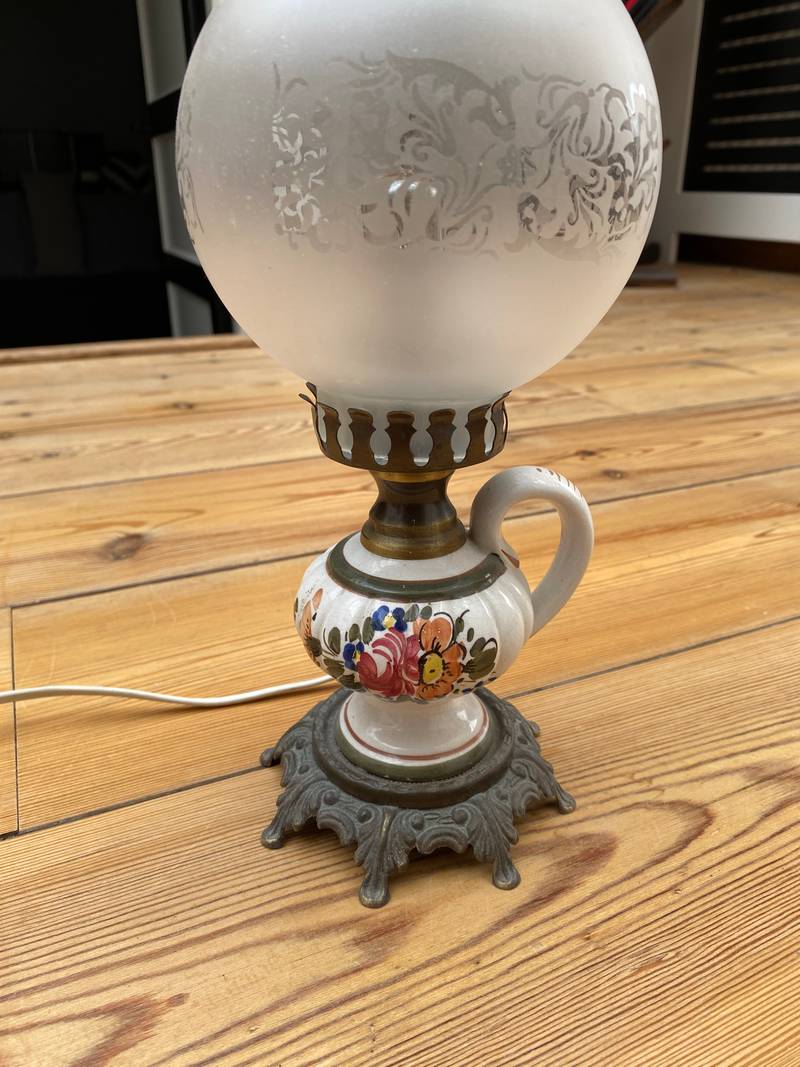
An electric table lamp designed in the style of an 18th-century ceramic oil lamp. The body features a glazed white ceramic fount with a hand-painted floral motif in iron red, cobalt blue, and ochre, characteristic of Central European folk pottery. It is mounted on a cast-metal foliate base with a faux-antique gray finish. The lighting assembly consists of a frosted glass globe shade with etched scrollwork motifs and a clear glass chimney. The white electric cord includes a contemporary plastic inline thumb switch.
CROSS-CULTURAL PARALLELS
Where This Object Echoes
The floral painting style, known as Bauernmalerei, was commonly used on domestic objects to brighten rural interiors.
Ritual & Ceremonial Use
- •Domestic lighting rituals where electrified versions of historical forms were used to create 'old world' ambiance in modern homes.
Meaning Through Time
Represented nostalgia for pre-industrial craftsmanship and European provincial heritage.
PRODUCTION PERIOD
SCARCITY
Standard antiques commonly found at estate sales and flea markets. Plentiful supply meets modest demand.
Typical Characteristics
- Moderate production runs
- Common at estate sales
- Entry-level collectibles
Confidence Factors
- Modern wiring and inline switch clearly identify this as a 20th-century decorative piece
- Construction and glaze type are consistent with post-WWII European export lamps
DESIGN HISTORIAN'S TAKE
Furniture Historian & Restoration Specialist
Identification is high due to the ubiquitous nature of these revival lamps and clear visibility of the material components (ceramic, cast metal, modern cord).
KEY EVIDENCE
- 1Ceramic body shows intentional 'crazing' glaze effect common in mid-century revival pieces.
- 2Cast metal base features stylized acanthus leaf motifs indicative of mid-20th century mass production.
- 3Plastic inline cord switch confirms post-1950s assembly.
- 4Glass chimney is a standard size (usually 2.5 or 3 inch base) compatible with modern replacements.
UNCERTAINTIES
- •Electrical components are not period-accurate to the 19th-century style depicted, as expected with revivalist decor.
WHAT WOULD IMPROVE CERTAINTY
- →Inspect the underside of the ceramic body for a stamped 'Made in...' mark or factory numbers.
- →Check the light socket for manufacturer stamps like 'Leviton' which can help date the electrical assembly.
CONDITION & GRADE
Condition
The ceramic fount shows visible crazing throughout the glaze. The glass chimney and etched globe appear intact without significant chipping at the rim. The wiring and inline switch are modern replacements or late-period additions in good cosmetic order.
Weight & feel
Estimated at 1.5 to 2.0 kg, providing substantial stability due to the cast metal base and dense ceramic body.
DESIGN MARKET VALUE
Updated: May 11, 2026
Similar electrified ceramic hurricane lamps frequently sell on eBay and at regional estate auctions for $50-$80.
Who buys this
Home decorators seeking 'Cottagecore' or traditional European aesthetics; collectors of mid-century lighting revivals.
What increases value
- •Intactness of the etched glass globe (reproduction globes are common but original matched sets are preferred)
- •Condition of the hand-painted floral decoration
What lowers value
- •Chips to the ceramic handle
- •Deep scratches in the frosted finish of the globe
What makes top-tier examples
- •Evidence of a known manufacturer mark like Villeroy & Boch or a specific German pottery
- •Pristine original wiring if considered a 'time capsule' piece
Grade & condition
Completeness of the glass assembly, vibrancy of the glaze paint, and lack of structural repairs on the ceramic fount.
Rarity & demand
For informational purposes only, not a formal appraisal.
ABOUT INTERIOR
Furniture, lamps, lighting, chandeliers, decorative objects for the home.
Interior value and rarity guideSHARE THIS CURIOSITY
Have your own curiosities to discover?
Scan Your Curiosity
COMMENTS