Green Agate Bi-Cone Beads
Authenticity
GREEN AGATE BI-CONE BEADS: IDENTIFICATION
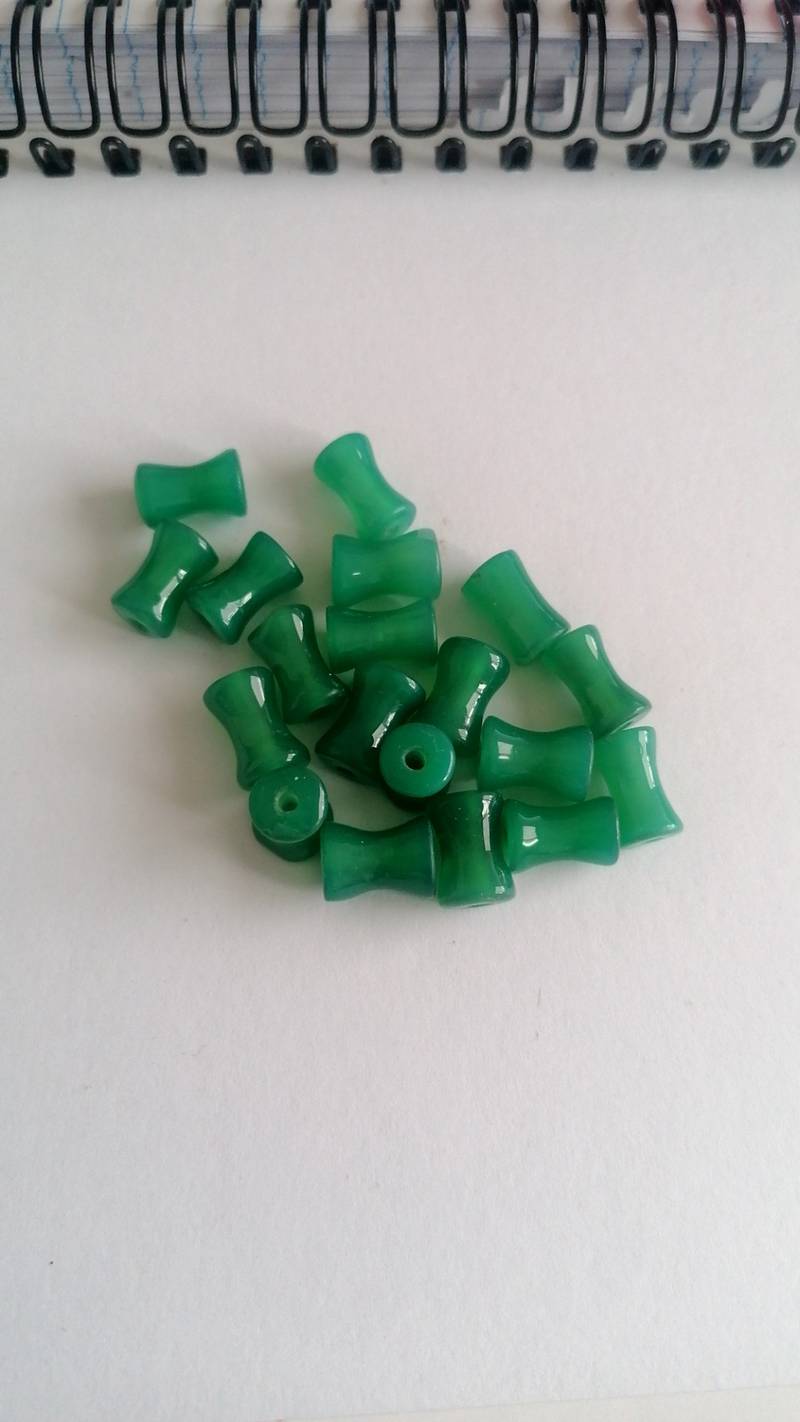
These appear to be a group of bi-cone shaped beads, likely crafted from either natural green agate or a similar type of chalcedony. The vibrant, translucent green color and polished finish suggest they are intended for jewelry making or decorative adornment. The 'bi-cone' shape, tapering in from both ends towards a central drilling hole, is a classic form for beads.
CROSS-CULTURAL PARALLELS
Where This Object Echoes
Agate beads were a prominent feature in early Mesopotamian jewelry and ritualistic objects, valued for their perceived protective qualities and aesthetic appeal.
Skilled artisans carved agate into various bead shapes, including bi-cones and barrels, for elaborate necklaces and personal adornment that were traded extensively.
Ritual & Ceremonial Use
- •Wearing for protection and grounding: Across many cultures, agate is believed to offer protection from negative energy and promote emotional balance, making beads of this material suitable for amulets or talismans.
- •Adornment in personal jewelry: Beads have been a fundamental component of personal decoration, signifying status, affiliation, or simply aesthetic pleasure in diverse societies.
Meaning Through Time
Primarily viewed as protective charms and status symbols, often associated with specific mythical properties like luck or strength.
Appreciated for aesthetic qualities in jewelry and intaglio carvings, becoming more widely available but still retaining some prestige.
Mass-produced for global jewelry and craft markets, making them accessible decorative components, though high-quality specimens remain gemstone collector's items.
SCARCITY
Standard antiques commonly found at estate sales and flea markets. Plentiful supply meets modest demand.
Typical Characteristics
- Moderate production runs
- Common at estate sales
- Entry-level collectibles
Confidence Factors
- Common material for beads.
- Geometric, simple shape (easy to manufacture).
- No specific markers to forge or reproduce a high-value original.
GEMOLOGIST'S TAKE
Decorative Arts Specialist
The visual characteristics strongly align with polished green agate or chalcedony beads. The common nature of such items reduces the likelihood of complex counterfeiting, though confirmation of material would require expert testing.
KEY EVIDENCE
- 1Translucent green color characteristic of agate or chalcedony.
- 2Bi-cone shape, uniformly drilled, indicating machine production or skilled lapidary work.
- 3High polish and smooth surface suggest good material quality and modern finishing.
- 4Lack of banding visible suggests a more uniform green chalcedony rather than striped agate.
UNCERTAINTIES
- •Without closer inspection, it's difficult to definitively distinguish dyed natural stone from some synthetic materials or less valuable natural stones.
- •No scale included in the image, making precise size assessment challenging.
WHAT WOULD IMPROVE CERTAINTY
- →A close-up photograph with a standard sizing reference (e.g., a ruler or coin).
- →A professional gemological test to confirm the material (e.g., specific gravity, refractive index).
- →Consider inspecting under magnification for internal inclusions characteristic of natural stone or signs of dyeing.
CONDITION & GRADE
Condition
The beads appear to be in excellent, unused condition. There are no visible chips, cracks, or surface abrasions, and the drilling for the stringing hole seems clean and uniform.
GEMSTONE VALUATION
Updated: Feb 27, 2026
- Market comparables from auctions & retail
- Condition, completeness & craftsmanship
- Current collector demand & trends
- Low = quick sale, high = patient seller
For informational purposes only, not a formal appraisal.
ABOUT GEMSTONES
Precious stones, semi-precious gems, minerals, crystals, and geological specimens.
Gemstones value and rarity guideSHARE THIS CURIOSITY
Have your own curiosities to discover?
Scan Your Curiosity
COMMENTS