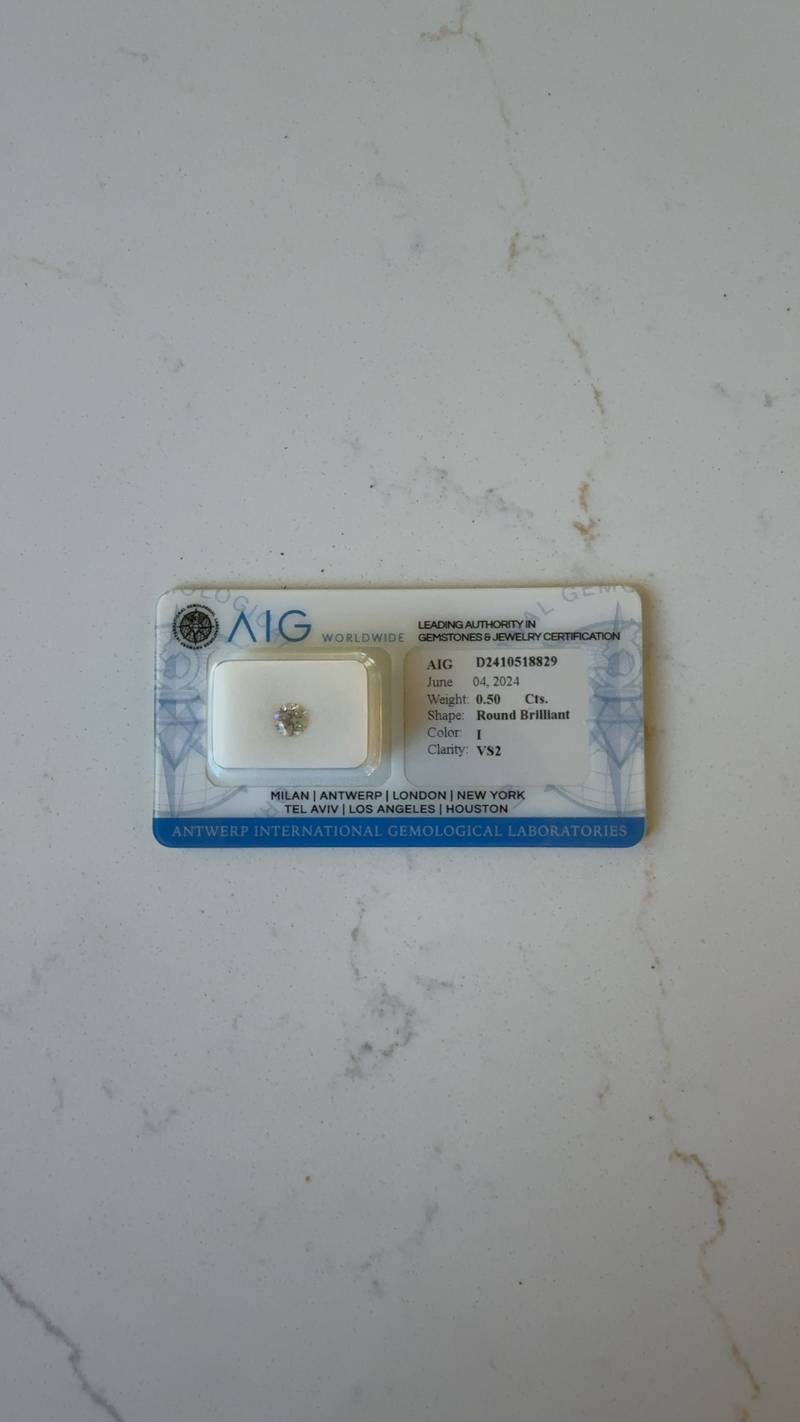
0.50 Carat Round Brilliant Diamond (AIG D2410518829)
Estimated value
$700 - $1,100Rarity
Ordinary(3/10)Category
GemstonesBrand
Antwerp International Gemological LaboratoriesEra
2024Origin
BelgiumAuthenticity
0.50 CARAT ROUND BRILLIANT DIAMOND (AIG D2410518829): IDENTIFICATION
A sealed 0.50-carat round brilliant cut diamond housed in a tamper-evident PVC blister pack. The accompanying AIG (Antwerp International Gemological Laboratories) report card D2410518829, dated June 04, 2024, identifies the specimen with an I color grade and VS2 clarity. The stone displays standard 57 or 58 facet geometry consistent with modern brilliant-cut proportions, exhibiting a visible brightness and high-contrast light return typical of this geometry.
CROSS-CULTURAL PARALLELS
Where This Object Echoes
The round brilliant 0.50 ct stone is the most common archetype for engagement rings since the mid-20th century.
Ritual & Ceremonial Use
- •Engagement proposal ceremonies where diamonds symbolize enduring commitment.
- •Investment hedging where high-quality portable gemstones serve as a store of value.
Meaning Through Time
The diamond has transitioned from a symbol of status to a standardized commodity with transparent global pricing scales.
GEOLOGICAL ORIGIN
SCARCITY
Standard antiques commonly found at estate sales and flea markets. Plentiful supply meets modest demand.
Typical Characteristics
- Moderate production runs
- Common at estate sales
- Entry-level collectibles
Confidence Factors
- Presence of a verifiable AIG laboratory report number
- Blister pack remains factory-sealed and untampered
- Optical properties are consistent with documented diamond specifications
GEMOLOGIST'S TAKE
Gemologist & Mineral Specialist
Confidence is high due to the clear presence of a professional laboratory report and sealed packaging which matches the optical characteristics of the stone.
KEY EVIDENCE
- 1Verifiable AIG report number D2410518829
- 2Visible 0.50 ct round brilliant cut characteristics
- 3Intact, tamper-evident laboratory sealing
- 4Clarity and color appearance align with I/VS2 grading standards
UNCERTAINTIES
- •AIG is often considered to have softer grading standards compared to GIA or AGS
- •Verification of the report on the official AIG website is required to confirm it is not a clone
WHAT WOULD IMPROVE CERTAINTY
- →Verify report on AIG Worldwide's digital portal
- →Examine under 10x-40x magnification to confirm VS2 inclusion patterns
- →Screen for laboratory-grown (CVD/HPHT) indicators if not specified as 'Natural' on the full report
CONDITION & GRADE
Grading breakdown
The stone is pre-graded by AIG as I color and VS2 clarity; the visual evidence confirms a high-quality cut with balanced symmetry.
Condition
The diamond is currently in a sealed, mint-state condition within its original AIG laboratory blister pack, protecting it from surface abrasions or oil accumulation.
Weight & feel
0.50 carats (approximately 0.1 grams), with a likely diameter of 5.0 to 5.2 mm based on standard cutting proportions.
GEMSTONE VALUATION
Updated: May 11, 2026
Similar 0.50ct I/VS2 diamonds with AIG or similar secondary lab reports typically sell for $800-$1,200 on platforms like Blue Nile or RapNet.
Who buys this
Private consumers for engagement jewelry and small-scale jewelry manufacturers seeking calibrated center stones.
What increases value
- •Sealed laboratory certification providing buyer confidence
- •Half-carat weight threshold, which is a major psychological value point in retail
- •Round brilliant cut, which holds the highest resale value of any shape
What lowers value
- •Market preference for GIA reports over AIG, which can result in a 20-30% discount
- •I-color may show faint yellow tints when compared to higher D-F grades
What makes top-tier examples
- •Ideal or Excellent cut grade ratings
- •Lack of fluorescence
- •GIA certification
Grade & condition
Color (absence of yellow), Clarity (lack of eye-visible inclusions), and Cut (precision of light return).
Rarity & demand
For informational purposes only, not a formal appraisal.
ABOUT GEMSTONES
Precious stones, semi-precious gems, minerals, crystals, and geological specimens.
Gemstones value and rarity guideSHARE THIS CURIOSITY
Have your own curiosities to discover?
Scan Your Curiosity
COMMENTS