Repoussé Metal Box with Dutch Master Scene
Estimated value
$100 - $400Rarity
Average(4/10)Category
Decorative ObjectsEra
Late 19th Century - Early 20th CenturyOrigin
NetherlandsAuthenticity
REPOUSSÉ METAL BOX WITH DUTCH MASTER SCENE: IDENTIFICATION
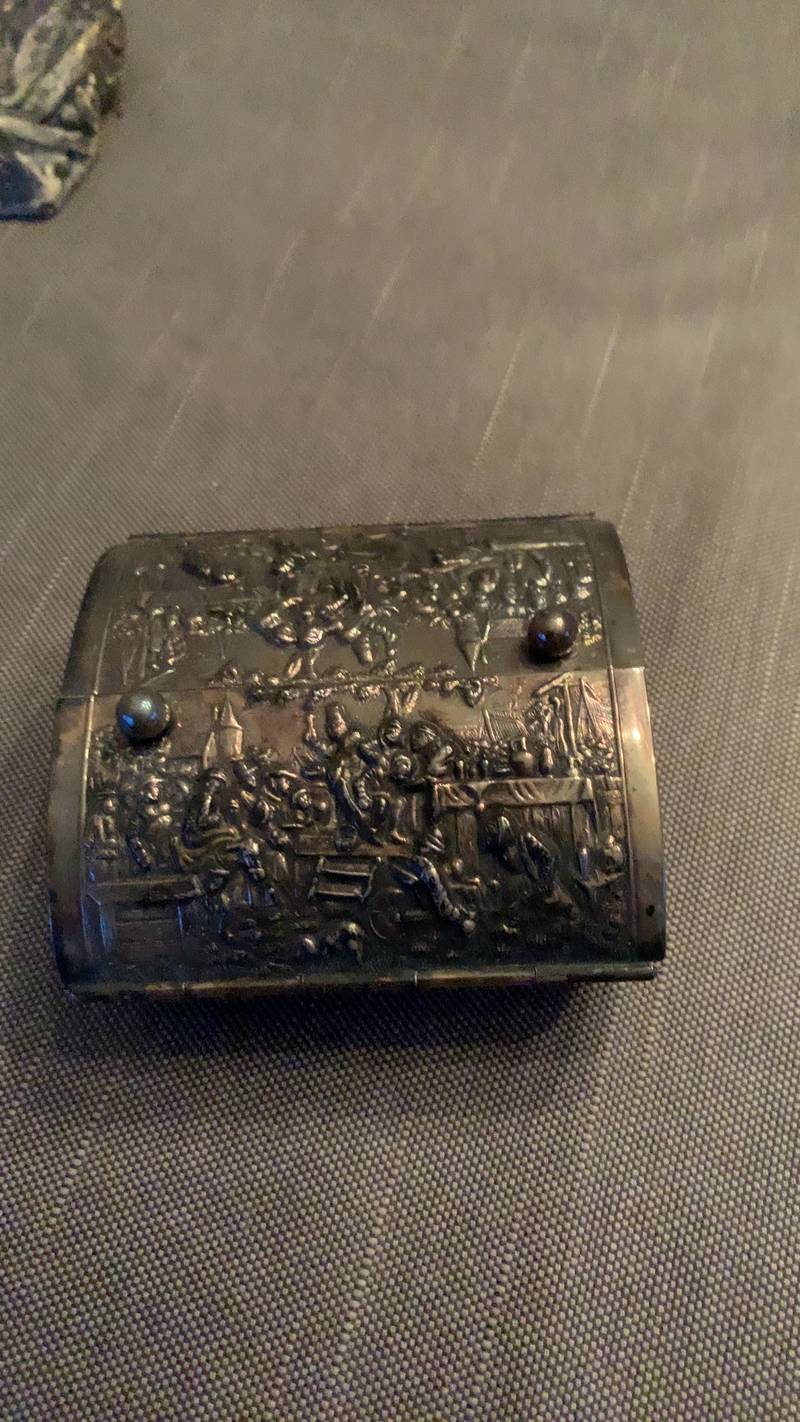
This appears to be a metal box, likely silver or silver-plated, meticulously decorated with repoussé work depicting a lively genre scene reminiscent of Dutch Master paintings. The relief work shows numerous figures, perhaps celebrating or engaged in daily life, against a backdrop of trees and structures which hint at a village or town setting. The rounded profile of the lid and the dark, aged patina suggest considerable age and handling.
SCARCITY
Typical antique shop fare. Requires some searching but regularly available. This is where most genuine antiques fall.
Typical Characteristics
- Standard antique shop items
- Regularly available
- Moderate collector interest
Confidence Factors
- Lack of visible maker's marks or hallmarks, which would aid in definitive identification of material and origin.
- The popularity of such decorative boxes led to many reproductions over time, requiring careful examination for period-appropriate crafting techniques.
- Image clarity limitations make it difficult to ascertain the exact metal composition (e.g., solid silver vs. silverplate).
DECORATIVE ARTS EXPERT'S TAKE
Decorative Arts Specialist
Confidence is good based on the clear visual evidence of repoussé metalwork and the recognizable genre scene, allowing placement within a historical decorative arts context. However, the absence of specific identifying marks in the provided images limits a more precise attribution of maker and material.
KEY EVIDENCE
- 1The intricate repoussé technique demonstrates skilled metalwork.
- 2The subject matter, a genre scene, is characteristic of Dutch-inspired decorative arts.
- 3The dark, aged patina strongly suggests metal (likely silver or silverplate) that has oxidized over time.
- 4The overall form and style align with small decorative boxes produced from the late 19th into the early 20th century.
UNCERTAINTIES
- •Absence of clear maker's marks, hallmarks, or assay stamps.
- •The scene's potentially generalized nature could indicate mass-produced decorative items rather than unique artisan work.
WHAT WOULD IMPROVE CERTAINTY
- →A close-up image of the bottom or any interior surfaces to check for marks or stamps.
- →Gentle cleaning in a small, inconspicuous area to determine the underlying metal and its luster.
- →Measurement of the box's dimensions for accurate cataloging.
- →Examination under UV light to check for any repairs or previous restorations, especially if the piece were solid silver.
CONDITION & GRADE
Condition
The object appears to be in relatively good condition, exhibiting expected wear consistent with age and handling. The deep oxidation suggests a lack of recent polishing, contributing to its aged aesthetic. No obvious dents, cracks, or significant losses to the relief work are immediately visible from these images.
DECORATIVE ARTS VALUATION
Updated: Feb 27, 2026
- Market comparables from auctions & retail
- Condition, completeness & craftsmanship
- Current collector demand & trends
- Low = quick sale, high = patient seller
For informational purposes only, not a formal appraisal.
ABOUT DECORATIVE OBJECTS
Silver, glassware, metalwork, enamelwork, and decorative arts.
Decorative Objects value and rarity guideSHARE THIS CURIOSITY
Have your own curiosities to discover?
Scan Your Curiosity
COMMENTS