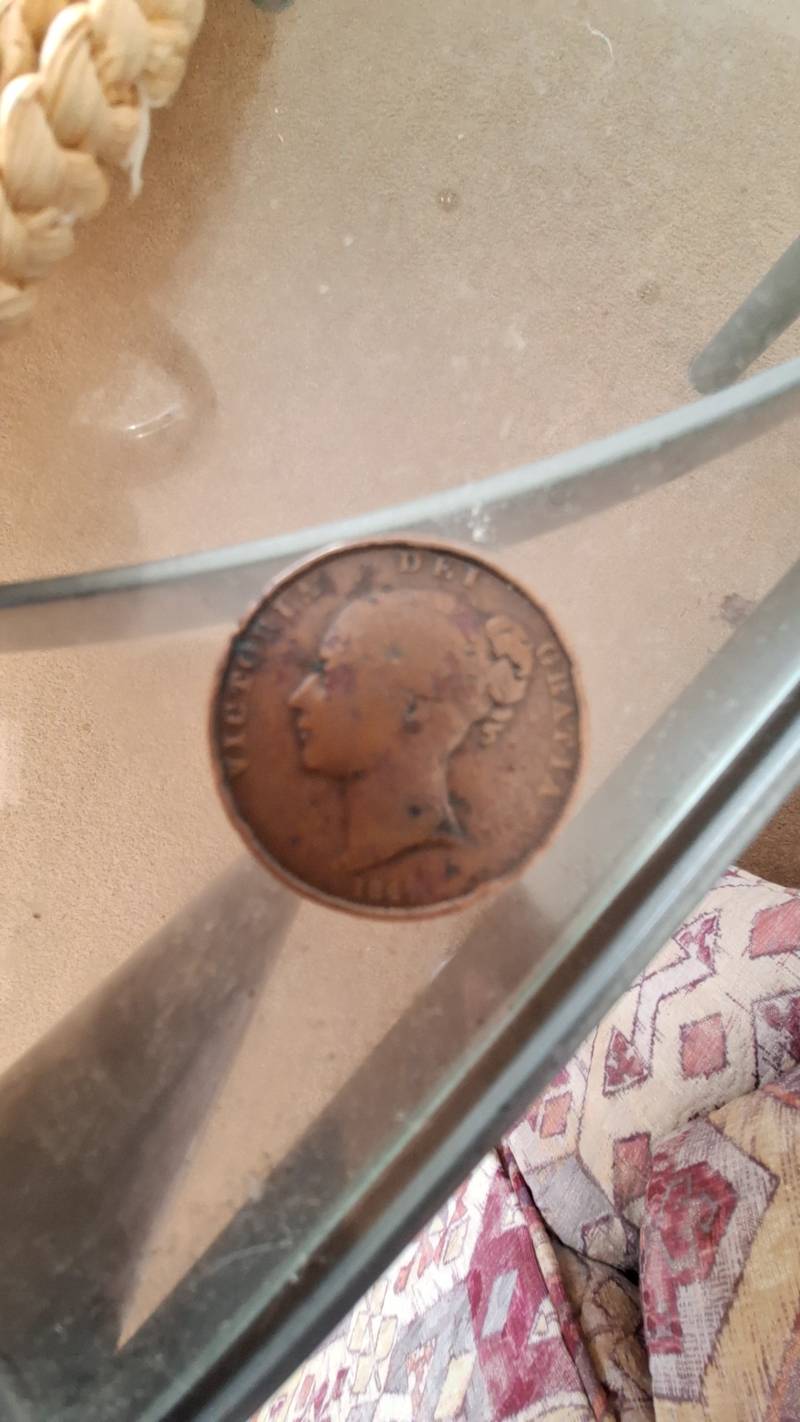
1884 Great Britain Queen Victoria 'Bun Head' Farthing
Estimated value
$2 - $12Rarity
Ordinary(3/10)Category
Rare Coins & CurrencyBrand
Royal MintEra
1884Origin
United KingdomArtist / Creator
Leonard Charles WyonAuthenticity
1884 GREAT BRITAIN QUEEN VICTORIA 'BUN HEAD' FARTHING: IDENTIFICATION
A bronze farthing (quarter-penny) featuring the second portrait of Queen Victoria, commonly known by collectors as the 'Bun Head' due to her distinctive hairstyle. The obverse displays the laureate bust of Victoria facing left, while the reverse depicts a seated Britannia with a trident and shield, flanked by a lighthouse and a ship. This specific example shows considerable circulation wear and environmental dark toning typical of copper-alloy coins of the late Victorian era.
NUMISMATIC HISTORY
NUMISMATIC NOTES
Until 1860, British farthings were minted in copper; after that, they switched to a harder bronze alloy (95% copper, 4% tin, 1% zinc) which improved the strike detail.
SCARCITY
Standard antiques commonly found at estate sales and flea markets. Plentiful supply meets modest demand.
Typical Characteristics
- Moderate production runs
- Common at estate sales
- Entry-level collectibles
Confidence Factors
- Common date and denomination for the period
- Wear patterns and patina are consistent with authentic bronze aging
- Low market incentive for forgery in this specific condition
NUMISMATIST'S ASSESSMENT
Numismatist
The identification of the type and date is certain based on the visible legends and silhouette, though the low image quality prevents a precise numerical grade.
KEY EVIDENCE
- 1Legends 'VICTORIA D: G: BRITT: REG: F: D:' identify the monarch.
- 2Reverse date '1884' is correctly positioned in the exergue.
- 3Specific 'Bun Head' portrait by L.C. Wyon matches the dated period.
- 4Lighthouse and ship design elements confirm the pre-1895 bronze type.
UNCERTAINTIES
- •Significant image blur obscures fine die details (e.g., teeth on the rim).
- •Dark spots on the obverse may hide surface damage or active verdigris.
WHAT WOULD IMPROVE CERTAINTY
- →Take a clearer, high-resolution photo of the date exergue.
- →Photograph the edge of the coin to ensure it is smooth without evidence of casting.
- →Check for 'verdigris' (green powdery growth) which may require professional stabilization.
CONDITION & GRADE
Grading breakdown
The legends are clear, but Victoria's facial features and hair detail have flattened significantly. The reverse exergue where the date '1884' sits is legible, though worn. No major gouges, but surface dark spots suggest minor corrosion.
Condition
The coin shows heavy circulation wear consistent with a grade of Very Good (VG) to Fine (F). There is visible pitting and environmental staining on the obverse. The lighthouse and ship are faint but discernible.
NUMISMATIC VALUATION
Updated: Apr 7, 2026
Who buys this
Entry-level British type set collectors and historical artifact enthusiasts.
What increases value
- •Legibility of the date and the specific 'Bun Head' portrait interest.
What lowers value
- •Heavy wear and 'environmental damage' (staining) significantly cap the value.
What makes top-tier examples
- •Full 'uncirculated' red luster and razor-sharp detail on the lighthouse/ship.
Grade & condition
Completeness of the hair bun, clarity of the trident, and presence of original surface luster.
Rarity & demand
For informational purposes only, not a formal appraisal.
ABOUT RARE COINS & CURRENCY
Ancient coins, rare currency, banknotes, numismatic treasures, and monetary artifacts.
Rare Coins & Currency value and rarity guideSHARE THIS CURIOSITY
Have your own curiosities to discover?
Scan Your Curiosity
COMMENTS