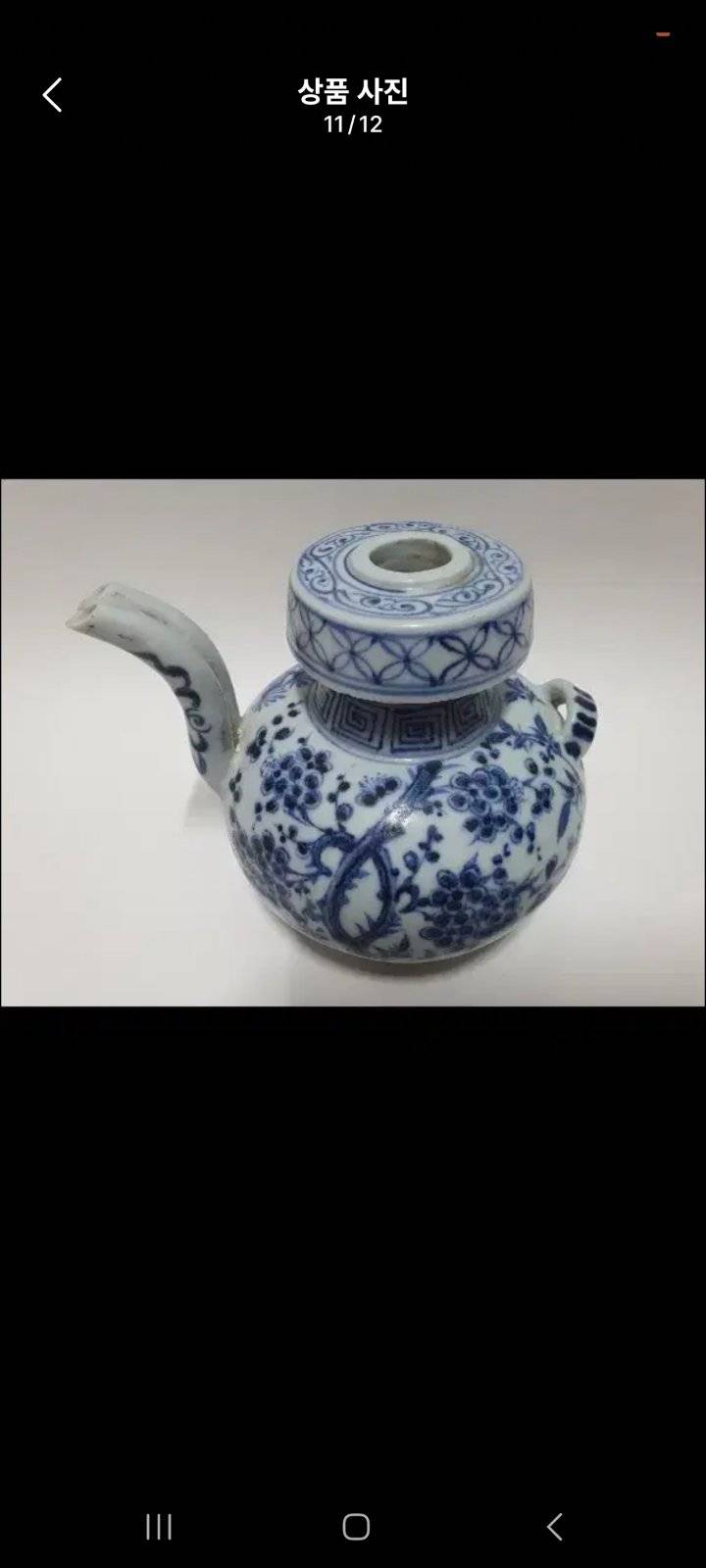
Blue and White Porcelain Kendi
Estimated value
$450 - $1,200Rarity
Uncommon(5/10)Category
Ceramics & PotteryEra
Late Ming Dynasty, circa 1580–1640Origin
ChinaAuthenticity
BLUE AND WHITE PORCELAIN KENDI: IDENTIFICATION
A globose-bodied kendi vessel featuring a stepped collar and a mammary-shaped spout with a prominent vertical seam. The decoration is executed in underglaze cobalt blue, depicting traditional 'Three Friends of Winter' (pine, bamboo, and plum) motifs on the body and geometric diaper patterns on the neck. The footring is unglazed with visible concentric chatter marks and radiating grit inclusions common in provincial kilns.
PRODUCTION & FIRING
SCARCITY
Genuine antiques with fewer examples on the market. Named makers, documented provenance, or early production examples.
Typical Characteristics
- Limited production
- Named makers
- Growing collector demand
Confidence Factors
- Chatter marks on the base are consistent with period production
- Cobalt bleed and glaze shrinkage holes align with Zhangzhou (Swatow) style
- The spout fracture reveals a genuine aged paste body rather than modern composite
CERAMICIST'S ASSESSMENT
Ceramics Historian & Kiln Specialist
The form and base characteristics strongly align with Ming export wares, though the spout's damage and the specific shade of cobalt require closer tactile inspection to rule out high-quality 20th-century reproductions.
KEY EVIDENCE
- 1V-shaped vertical seam on the spout indicating two-part mold construction.
- 2Concentric potting rings and radiating grit on the unglazed base.
- 3Presence of 'bird-track' crazing and iron oxidation spots in the glaze.
- 4Wanli-style diaper patterns on the neck and classic export floral motifs.
UNCERTAINTIES
- •The cobalt blue is somewhat vivid for early 17th-century provincial ware, requiring a check for modern chemical pigments.
- •The symmetry of the globose body is unusually high for handheld provincial wares.
WHAT WOULD IMPROVE CERTAINTY
- →Close-up of the spout fracture to examine the porosity of the paste.
- →Ultraviolet (UV) light check to ensure no seamless resin repairs exist on the body handles.
- →Rubbing of the base to verify if 'wear' is natural or chemically induced.
CONDITION & GRADE
Grading breakdown
The grade is severely impacted by the structural damage to the spout, which is a critical diagnostic feature for the kendi form.
Condition
Significant fractures and loss of material at the tip of the spout. The glaze exhibits fine crazing and earth encrustation on the unglazed footring, suggesting long-term burial or storage in a humid environment.
CERAMICS MARKET VALUE
Updated: May 11, 2026
Similar Wanli-era kendis have sold at Sotheby's and Christie's London Oriental sales between £800 and £3,000 depending on condition (2022-2023).
Who buys this
Specialist collectors of Chinese export porcelain and Southeast Asian shipwreck ceramics.
What increases value
- •Rarity of the specific 'Three Friends of Winter' motif on this form
- •Evidence of early provincial kiln markers (grit, chatter marks)
What lowers value
- •The broken spout significantly reduces value by 50-70% compared to a pristine example
- •Absence of a confirmed shipwreck provenance
What makes top-tier examples
- •Vibrant but controlled cobalt use
- •Intact delicate spouts and handles
- •Documented kiln site provenance
Grade & condition
Completeness of spout, clarity of underglaze painting, and lack of hairline cracks in the body.
Rarity & demand
For informational purposes only, not a formal appraisal.
ABOUT CERAMICS & POTTERY
Pottery, porcelain, stoneware, earthenware, and kiln-fired objects.
Ceramics & Pottery value and rarity guideSHARE THIS CURIOSITY
Have your own curiosities to discover?
Scan Your Curiosity
COMMENTS