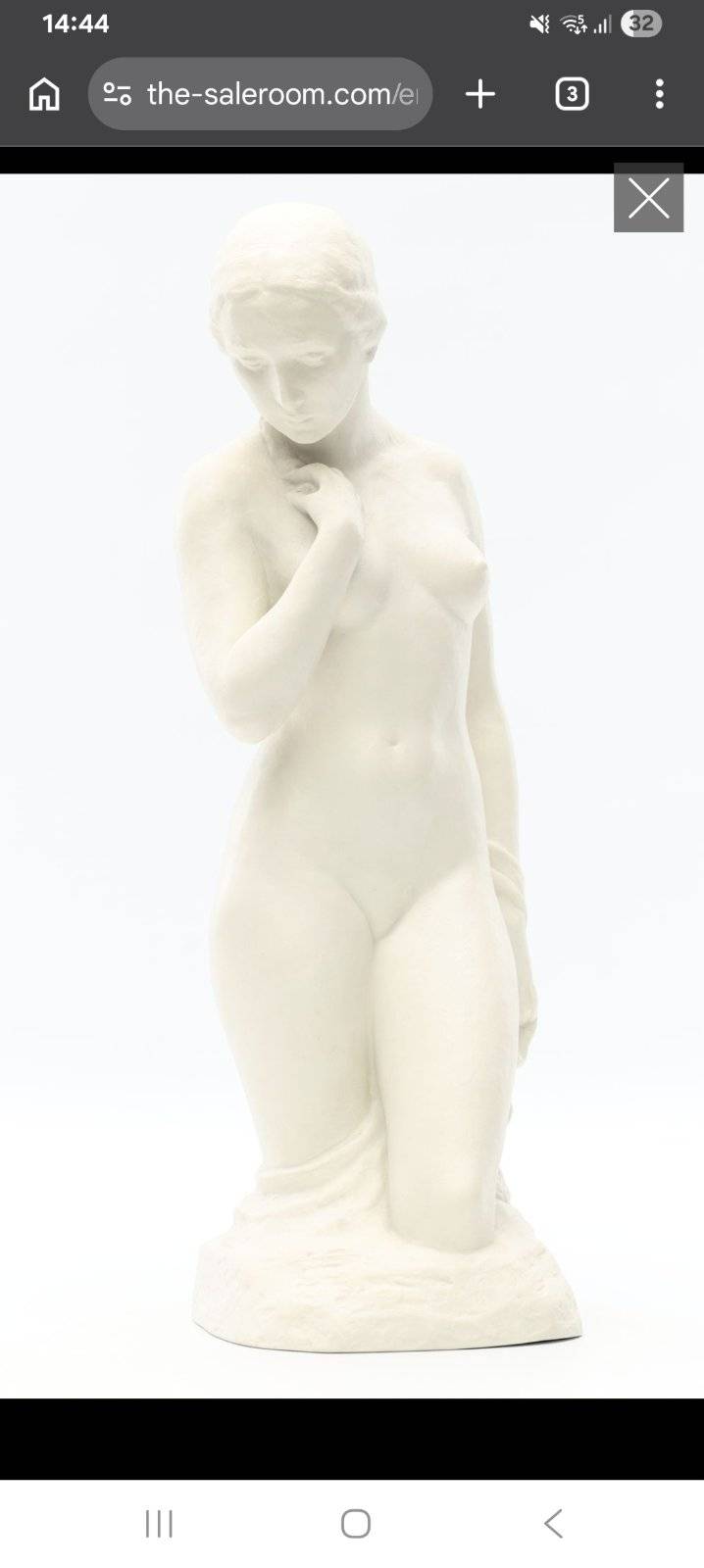
Parian Ware Figurine of 'The Greek Slave' after Hiram Powers
Estimated value
$250 - $650Rarity
Average(4/10)Category
Ceramics & PotteryBrand
MintonEra
circa 1850-1875Origin
United KingdomArtist / Creator
Hiram PowersAuthenticity
PARIAN WARE FIGURINE OF 'THE GREEK SLAVE' AFTER HIRAM POWERS: IDENTIFICATION
A mid-19th-century Parian porcelain statuette, likely a reduction of Hiram Powers' celebrated 1844 marble sculpture 'The Greek Slave'. The figure is characterized by a matte, marble-like biscuit finish, featuring soft anatomical modeling and a self-base with simulated rocky texture. The scale suggests a domestic ornamental piece, typically measuring between 30 and 50 cm in height, produced by prominent firms such as Minton or Copeland.
CROSS-CULTURAL PARALLELS
Where This Object Echoes
The revival of Greek aesthetic ideals in the 19th century through industrial production techniques.
Ritual & Ceremonial Use
- •Victorian domestic display intended to signal cultural literacy and moral refinement.
Meaning Through Time
A political allegory related to the Greek War of Independence and American abolitionism.
An example of the 19th-century commodification of high art for the middle class.
PRODUCTION & FIRING
COLLECTOR NOTES
The 1851 Great Exhibition in London displayed several Parian versions of this statue, making it one of the most widely reproduced artworks of the 19th century.
SCARCITY
Typical antique shop fare. Requires some searching but regularly available. This is where most genuine antiques fall.
Typical Characteristics
- Standard antique shop items
- Regularly available
- Moderate collector interest
Confidence Factors
- Parian ware was mass-produced in the 19th century, making originals plentiful.
- Later 20th-century reproductions exist but often lack the sharp modeling and silkiness of Victorian examples.
CERAMICIST'S ASSESSMENT
Furniture Historian & Restoration Specialist
The iconography is unmistakable and the material characteristics visible in the high-key lighting align perfectly with Parian ware of the mid-19th century.
KEY EVIDENCE
- 1Silky, unglazed matte finish diagnostic of 19th-century Parian body.
- 2Form matches the known reductions of 'The Greek Slave' produced by Minton/Copeland.
- 3Sharpness of the features and anatomy suggests an early casting from a quality mold.
- 4Rocky base texture is consistent with mid-Victorian sculptural ceramics.
UNCERTAINTIES
- •Absence of maker's marks or year cyphers on the base or interior reduces attribution certainty.
- •Potential over-cleaning/whitening in digital photography might obscure surface age/patina.
WHAT WOULD IMPROVE CERTAINTY
- →Inspect the underside of the base for impressed marks such as 'MINTON' or 'COPELAND' and date codes.
- →Examine the figure under UV light to check for professional restorations to the neck, wrists, or fingers.
- →Measure height to determine which specific reduction size was produced.
CONDITION & GRADE
Condition
The surface appears clean with no immediate signs of 'pitting' or firing cracks; however, the left hand and drapery edges are common areas for historical repairs or losses.
CERAMICS MARKET VALUE
Updated: May 11, 2026
Similar Minton reductions have achieved between £200 and £500 at specialist UK auctions like Bonhams and The Saleroom in recent years.
Who buys this
Victorian ceramic collectors and enthusiasts of Neoclassical sculpture and the 1851 Great Exhibition.
What increases value
- •Maker marks by Minton or Copeland increase value significantly.
- •Integrity of slender fingers and decorative elements like the chain (if present).
- •Presence of an Art Union stamp.
What lowers value
- •Discoloration or spotting within the porcelain body from iron impurities.
- •Repairs to the neck or extremities, which frequently break on these fragile figures.
What makes top-tier examples
- •Impressed year cyphers providing a precise production date.
- •Sharp, crisp detail in the hair and base, indicating a first-generation mold casting.
Grade & condition
Condition of the limbs, clarity of factory stamps, and lack of 'firing specks' on the surface.
Rarity & demand
For informational purposes only, not a formal appraisal.
ABOUT CERAMICS & POTTERY
Pottery, porcelain, stoneware, earthenware, and kiln-fired objects.
Ceramics & Pottery value and rarity guideSHARE THIS CURIOSITY
Have your own curiosities to discover?
Scan Your Curiosity
COMMENTS