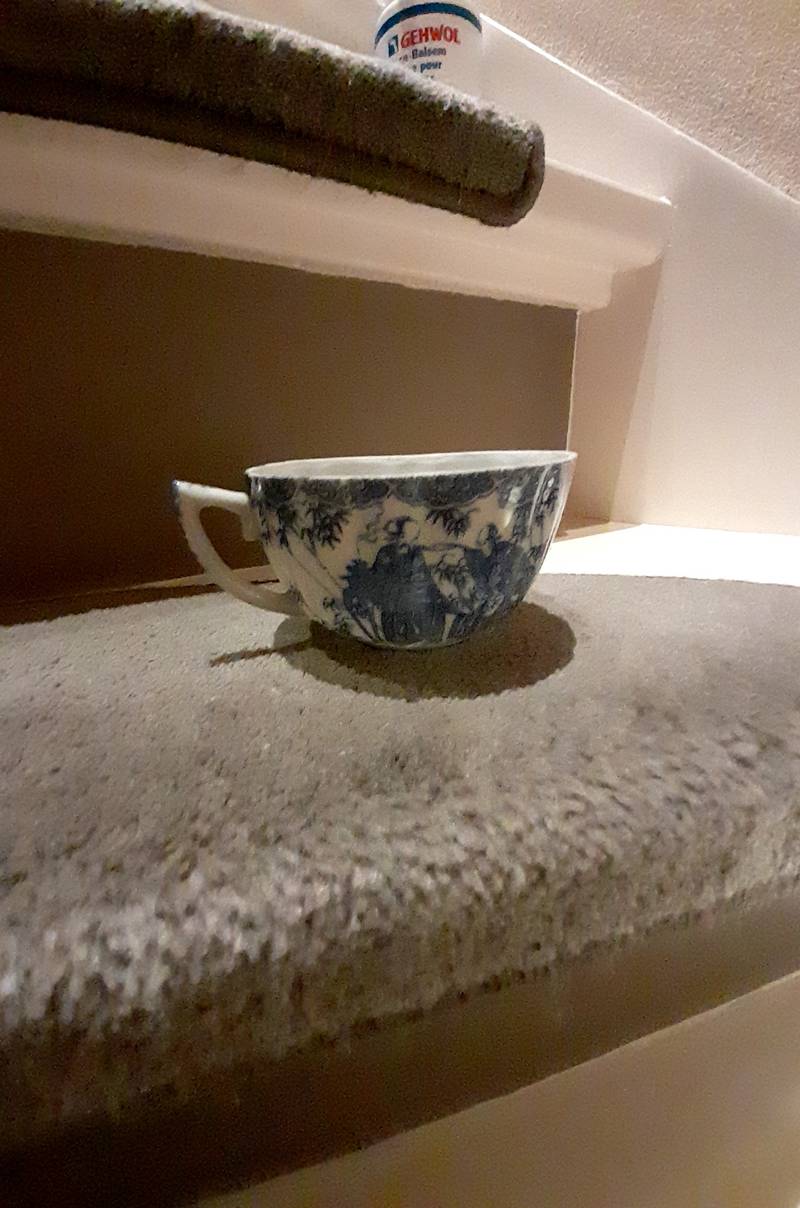
Blue and White Transferware Teacup - 'Bamboo' or Aesthetic Movement Motif, c.1880-1920
Estimated value
$15 - $45Rarity
Ordinary(3/10)Category
Ceramics & PotteryEra
circa 1880-1920Origin
United KingdomAuthenticity
BLUE AND WHITE TRANSFERWARE TEACUP - 'BAMBOO' OR AESTHETIC MOVEMENT MOTIF, C.1880-1920: IDENTIFICATION
Glazed ceramic teacup featuring a blue transfer-printed Chinoiserie design with bamboo stalks and floral scrolls. The vessel utilizes a lobed or fluted body construction typical of late 19th-century Staffordshire production, with an angular geometric handle that aligns with Aesthetic Movement design principles favored between 1870 and 1900.
CROSS-CULTURAL PARALLELS
Where This Object Echoes
The Aesthetic Movement emphasized 'Art for Art's Sake,' leading to the mass production of nature-inspired household objects.
Ritual & Ceremonial Use
- •Afternoon tea service, a ritualized social gathering in the British Empire that dictated specific vessel shapes for different grades of tea.
Meaning Through Time
Bamboo symbolized sophisticated worldliness and a connection to the 'Orient'.
PRODUCTION & FIRING
This style of transferware proliferated during the Victorian interest in Japonisme, a design trend that emerged after trade reopened with Japan in 1853. British potteries such as Ridgways, Minton, and Wedgwood produced bamboo-themed patterns to satisfy the middle-class demand for 'exotic' domestic wares during the Aesthetic Movement era.
COLLECTOR NOTES
Transferware allowed potteries to apply complex designs to 1,000 pieces in the time a single artist would take to hand-paint one.
SCARCITY
Standard antiques commonly found at estate sales and flea markets. Plentiful supply meets modest demand.
Typical Characteristics
- Moderate production runs
- Common at estate sales
- Entry-level collectibles
Confidence Factors
- Construction and handle shape are period-correct for late 19th-century earthenware
- Visible crazing and rim staining are typical of authentic Victorian lead-glazed ceramics
CERAMICIST'S ASSESSMENT
Decorative Arts Specialist
Identification is stable due to the highly characteristic handle shape and transfer technique, though the lack of a visible maker's mark prevents a score above 0.80.
KEY EVIDENCE
- 1Geometric angular handle is diagnostic of the 1880s Aesthetic style
- 2Lobed/fluted body suggests a mold-formed fabrication technique common in Staffordshire
- 3Cobalt blue transfer-print exhibits the characteristic depth of 19th-century copper-plate engraving
- 4The absence of a maker's mark on the base is common for 'penny-ware' or middle-market export sets
UNCERTAINTIES
- •Lack of backstamp makes precise factory attribution impossible without a pattern match
- •Potential hairline crack extending from the rim, although difficult to confirm without a 'ring test'
WHAT WOULD IMPROVE CERTAINTY
- →Photograph the base again with a bright sidelight to reveal any 'blind' or impressed marks
- →Perform a 'tap test' with a wooden spoon; a clear ring indicates structural integrity, while a dull thud suggests a hidden crack
- →Check the interior of the cup under UV light to identify any professional porcelain fills or repairs
CONDITION & GRADE
Grading breakdown
The transfer remains vibrant without significant 'pitting,' though the absence of a matching saucer and visible rim wear precludes a 'Fine' grade.
Condition
Visible darkening on the interior rim suggests localized glaze wear or tea staining. The foot rim appears unglazed and shows light environmental soiling consistent with age.
CERAMICS MARKET VALUE
Updated: May 10, 2026
Single Aesthetic Movement teacups of similar quality typically achieve $20-$40 on eBay or specialized Etsy vintage shops (2023-2024 data).
Who buys this
Casual collectors of blue and white transferware and enthusiasts of Victorian-era domestic tea service.
What increases value
- •Condition of the rim and handle
- •Clarity of the bamboo transfer print
- •Presence of a matching saucer (currently missing)
What lowers value
- •Unattributed maker's mark limits premium growth
- •Chips or crazing on the drinking edge
What makes top-tier examples
- •Attribution to Minton or Wedgwood
- •Mint condition with no glaze staining
- •Complete tea set in the same pattern
Grade & condition
Completeness of the set, presence of chips, and the degree of crazing or staining on the white ground.
Rarity & demand
For informational purposes only, not a formal appraisal.
ABOUT CERAMICS & POTTERY
Pottery, porcelain, stoneware, earthenware, and kiln-fired objects.
Ceramics & Pottery value and rarity guideSHARE THIS CURIOSITY
Have your own curiosities to discover?
Scan Your Curiosity
COMMENTS