
Hand-Painted Earthenware Jug
Estimated value
$40 - $120Rarity
Ordinary(3/10)Category
Ceramics & PotteryEra
Early to Mid 20th CenturyOrigin
InternationalVisual assessment
Photo analysis
Save to revisit in your watchlist. This does not add the object to your own collection.
Hand-Painted Earthenware Jug
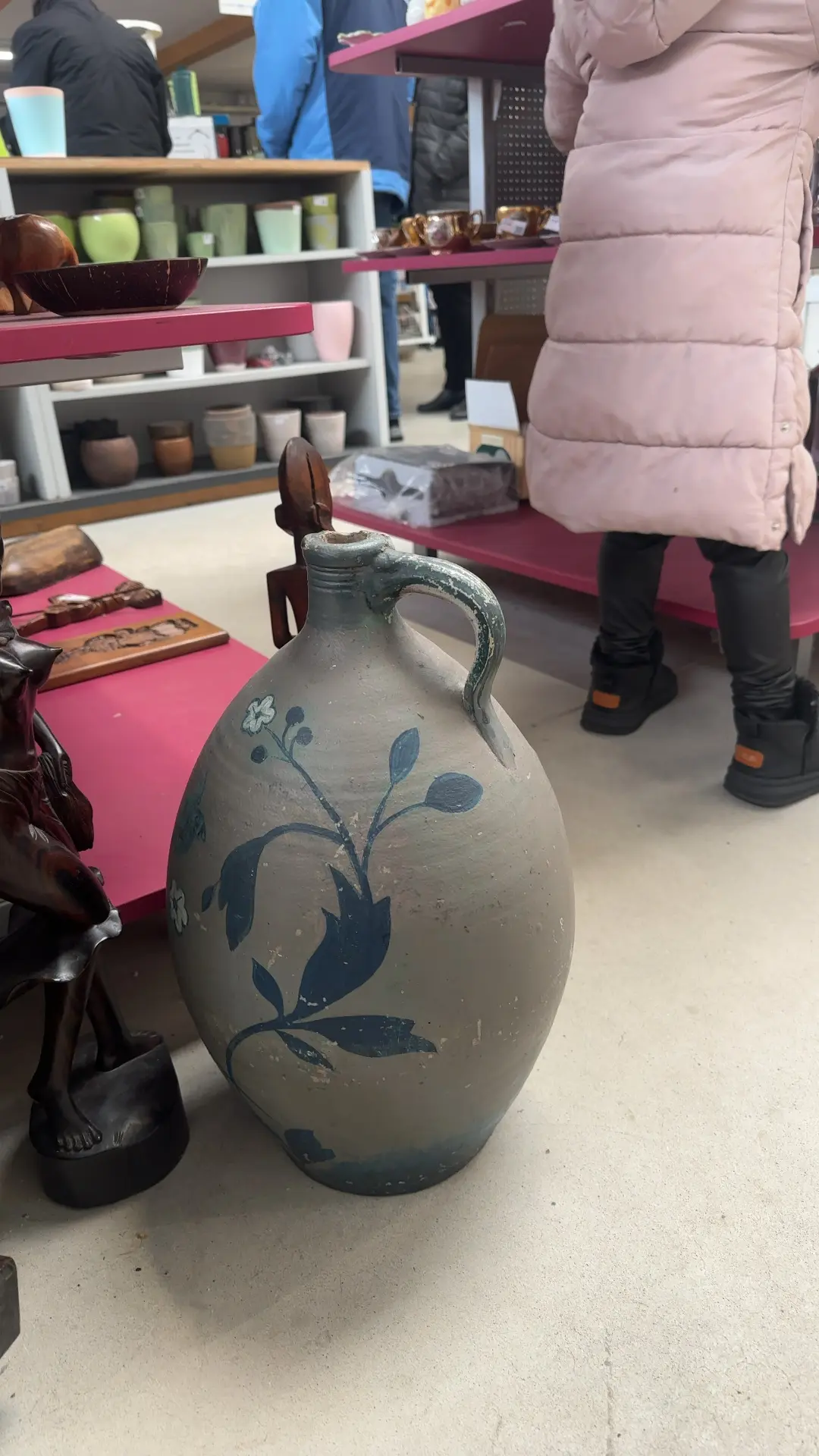
This appears to be a rustic earthenware jug, likely hand-thrown given the slightly irregular form. It features hand-painted floral or foliate decorations in a muted blue on a greyish-tan ground. The overall aesthetic suggests a utilitarian object that has been decoratively enhanced, possibly for domestic use in a rural setting.
Related traditions
European Folk Art Pottery
18th to 20th Century
Similar rustic, hand-decorated earthenware forms and motifs are found throughout various European folk art traditions, particularly from regions known for traditional pottery production.
Use and ceremony
Pre-Industrial
Primarily a functional household item, often made locally.
20th Century onwards
Appreciated for its aesthetic, rustic charm, and connection to traditional crafts, often used decoratively rather than functionally.
Origins and context
Earthenware jugs of this form have been used for centuries across various cultures for storing and serving liquids such as water, wine, or cider. Their decorative nature often reflects regional folk art traditions, where practical items were embellished to bring beauty into everyday life. The simplistic, stylized floral motifs seen here are common in European country pottery.
Further details
Before modern refrigeration and bottling, large ceramic vessels like this jug were essential for household liquid storage.
The art of hand-painting pottery often involved women in rural communities, passing down decorative motifs and techniques through generations.
Attribution and evidence
The visual evidence strongly points to an earthenware jug with hand-painted decoration, showing typical signs of age and use. While the exact origin and date remain imprecise without marks, the material and style are consistent.
Identifying details
- 1The overall form of the vessel is a classic jug/flagon shape, common in earthenware.
- 2Textural and visual evidence suggests an earthenware body, possibly unglazed or only minimally glazed.
- 3The floral decoration is clearly hand-painted, showing brushstrokes and some pigment irregularity.
- 4The muted color palette and rustic decoration align with folk art traditions.
- 5Visible paint loss indicates significant age and handling.
Photographs that would help
- Examine the base and interior for any maker's marks, impressed numbers, or signatures.
- A gentle tap test could help identify any hairline cracks or repairs.
- Inspect the ceramic body for any signs of modern porosity or composition that would indicate a recent reproduction rather than an older piece.
- High-resolution images of the base and rim would further aid assessment.
Terms in this record
- Earthenware
- A type of pottery made from clay that is fired at relatively low temperatures (around 1,000 to 1,150 °C) and is typically porous, opaque, and relatively soft. It is often glazed to make it watertight.
- Utilitarian ware
- Pottery or other objects designed primarily for practical daily use rather than purely decorative purposes, though they may also be aesthetically pleasing.
- Foliate decoration
- Ornamentation inspired by or featuring leaves, branches, and leafy patterns.
Wear and preservation
The jug shows significant signs of wear, including paint loss and surface abrasions, especially on the handle and painted areas. This is consistent with an older, used piece. There's no visible structural damage like large chips or cracks in the provided images, though a full inspection would be required to confirm.
Glaze and painted decoration
The surface exhibits a matte, unglazed or minimally glazed finish, typical of utilitarian earthenware. There’s visible wear and some loss of the blue pigment, particularly on the handle and the painted designs, suggesting age and handling. The greyish-tan background color appears to be part of the ceramic body or a thin wash.
Recorded physical details
Based on its size and apparent material, it would likely be substantial and sturdy, possessing a noticeable heft typical of thick-walled earthenware.
Scarcity and surviving examples
Ordinary · 3/10 estimated rarity
This is a qualitative collection score, not a measured survival count, market percentile or proof of authenticity.
What the photographs establish
Interpretation of the photographs and supplied context. This does not authenticate the object.
- Utilitarian nature and folk art style make it less susceptible to high-value forgery.
- Wear patterns appear consistent with genuine age and use.
- Lack of identifying marks makes precise attribution difficult, but also reduces motivation for outright fakery.
Value and its basis
Estimate recorded: Feb 27, 2026
How we estimate value
- No documented comparable sales are shown for this estimate
- Condition, completeness & craftsmanship
- Demand assumptions may not reflect current transactions
- The range is an estimate, not an asking price or sale result
For informational purposes only, not a formal appraisal.
Related objects
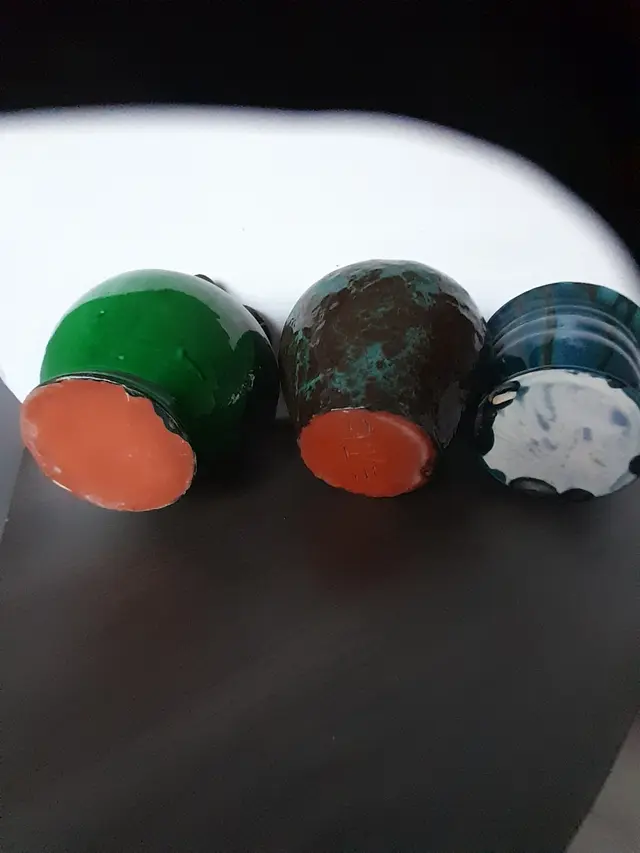
Mid-Century Modern Glazed Earthenware Jugs and Vase
Same category
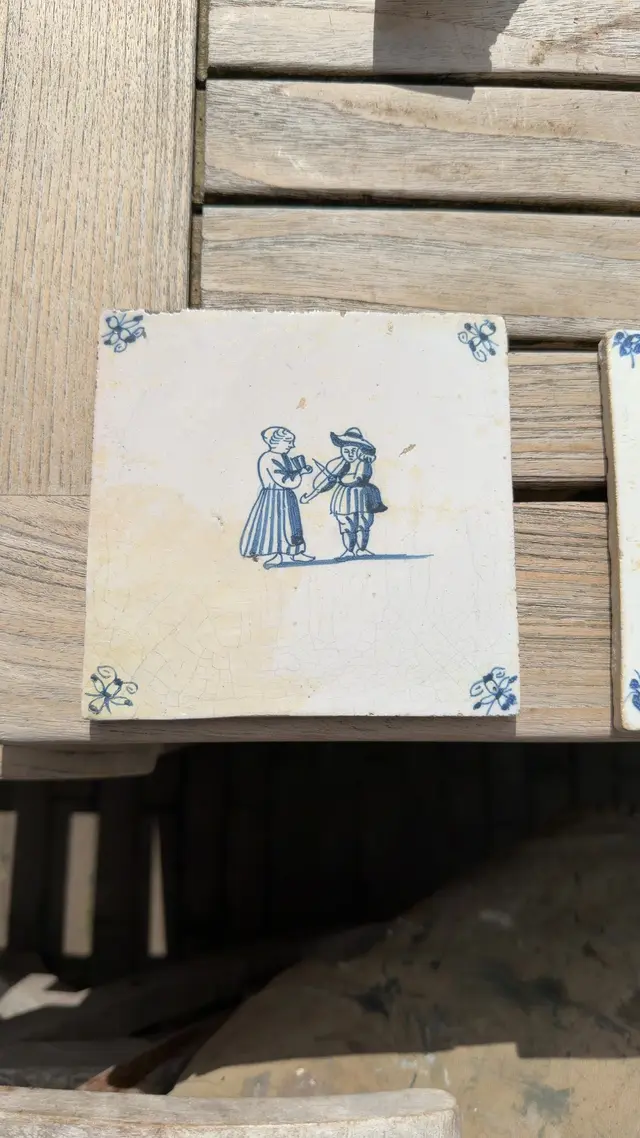
Delft Blue Tin-Glazed Earthenware Tile
Same category
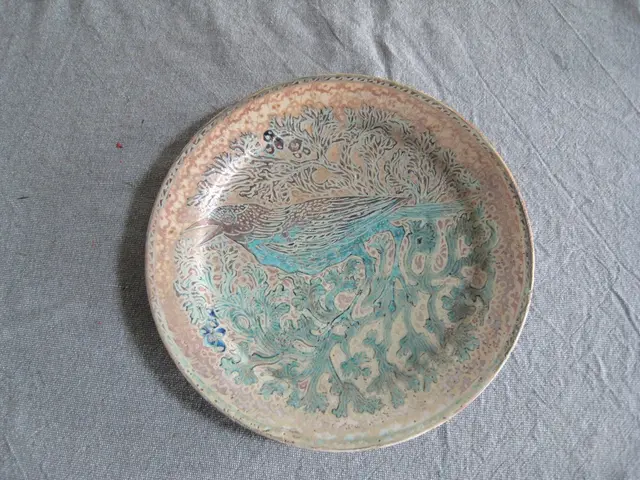
Hand-Decorated Ceramic Plate with Bird Motif
Same category
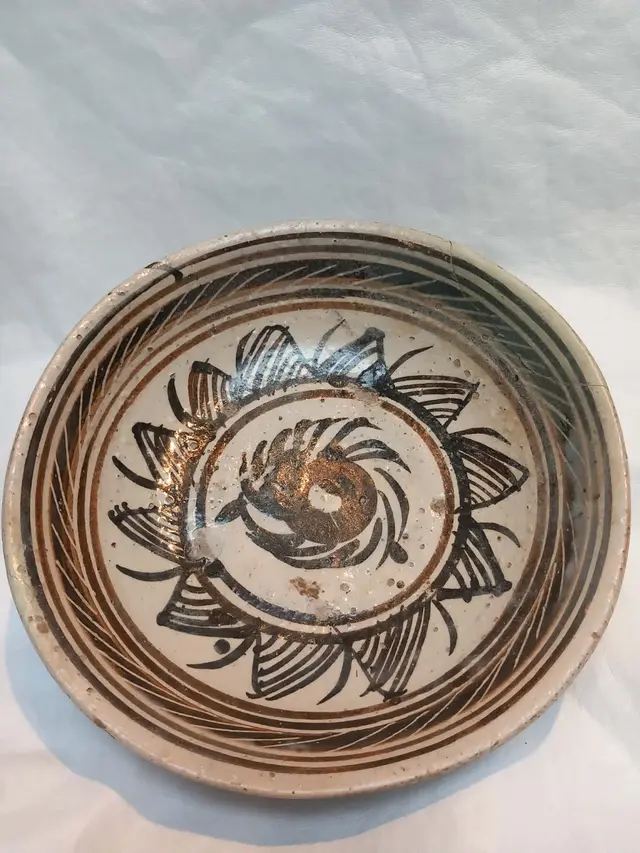
Chinese Cizhou-style Painted Stoneware Bowl, Song to Yuan Dynasty type
Same category
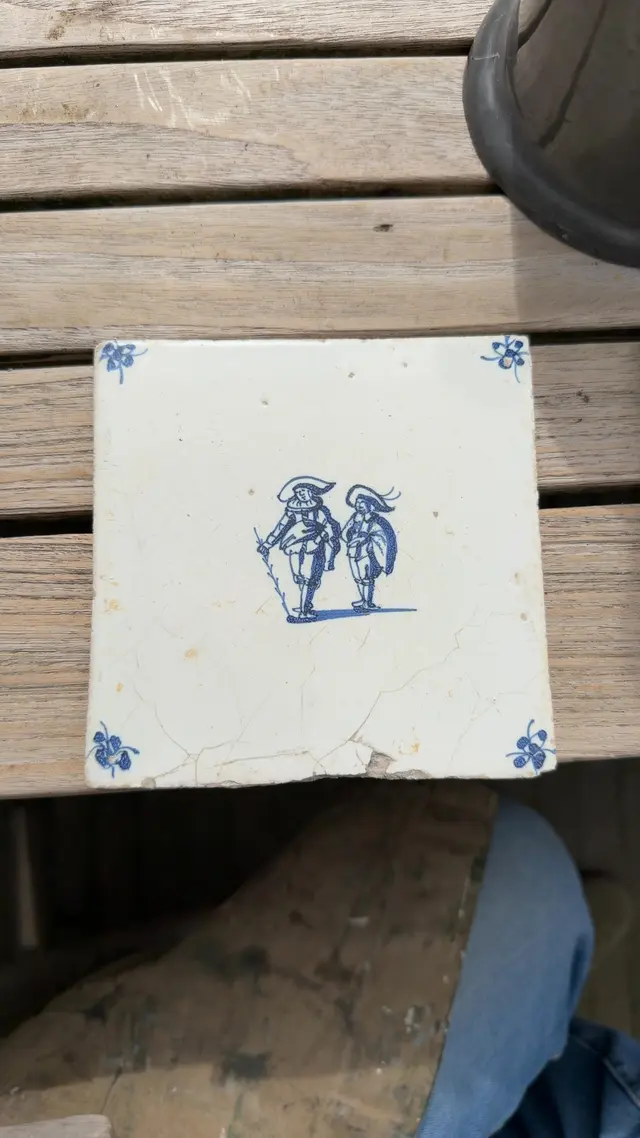
Delft Tin-Glazed Earthenware Tile
Same category
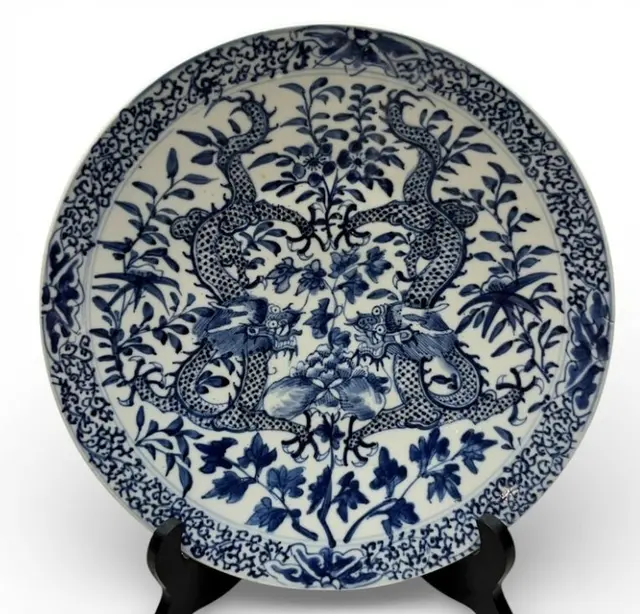
Chinese Blue and White Porcelain 'Dragon and Phoenix' Charger
Same category
Explore Ceramics & Pottery
Pottery, porcelain, stoneware, earthenware, and kiln-fired objects.
Ceramics & Pottery value and rarity guideShare this find
A place for your ceramics
Keep its photographs, maker’s marks and the story you know in one object record. Start with a photo.
Create an account for 10 free scans. No credit card needed.
Join the conversation