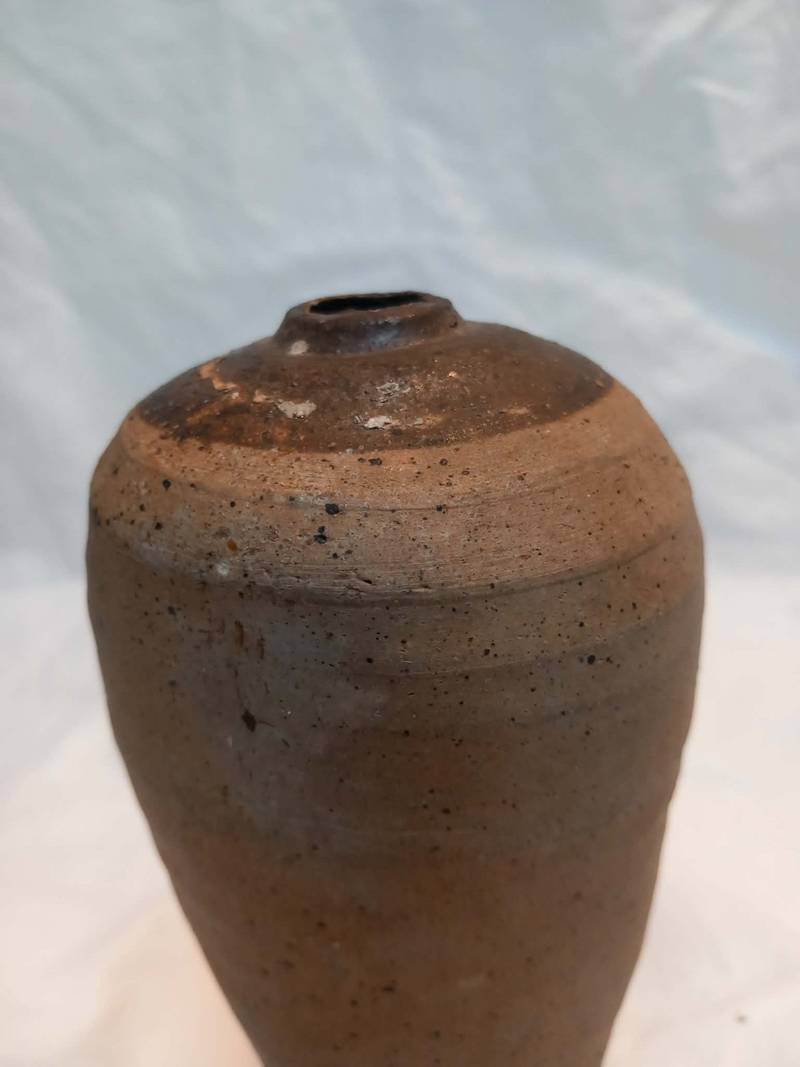
Chinese Brown-Glazed Cizhou-type 'Meiping' Storage Jar, Jin to Yuan Dynasty (1115–1368)
Estimated value
$150 - $600Rarity
Average(4/10)Category
Ceramics & PotteryEra
circa 1200–1350Origin
ChinaAuthenticity
CHINESE BROWN-GLAZED CIZHOU-TYPE 'MEIPING' STORAGE JAR, JIN TO YUAN DYNASTY (1115–1368): IDENTIFICATION
A high-shouldered, tapering storage vessel of utilitarian form, consistent with Cizhou-type stoneware production from Northern Chinese kilns. The piece features a small, narrow mouth with a rolled lip and a distinct iron-brown wash or slip concentrated on the upper shoulder. The lower body remains unglazed, revealing a coarse, buff-colored stoneware clay with characteristic dark mineral inclusions and visible horizontal potting rings created on a manual wheel.
SCARCITY
Typical antique shop fare. Requires some searching but regularly available. This is where most genuine antiques fall.
Typical Characteristics
- Standard antique shop items
- Regularly available
- Moderate collector interest
Confidence Factors
- Utility wares of this type are frequently reproduced using traditional methods in modern-day China.
- Surface deposits appear somewhat concentrated and require microscopic inspection to confirm genuine mineral precipitation.
- Form is consistent with period production but lacks the refined potting seen in high-tier kiln sites.
CERAMICIST'S ASSESSMENT
Asian Art Specialist
The form and material are highly consistent with Jin/Yuan period utility jars; however, the lack of an image of the base and the prevalence of modern reproductions of this specific type warrant a moderate confidence level.
KEY EVIDENCE
- 1Mouth profile and narrow aperture are diagnostic of Northern Chinese storage traditions.
- 2Clay body composition shows characteristic dark iron 'flecks' common to Cizhou kiln environments.
- 3Presence of 'chatter' marks and wheel rings at the base suggests manual production common before modern slip-casting.
- 4Iron-brown slip application shows oxidative firing typical of Yuan-era kilns.
UNCERTAINTIES
- •The rim damage is very sharp, potentially suggesting a more recent fracture than the supposed age of the piece.
- •The uniform color of the base clay may indicate a modern firing rather than the variegated heat exposure of an ancient dragon kiln.
WHAT WOULD IMPROVE CERTAINTY
- →Provide a high-resolution photograph of the footrim (base) to check for kiln sand and paring marks.
- →Examine the interior for spiral potting marks which help distinguish wheel-throwing from modern molding.
- →Check the rim fracture with a magnification lens for signs of internal oxidation.
CONDITION & GRADE
Grading breakdown
The substantial rim damage and visible surface pitting from kiln atmosphere impurities significantly impact the grade compared to intact museum examples.
Condition
Significant impact damage and losses are visible at the mouth rim. The body shows typical abrasions and surface encrustations consistent with long-term burial or outdoor exposure.
Weight & feel
Approximately 1.5 to 2.2 kg; the thick-walled construction of the base suggests a low center of gravity for stability during storage.
CERAMICS MARKET VALUE
Updated: May 11, 2026
Who buys this
Collectors of early Chinese stoneware and interior designers seeking organic, architectural elements with historical weight.
What increases value
- •Authenticity of the period slip application
- •Completeness of the mouth rim (currently damaged)
- •Size and presence of original burial deposits
What lowers value
- •Extensive rim loss significantly reduces market value to a study-piece level
- •Absence of provenance can make these difficult to sell at premium auctions
What makes top-tier examples
- •Uniform, lustrous oil-spot or hare's-fur glazing
- •Intact mouth and foot without chipping
- •Proven excavation history or academic publication
Grade & condition
Completeness of the rim, intensity of glaze color, and surface patination stability.
Rarity & demand
For informational purposes only, not a formal appraisal.
ABOUT CERAMICS & POTTERY
Pottery, porcelain, stoneware, earthenware, and kiln-fired objects.
Ceramics & Pottery value and rarity guideSHARE THIS CURIOSITY
Have your own curiosities to discover?
Scan Your Curiosity
COMMENTS