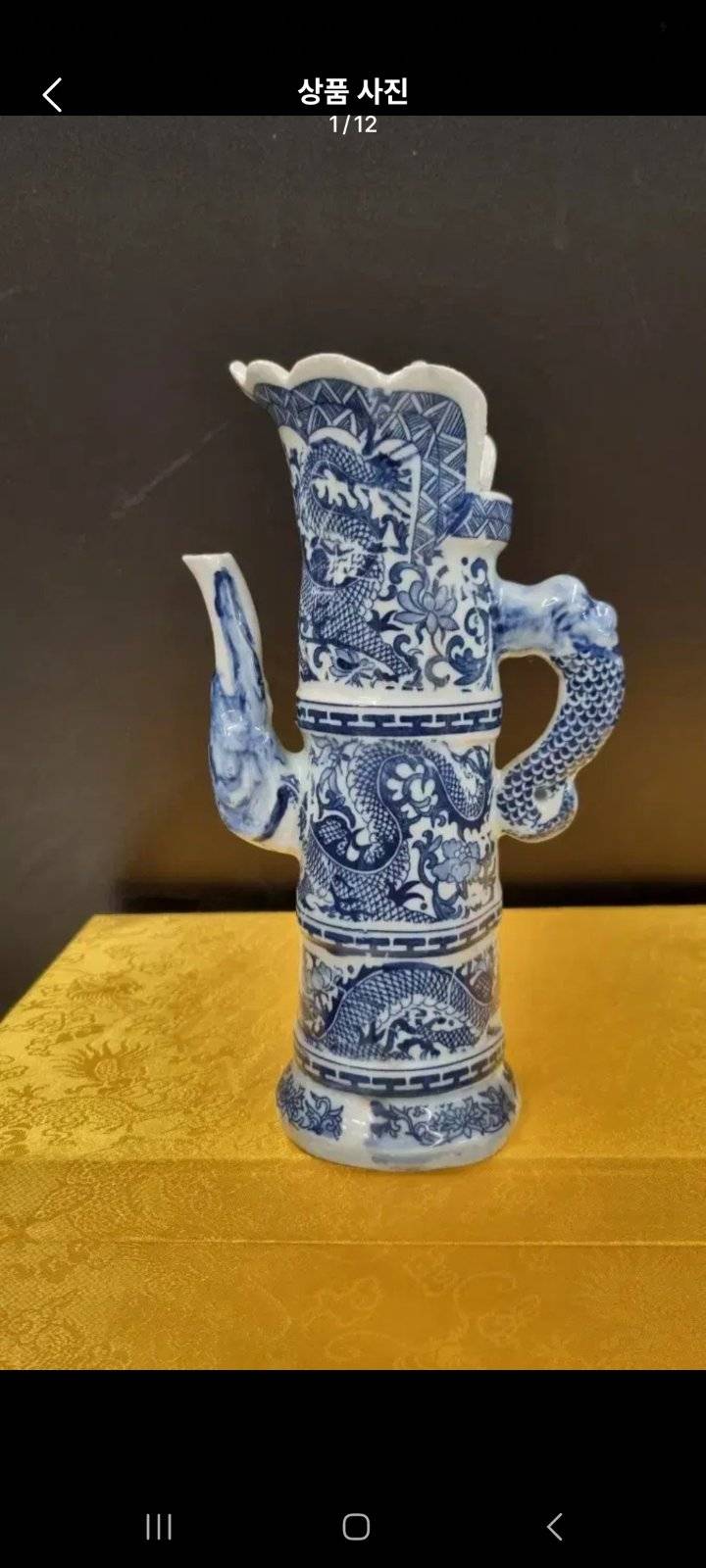
Blue and White Porcelain Dragon Ewer in Bamboo-Form
Estimated value
$45 - $125Rarity
Ordinary(3/10)Category
Ceramics & PotteryEra
Late 20th CenturyOrigin
ChinaAuthenticity
BLUE AND WHITE PORCELAIN DRAGON EWER IN BAMBOO-FORM: IDENTIFICATION
A blue and white porcelain ewer designed in the shape of a vertical bamboo stalk. The body features three tiers of cobalt blue underglaze decoration depicting five-clawed imperial dragons amidst stylized clouds and floral scrolls. The handle and spout are modeled as chih-lung (young dragons), with the handle forming a curved dragon body and the spout emerging from a dragon's mouth. A six-character Qianlong seal mark in zhuanshu script is visible on the base in underglaze blue.
CROSS-CULTURAL PARALLELS
Where This Object Echoes
Bamboo represents the Four Gentlemen (Sijunzi) virtues in Chinese art.
Ritual & Ceremonial Use
- •Traditional tea ceremonies or wine service within a scholar's studio setting.
Meaning Through Time
A high-status imperial gift signaling the Emperor's virtue.
Mass-produced decorative object celebrating traditional Chinese aesthetic heritage.
PRODUCTION & FIRING
SCARCITY
Standard antiques commonly found at estate sales and flea markets. Plentiful supply meets modest demand.
Typical Characteristics
- Moderate production runs
- Common at estate sales
- Entry-level collectibles
Confidence Factors
- The Qianlong seal mark is executed with modern, stiff brushwork lacking the calligraphic fluidness of period imperial marks
- Footrim shows 'faked' dirt/patina that appears as a surface smudge rather than embedded oxidation from centuries of display
- Glaze shows high-gloss reflective properties consistent with modern gas kilns rather than wood-fired imperial kilns
Expert review recommended. Consider consulting a specialist before making purchasing decisions.
CERAMICIST'S ASSESSMENT
Ceramics Historian & Kiln Specialist
The identification of the form and mark is certain, but the high authenticity risk is based on visual indicators of modern production methods common in export market pieces.
KEY EVIDENCE
- 1Bamboo-form moulding indicates a specific decorative style popular in the Qing revivalist tradition
- 2Cobalt blue lacks the natural iron oxide spots (manganese clustering) found in true antique wares
- 3Thezhuanshu (seal script) mark on the base is a common 'apocryphal' mark seen on contemporary export porcelain
- 4Dragon handles and spouts are standard motifs for high-end decorative reproductions
UNCERTAINTIES
- •Uniformity of the blue pigment suggests synthetic cobalt
- •Artificial staining on the unglazed footrim
- •Lack of 'orange peel' texture or pinholing in the glaze
WHAT WOULD IMPROVE CERTAINTY
- →Examine the interior for slip-casting seams which confirm modern manufacture
- →Perform a 'tap test' with a fingernail; a high-pitched ring indicates high-fire modern porcelain
- →Photograph the item under UV light; modern glazes often fluoresce differently than historical mineral glazes
CONDITION & GRADE
Condition
Surface shows artificial aging on the footrim, likely applied with a tinted wash to simulate soil or cupboard wear. No visible hairline fractures or chips are present in the provided images.
CERAMICS MARKET VALUE
Updated: May 11, 2026
Similar contemporary bamboo-form pitchers sell regularly on platforms like eBay and Etsy in the $40-$100 range (2023-2024 data).
Who buys this
Home decorators seeking traditional Asian aesthetics and entry-level collectors of modern Chinese export wares.
What increases value
- •Visual appeal of the bamboo form
- •Intricacy of the dragon-modeled spout and handle
- •Intact condition with no visible chips
What lowers value
- •Commonly recognized as a modern reproduction by specialist buyers
- •Lack of provenance or exhibition history
What makes top-tier examples
- •Authentic 18th-century examples would feature mineral-derived cobalt and erratic 'kiln dust' inclusions
- •Greater detail in the hand-painted dragon scales rather than standardized patterns
Grade & condition
Glaze integrity, clarity of the cobalt underglaze, and the absence of firing cracks.
Rarity & demand
For informational purposes only, not a formal appraisal.
ABOUT CERAMICS & POTTERY
Pottery, porcelain, stoneware, earthenware, and kiln-fired objects.
Ceramics & Pottery value and rarity guideSHARE THIS CURIOSITY
Have your own curiosities to discover?
Scan Your Curiosity
COMMENTS