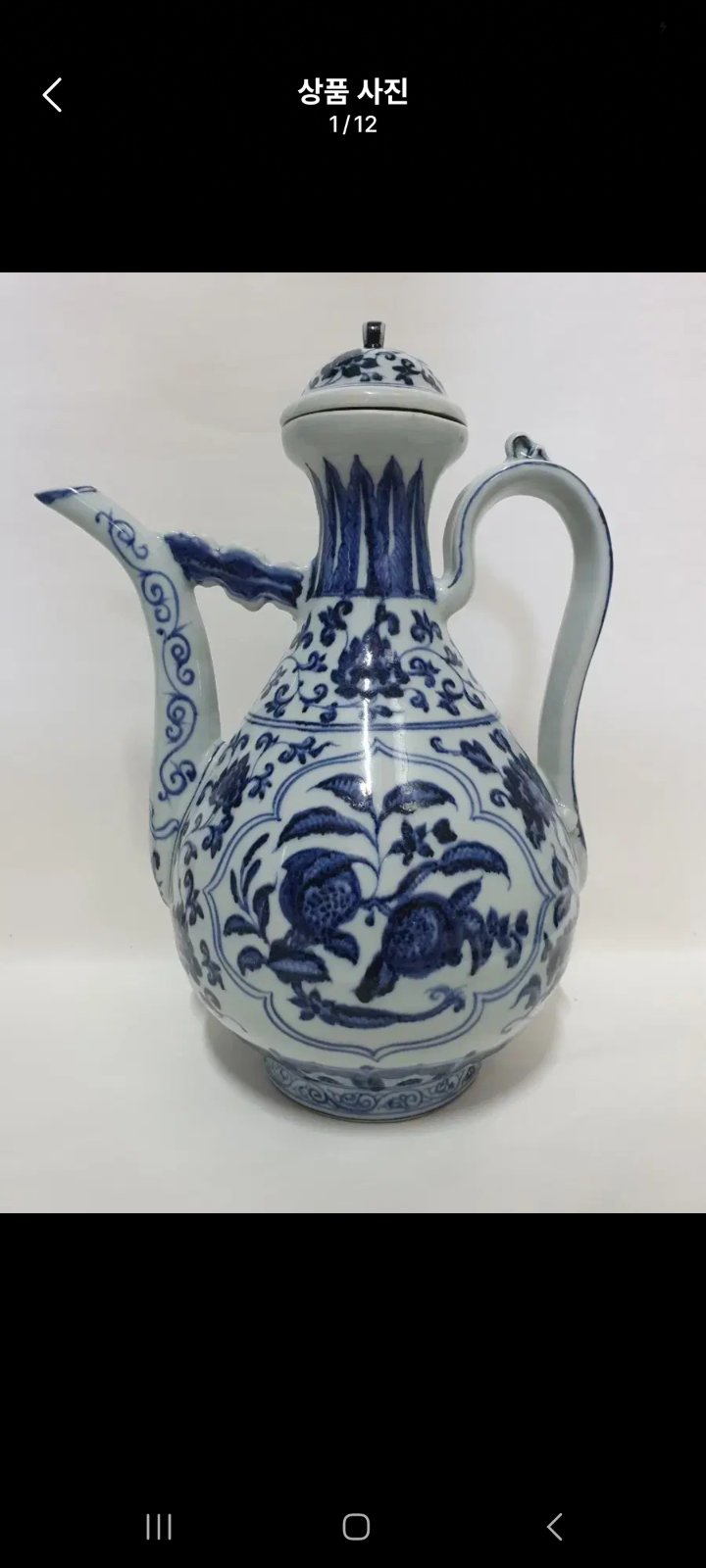
Chinese Blue and White Ewer with Apocryphal Xuande Mark
Estimated value
$50 - $150Rarity
Common(2/10)Category
Ceramics & PotteryEra
Late 20th C. - 21st C.Origin
🇨🇳 ChinaAuthenticity
KILN TO COLLECTION: CHINESE BLUE AND WHITE EWER WITH APOCRYPHAL XUANDE MARK
A Chinese blue and white ceramic ewer, modeled after early 15th-century Ming dynasty prototypes. The vessel features a pear-shaped body with a slender neck, a flared rim fitted with a domed cover, and a curved spout connected to the neck by a cloud-shaped strut. A curved strap handle is applied to the opposite side, bearing a horizontally written six-character reign mark: 'Da Ming Xuande Nian Zhi'. The body is decorated in underglaze cobalt blue with ogival panels enclosing fruiting branches—likely peaches and pomegranates—surrounded by scrolling floral vines. Plantain leaves encircle the neck, while key-fret and classic scroll borders frame the upper and lower registers. The blue pigment features deliberate, intense dark spots attempting to simulate the 'heaping and piling' effect historically associated with the iron-rich imported cobalt of the Ming era.
CLAY ACROSS CULTURES
Where This Object Echoes
The fundamental shape of this ewer, particularly the spout with its reinforcing strut, was directly copied from Islamic metalwork forms imported into China.
Ritual & Ceremonial Use
- •Pouring wine or liquids during formal banquets or ritual offerings.
Meaning Through Time
An imperial court vessel reflecting cross-cultural trade and technological triumph in kiln chemistry.
A decorative homage to China's ceramic golden age, produced largely for commercial and aesthetic appreciation.
FROM KILN TO COLLECTOR
KILN-SIDE SECRETS
The distinctive cloud-shaped strut connecting the neck to the spout was originally a structural necessity in Islamic metal ewers transferred directly into the much heavier clay medium.
The 'heaping and piling' effect, originally a chemical accident caused by unmixed iron in imported Persian cobalt, became so coveted that later copyists intentionally painted dark blue dots onto pieces to fake the antique flaw.
HOW SCARCE IS IT?
Older mass-produced items still widely available. Easy to find on eBay, antique malls, and estate sales in large quantities.
Typical Characteristics
- Mass produced historically
- High survival rate
- Readily available everywhere
Confidence Factors
- The unglazed footrim is flat, stark white, and completely lacks the iron oxidation (rust spots) or firing grit typically found on genuine 15th-century imperial porcelain bases.
- The 'heaping and piling' effect is artificially applied via stippling with a darker blue pigment, rather than occurring naturally from concentrated iron bursting through the glaze.
- The transparent glaze is exceptionally glassy and bright, missing the subtle blueish 'duck-egg' tint of genuine early Ming glazes.
- The calligraphy of the reign mark on the handle appears stiff and lacks the fluid, practiced rhythm of an imperial kiln scribe.
Expert review recommended. Consider consulting a specialist before making purchasing decisions.
CERAMICIST'S ASSESSMENT
Asian Art Specialist
The combination of forced, artificial cobalt stippling, an overly bright modern paste/foot rim, and a glassy surface are standard, easily identifiable characteristics of late 20th/21st-century Jingdezhen decorative reproductions.
KEY EVIDENCE
- 1Six-character horizontal Da Ming Xuande Nian Zhi mark on the handle.
- 2Intentionally painted 'heaping and piling' dark spots in the cobalt blue decoration.
- 3Smooth, uniform, highly refined white biscuit foot rim.
- 4Glassy, highly reflective transparent surface glaze.
UNCERTAINTIES
- •The paste on the foot rim shows modern mechanical refinement rather than the slightly grainy texture of older clay.
- •Absence of genuine age indicators like microscopic scratching on the glaze surface or natural iron oxidation on the unglazed areas.
WHAT WOULD IMPROVE CERTAINTY
- →Examine the unglazed footrim under 10x magnification to check for modern cutting tool marks and paste density.
- →Perform a thermoluminescence (TL) test if an absolute dating confirmation is required by the owner, though visual evidence strongly points to modern origin.
CONDITION & GRADE
Condition
Visually intact with no visible chips, cracks, or restorations apparent in the provided images. The surface lacks genuine wear patterns, scratching, or glaze degradation typical of an object centuries old.
Surface
Finished with a highly reflective, unctuous transparent glaze. The painted underglaze cobalt shows harsh, intentionally stippled darker spots meant to imitate antique oxidation, lacking the soft, sunken diffusion of period examples.
Weight & feel
Likely dense and uniformly heavy, characteristic of mechanically refined modern porcelain clay, lacking the subtle buoyancy of 15th-century paste.
CERAMICS MARKET VALUE
Updated: May 6, 2026
Who buys this
Interior decorators and casual buyers seeking the classic visual impact of Ming-style blue and white ceramics without requiring antique authenticity.
What increases value
- •Presence of the original fitted lid
- •Bold, contrasting decorative impact
- •Undamaged, intact spout and handle
What lowers value
- •Widespread availability of identical modern reproductions
- •Misrepresentation of age, which completely voids higher antique valuation frameworks
What makes top-tier examples
- •Extremely close mimicking of the original 'Su Ni Po' cobalt spread
- •Refined painting techniques that avoid looking mass-produced
Grade & condition
Condition of the extremities (spout tip, handle, lid finial) and the overall aesthetic quality of the painting.
Rarity & demand
For informational purposes only, not a formal appraisal.
CONTEXT ANALYSIS
How your provided context compares with Curiosa.com scanner findings.
What Aligned
- User's assessment of 'minor wear' aligns with the visually clean, complete condition of the object seen in the images.
What Conflicted
- User asserts an 'Original/Authentic' 1500 origin; however, the reign mark denotes the Xuande period (1426-1435), directly contradicting the 1500 date. Furthermore, the pristine white foot rim, glassy glaze, and artificially stippled cobalt clearly identify this as a modern reproduction rather than an authentic Ming artifact.
SIMILAR CURIOSITIES
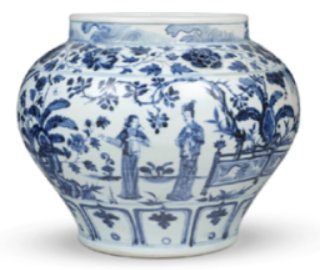
Blue and White Porcelain Jar (Guan)
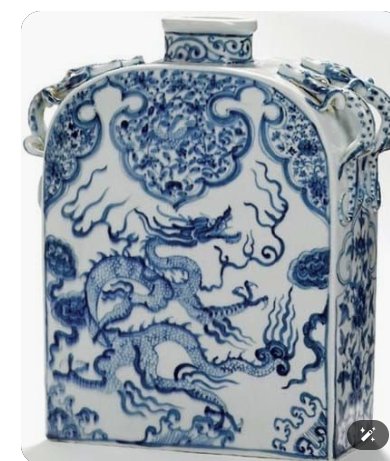
Ming Dynasty Blue and White Dragon Moon Flask (Bianhu)
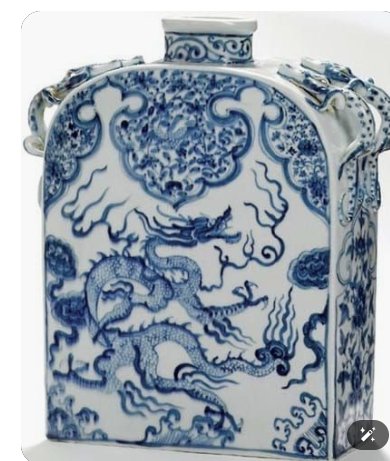
Chinese Blue and White Porcelain Moonflask-form Wall Vase
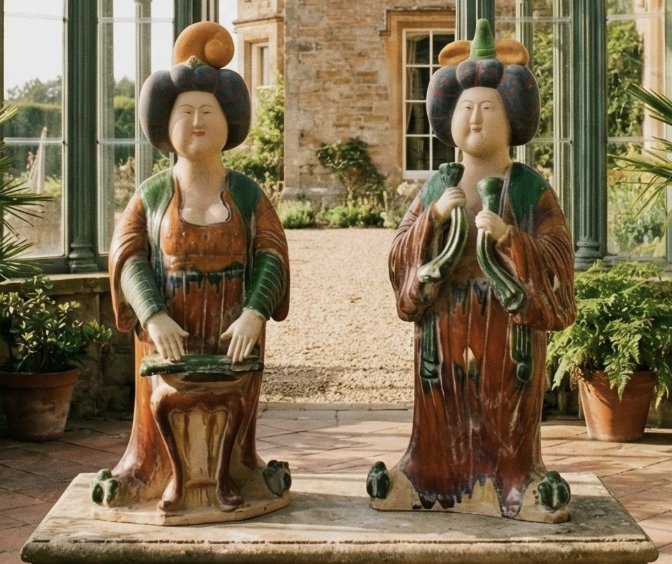
Tang Dynasty Style Sancai Glazed Pottery Musicians
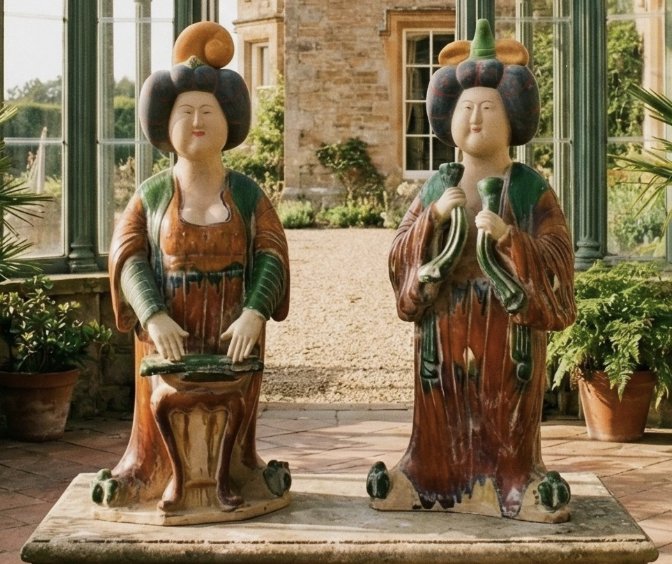
Tang Dynasty Style Sancai Glazed Pottery Musicians

Sancai Glazed Camel with Musicians
ABOUT CERAMICS & POTTERY
Pottery, porcelain, stoneware, earthenware, and kiln-fired objects.
Ceramics & Pottery value and rarity guideSHARE THIS CURIOSITY
Have your own curiosities to discover?
Scan Your Curiosity
COMMENTS
No comments yet. Be the first to share your thoughts!
Sign in to leave a comment