Japanese Lacquer 'Magic Wealth Mallet' (Uchide-no-kozuchi)
Estimated value
$2,000 - $5,000Rarity
Uncommon(5/10)Type
Museum ObjectCategory
Asian ArtEra
c. 1900 / Meiji PeriodOrigin
JapanAuthenticity
JAPANESE LACQUER 'MAGIC WEALTH MALLET' (UCHIDE-NO-KOZUCHI): IDENTIFICATION
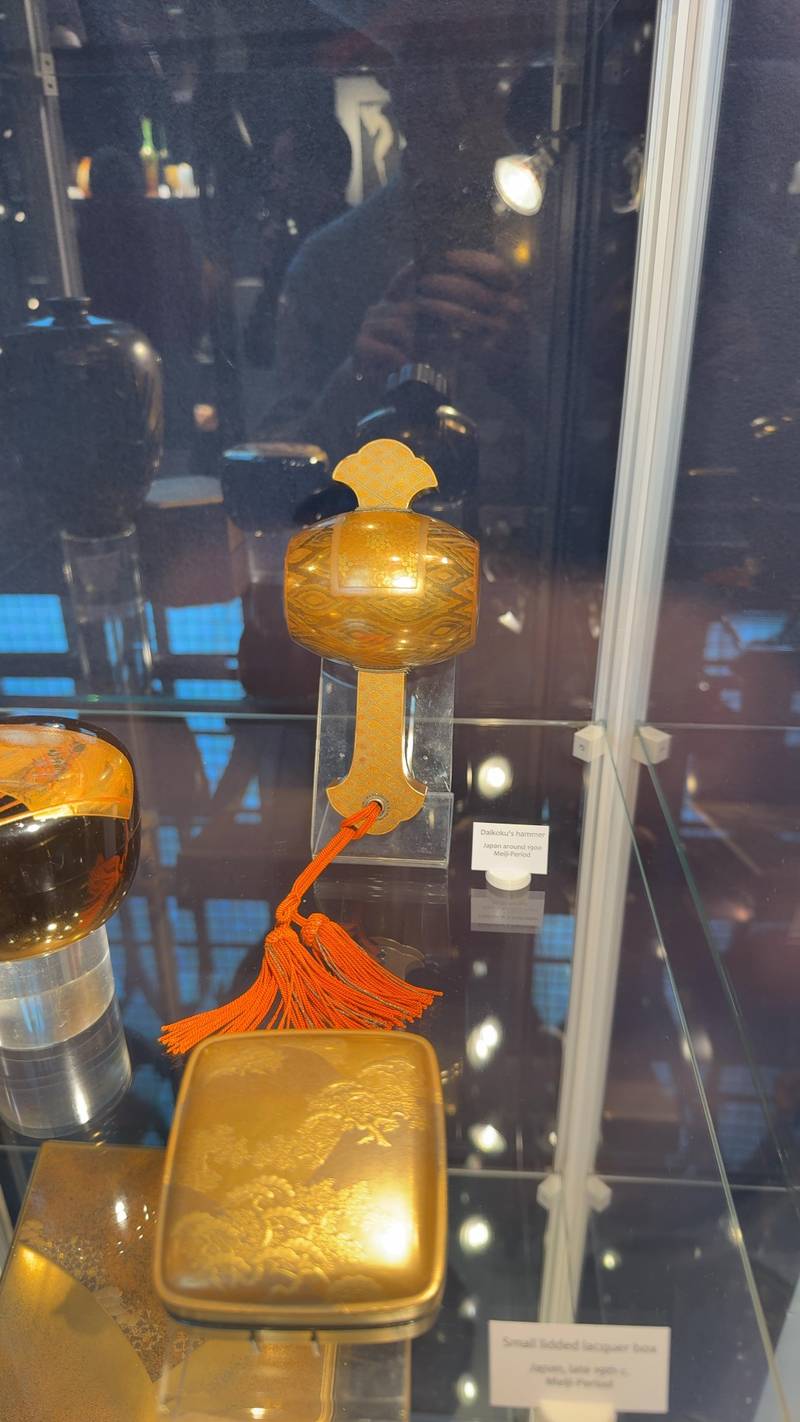
A superb example of a Japanese uchide-no-kozuchi, the mythical wealth-granting mallet of the deity Daikokuten. The entire surface reflects the lacquer artist's skill, employing intricate maki-e (sprinkled picture) techniques. The brilliant gold finish is likely achieved through various grades of gold powder, meticulously applied over a carved wood core to create depth and pattern. The end of the mallet head features a circular cartouche with a design of cranes, symbols of longevity, adding another layer of auspicious meaning.
CROSS-CULTURAL PARALLELS
Where This Object Echoes
The mallet echoes the concept of a mythical hammer with special powers, much like Mjölnir, the hammer of the thunder god Thor.
The idea of a magical object that produces wealth has parallels in European fairy tales, such as the 'magic table' (Tischlein, deck dich) that sets itself with food or the goose that lays golden eggs.
Ritual & Ceremonial Use
- •Displaying an uchide-no-kozuchi in a home, particularly near an altar or in a main room, is a ritual act to invite wealth and good fortune for the family.
- •Images of Daikokuten with his mallet are often the first thing visited or decorated during New Year's celebrations to ensure prosperity for the year ahead.
Meaning Through Time
Daikokuten was syncretized with the native Shinto deity Ōkuninushi, solidifying his role as a benevolent god of the land and rice harvest, and by extension, material wealth.
Daikokuten and his mallet became central figures in popular culture and commercial life, appearing on store signs and in prints as a patron for merchants and artisans.
Objects like this became masterpieces of decorative art, shifting from purely folk religious items to symbols of Japanese craftsmanship and national identity for an international audience.
DYNASTY & PROVENANCE
SCARCITY
Genuine antiques with fewer examples on the market. Named makers, documented provenance, or early production examples.
Typical Characteristics
- Limited production
- Named makers
- Growing collector demand
Confidence Factors
- Object is displayed with a museum-style label identifying its type, origin, and date.
- The style, materials (lacquer on wood), and high quality of craftsmanship are entirely consistent with documented Meiji-era decorative arts.
- This is a classic form in Japanese art, and the execution appears period-correct.
ASIAN ART SCHOLAR'S TAKE
Asian Art Specialist
Confidence is high because the object's form is unmistakable, and a museum label provides direct confirmation of identity, origin, and period, all of which are strongly supported by the visual evidence of the craftsmanship.
KEY EVIDENCE
- 1The object is a classic uchide-no-kozuchi (wealth mallet) form, intrinsically tied to Japanese folklore.
- 2The visible museum label corroborates the identification: 'Daikoku's hammer, Japanese, around 1900'.
- 3The extensive use of high-quality gold maki-e lacquer over a wood core is characteristic of premier Meiji-period craftsmanship.
- 4The cartouche on the end features an auspicious motif of cranes, a common feature in high-quality Japanese decorative arts.
- 5The excellent, seemingly pristine condition indicates careful preservation and elevates its status.
UNCERTAINTIES
- •The object is viewed through reflective glass, which can obscure fine details and surface condition.
- •Without being able to examine the base or interior (if it opens), a potential maker's signature or mark remains unseen.
WHAT WOULD IMPROVE CERTAINTY
- →Photograph the object outside the display case to eliminate reflections.
- →Take a magnified photo of the cartouche on the end of the mallet head for clearer identification of the motif.
- →Examine the base and any joinery for maker's marks or inscriptions.
CONDITION & GRADE
Condition
The object appears to be in an exceptional state of preservation, with no visible cracks, chips, or significant wear to the delicate lacquerwork. The silk tassel is also intact and vibrant. Its display in a controlled environment has clearly protected it.
ASIAN ART VALUATION
Updated: Feb 27, 2026
- Market comparables from auctions & retail
- Condition, completeness & craftsmanship
- Current collector demand & trends
- Low = quick sale, high = patient seller
For informational purposes only, not a formal appraisal.
ABOUT ASIAN ART
Chinese, Japanese, Korean, and other Asian art and antiques.
Asian Art value and rarity guideSHARE THIS CURIOSITY
Have your own curiosities to discover?
Scan Your Curiosity
COMMENTS