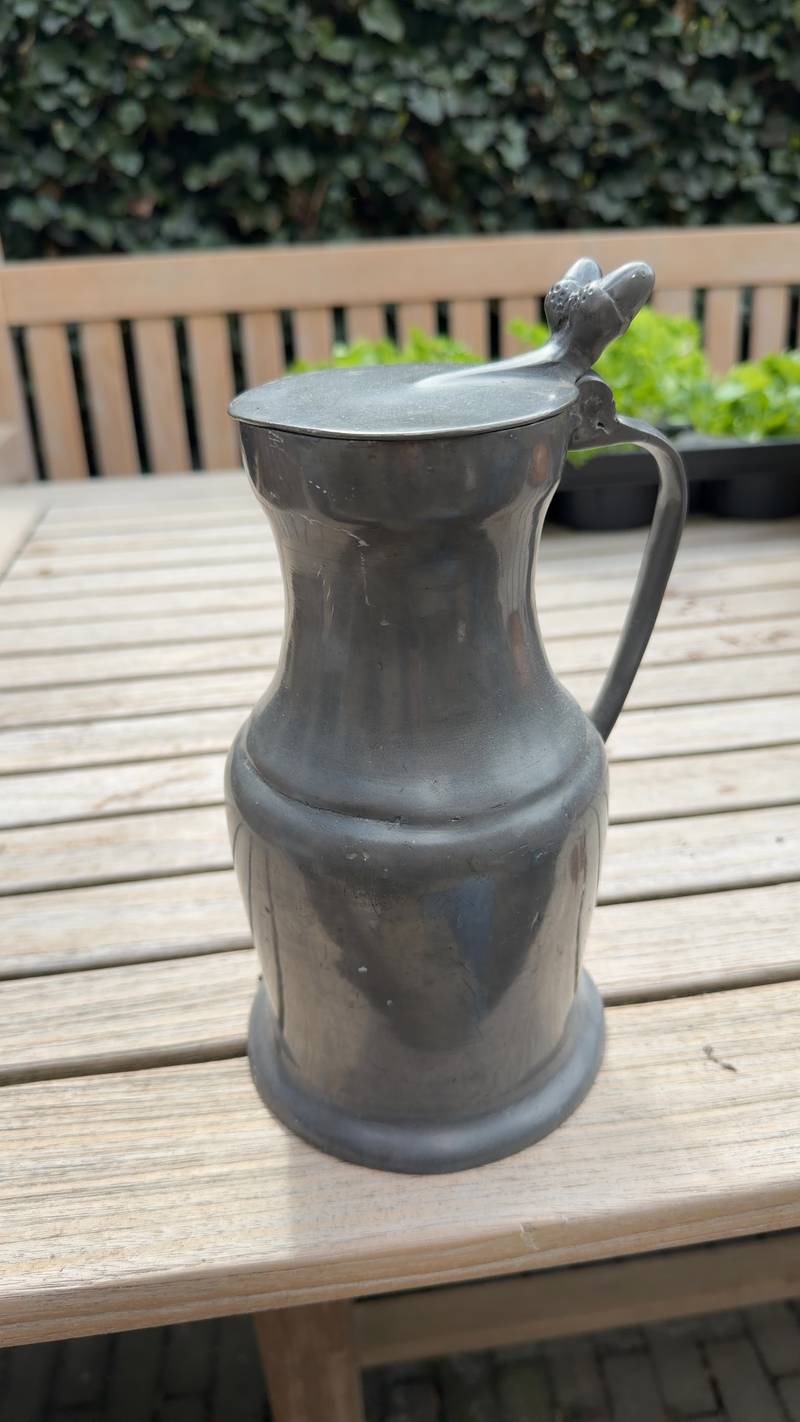
Continental Pewter Baluster Measure - 'Lidded Pinte' (Acorn Thumbpiece) c. 1820-1860
Estimated value
$85 - $175Rarity
Average(4/10)Category
AntiquesEra
Mid-19th Century (c. 1820-1860)Origin
InternationalAuthenticity
CONTINENTAL PEWTER BALUSTER MEASURE - 'LIDDED PINTE' (ACORN THUMBPIECE) C. 1820-1860: IDENTIFICATION
A heavy-gauge pewter lidded flagon or liquid measure, featuring a distinctive double-acorn thumbpiece and a simple strap handle. The vessel is constructed in a traditional baluster form with a high neck and wide, flared base. The base interior displays two punched rose crown touchmarks and hand-incised inventory or weight numbers, typical of 19th-century European commercial usage.
CROSS-CULTURAL PARALLELS
Where This Object Echoes
Traditional 'Pinte' measures used for dispensing ale and wine in commercial guilds
Ritual & Ceremonial Use
- •Commercial liquid measurement and verification in municipal marketplaces
- •Tavern service and communal dining in Northern Europe
Meaning Through Time
A precision instrument for trade and taxation regulated by weight authorities
An object of rustic decor symbolizing pre-industrial craftsmanship
PERIOD & PROVENANCE
SCARCITY
Typical antique shop fare. Requires some searching but regularly available. This is where most genuine antiques fall.
Typical Characteristics
- Standard antique shop items
- Regularly available
- Moderate collector interest
Confidence Factors
- Touchmarks show appropriate wear and authentic strike depth
- Hand-incised tally marks on the base are consistent with period commercial inventory practices
- Overall patina and leaden hue match 19th-century pewter compositions
ANTIQUARIAN'S ASSESSMENT
Decorative Arts Specialist
Identification is high due to the presence of clear, diagnostic features like the acorn thumbpiece and rose crown touchmarks, which allow for specific era and regional attribution.
KEY EVIDENCE
- 1Double-acorn thumbpiece is a diagnostic 18th-19th century Continental feature
- 2Presence of two rose crown touchmarks signifies high-tin content 'fine' pewter
- 3Hand-incised '3408' and '727' numbers suggest long-term inventory in a commercial setting
- 4Baluster profile is consistent with mid-19th century European production standards
UNCERTAINTIES
- •Hinge alignment should be checked for later repairs or replacement pins
- •Surface pitting can sometimes be accelerated artificially; however, this example appears naturally aged
WHAT WOULD IMPROVE CERTAINTY
- →Inspect the hinge pin closely for signs of modern steel replacement
- →Conduct a 'tap test' to verify the integrity of the lid-to-body seal
- →Consult specialized catalogs of Continental touchmarks to identify the specific guild or city of origin
CONDITION & GRADE
Condition
Significant surface wear and bruising consistent with utilitarian use; the lid hinge shows minor misalignment. The base rim exhibits small indentations and irregular foot wear patterns typical of 150+ years of contact with stone surfaces.
Weight & feel
Estimated at 1.2 to 1.5 kg, the thick-walled construction suggests a substantial, bottom-heavy vessel designed for heavy daily use.
ANTIQUES MARKET VALUATION
Updated: May 11, 2026
Similar 19th-century lidded measures frequently realize between $80 and $150 at regional auctions like Dreweatts or specialized pewter sales.
Who buys this
Collectors of early European metalwork and enthusiasts of rustic kitchenalia or tavern history.
What increases value
- •Clarity and number of touchmarks on the base
- •Originality of the hinge and thumbpiece assembly
- •Presence of inventory numbers which add historical character
What lowers value
- •Modern cleaning that removes the original dark patina would significantly reduce value
- •Leaking or structural cracks in the base
What makes top-tier examples
- •Clear maker's initials within the rose crown
- •Evidence of original government verification stamps (tax marks) on the rim
Grade & condition
Completeness of the hinge, depth of the patina, and legibility of the marks.
Rarity & demand
For informational purposes only, not a formal appraisal.
ABOUT ANTIQUES
Objects over 100 years old with historical and aesthetic value.
Antiques value and rarity guideSHARE THIS CURIOSITY
Have your own curiosities to discover?
Scan Your Curiosity
COMMENTS