
French Gilt Brass Miniature Book-Form Vesta Case
Visual assessment
Photo analysis
Save to revisit in your watchlist. This does not add the object to your own collection.
French Gilt Brass Miniature Book-Form Vesta Case
A late Victorian miniature vesta case (match safe) constructed of stamped brass with a dark patinated exterior. The object is designed as a trompe l’oeil book, featuring a ribbed spine and a hinged front cover. The primary face bears a stamped Maltese cross centerpiece within a radiant sunburst mandorla, surrounded by a beaded circular border and foliate corner motifs. The interior reveals the original gilt wash, which served to protect the metal from the sulfur in early friction matches.

Related traditions
Victorian England/France
1850-1900
The 'Palais Royal' souvenir culture where everyday objects were disguised as books or miniatures.
Use and ceremony
Late 19th Century
A necessary personal utility for portage of fire.
Modern Era
An obsolete curiosity and collectible example of Victorian metalwork.
Origins and context
Dating to circa 1880-1900, this vesta case reflects the 19th-century trend for novelty smoker's accessories. The use of religious iconography, specifically the Maltese cross, was frequently employed in French 'Palais Royal' style souvenirs of the period. While friction matches were invented in 1826, the portable vesta case became a ubiquitous gentleman's accessory after 1850 when safety matches became commercially standardized.
Further details
The term 'Vesta' originates from the Roman goddess of the hearth, a fitting name for a vessel designed to carry fire-starting friction matches.
Biddle and Co. and other Birmingham makers dominated the English market, but French manufacturers specialized in these stamped brass versions for the tourist trade in the late 1800s.
Attribution and evidence
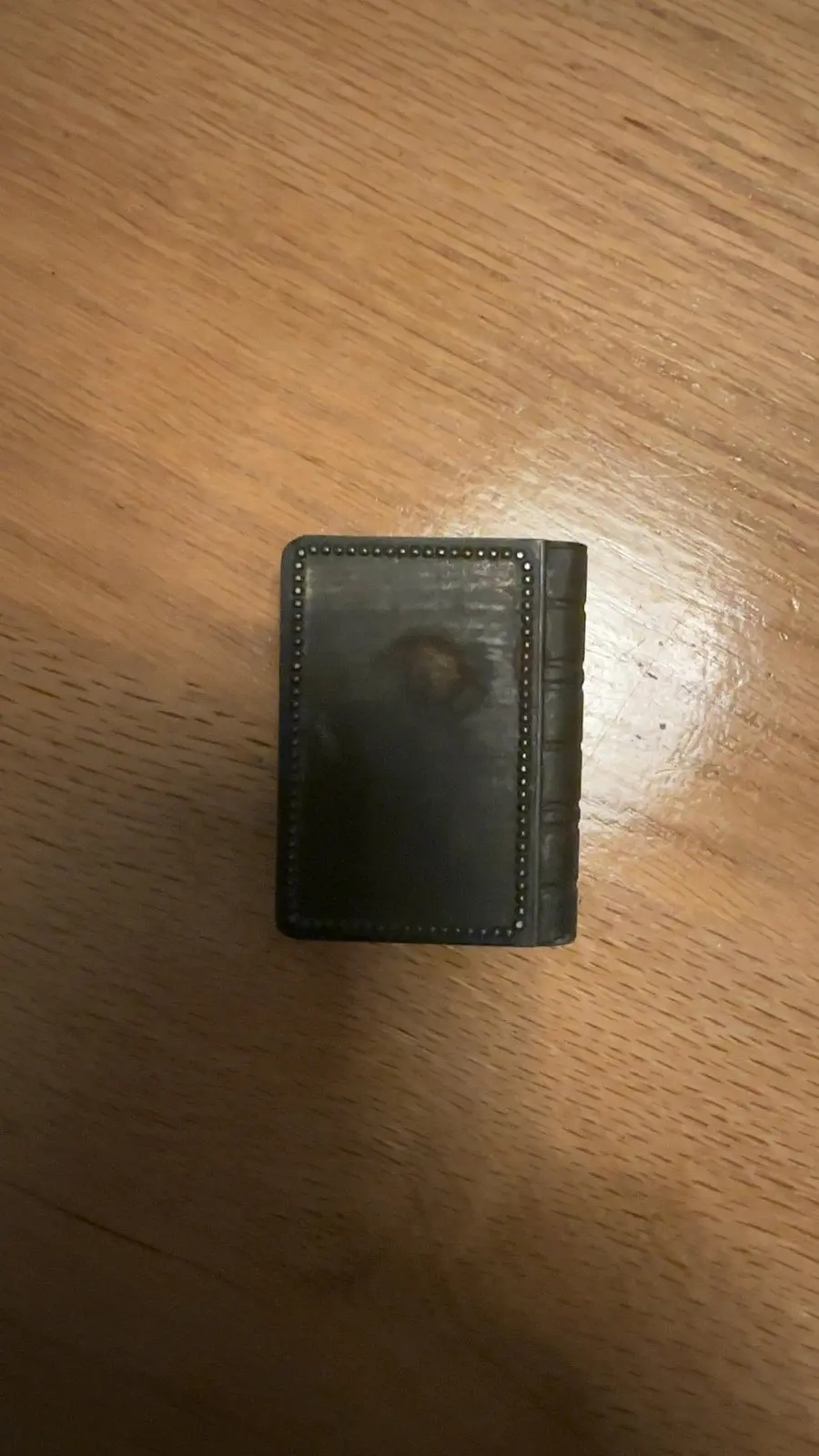
The form and construction are highly standardized for late 19th-century European metalware, allowing for a firm identification despite the lack of signatures.
Identifying details
- 1Book-form silhouette with faux-ribbed spine indicative of late Victorian novelty design.
- 2Iconographic use of the Maltese cross and radiant sunburst common in 19th-century French metalware.
- 3The presence of an interior striker surface (indicated by the grit-textured floor) identifies it as a vesta case.
- 4Gilt interior wash used to prevent chemical corrosion from phosphorus/sulfur matches.
Open questions
- •Lack of visible hallmarks or maker's stamps (common for brass trade pieces but limits specific workshop attribution).
Photographs that would help
- Check the bottom edge of the 'book' for a serrated or rough strike plate surface.
- Examine the inner rim for small stamped marks such as 'DEPOSE' (French registered design mark).
Terms in this record
- Vesta Case
- A small portable box, often highly decorated, used to carry friction matches (vestas).
- Gilt Wash
- A very thin layer of gold applied to a base metal, often used on the interior of silver or brass items to prevent corrosion.
- Trompe l’oeil
- A style of design intended to deceive the eye into perceiving a painted or shaped detail as a three-dimensional object (e.g., metal shaped as a book).
Wear and preservation
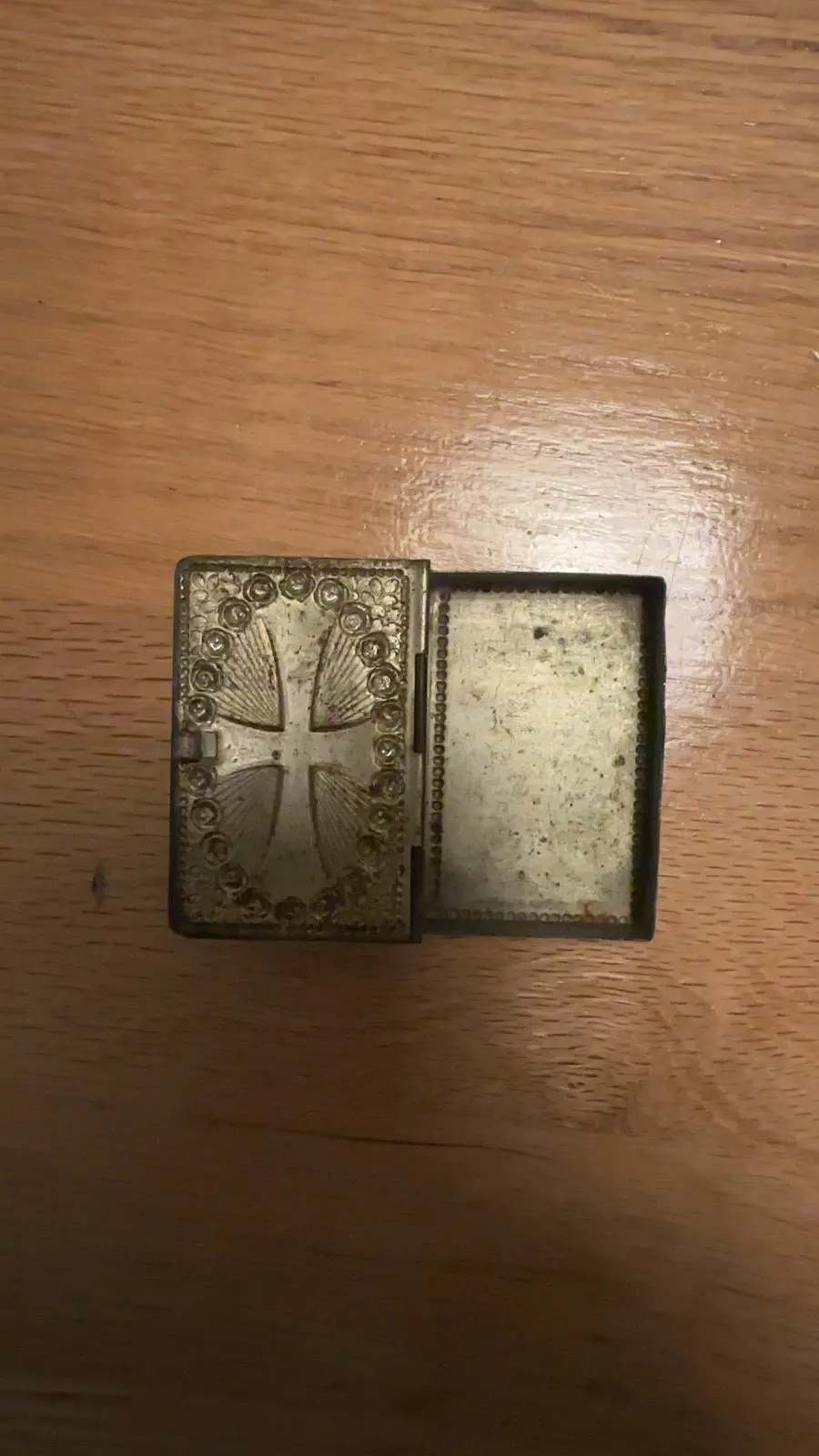
Surface oxidation and wear to the dark patina on the rear cover and edges. The hinge remains intact, though the interior shows spotty verdigris and oxidation consistent with contact with match heads.
Materials and construction
The exterior displays a heavy chemical patination intended to simulate aged bronze or leather, while the interior retains a thin gilt finish over a granular brass substrate.
Recorded physical details
Approximately 25-35 grams; typical for thin-gauge stamped brass construction of the late 19th century.
Scarcity and surviving examples
Average · 4/10 estimated rarity
This is a qualitative collection score, not a measured survival count, market percentile or proof of authenticity.
What the photographs establish
Interpretation of the photographs and supplied context. This does not authenticate the object.
- Construction techniques such as the rolled hinge and stamped relief are consistent with late 19th-century mass production.
- Internal surface wear and oxidation patterns match the age and intended functional use.
Value and its basis
Estimate recorded: May 11, 2026
How we estimate value
Estimate context (not a documented sale): Similar brass book vestas frequently appear on eBay and at regional UK/French auctions, typically selling for between $40 and $90 depending on condition (Catawiki 2023).
Collectors and interest
Collectors of 'Tobacciana' (vintage smoking accessories) and enthusiasts of Victorian novelty metalwork.
What supports the estimate
- •Retaining the original internal gilt wash
- •The degree of crispness in the stamped Maltese cross relief
- •Functional integrity of the hinge and clasp
What could change it
- •Heavy verdigris (green corrosion) on the interior
- •Loss of the exterior dark patina revealing raw brass
Comparing quality
- •Maker marks from recognized firms like Biddle or Bryant & May
- •Inclusion of an enamel or silver-plated finish rather than plain brass
The effect of condition
Sharpness of stamping, hinge tension, and the state of the internal gilding.
Market interest
For informational purposes only, not a formal appraisal.
Related objects
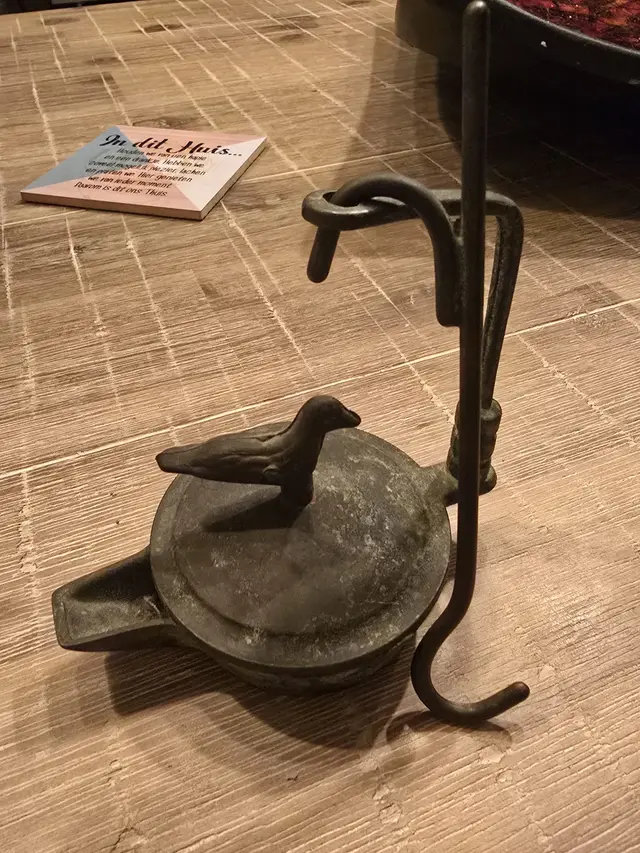
Flemish Brass Crusie Lamp with Bird Finial - c. 18th-19th Century
Same category
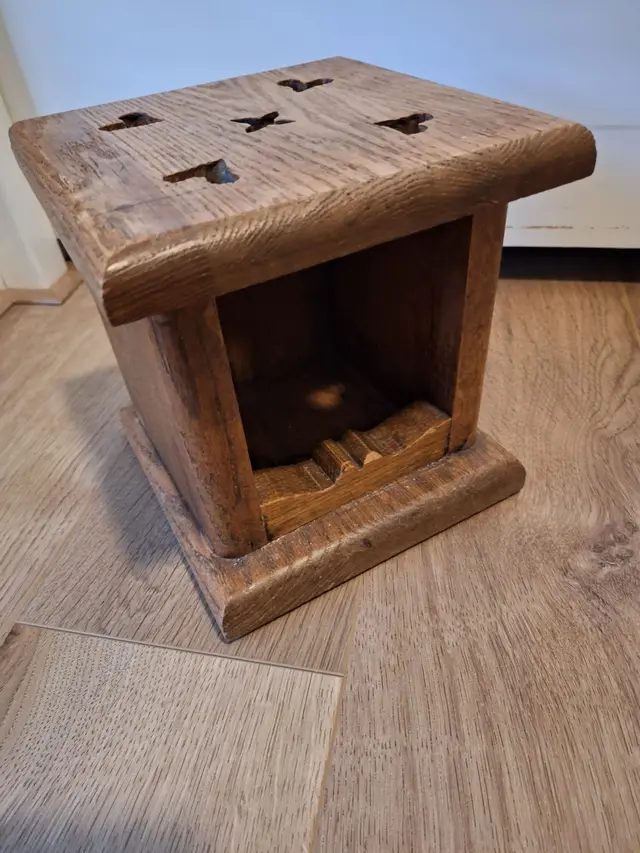
Flemish or Dutch Oak Foot Warmer (Stoof) - c. late 19th Century
Same category
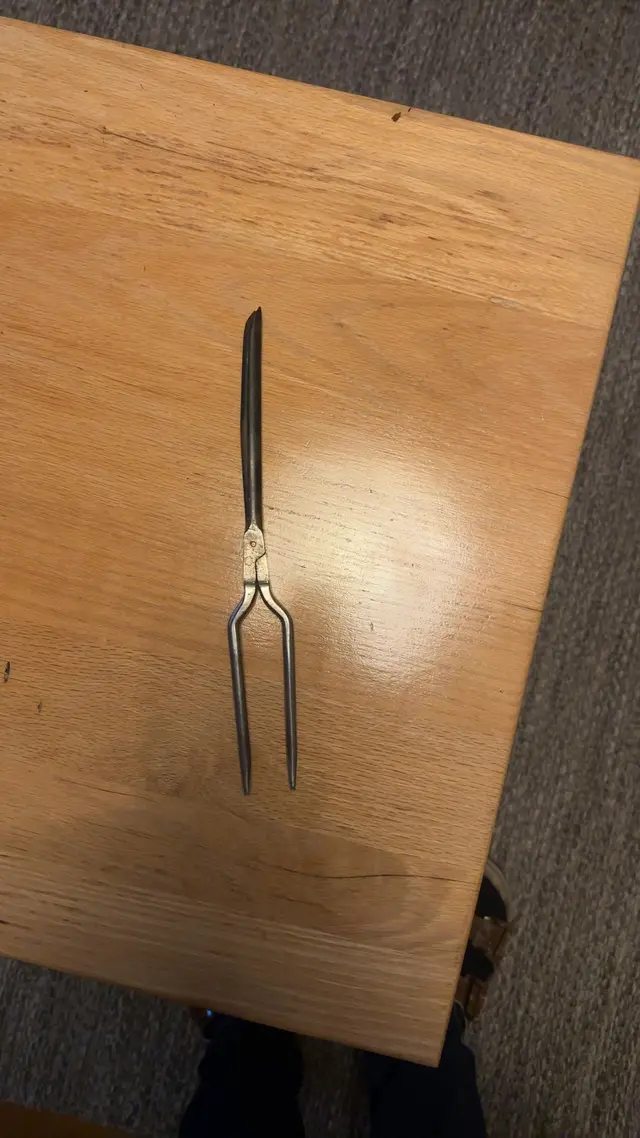
Victorian Marcel Curling Tongs (Hair Styling Iron)
Same category
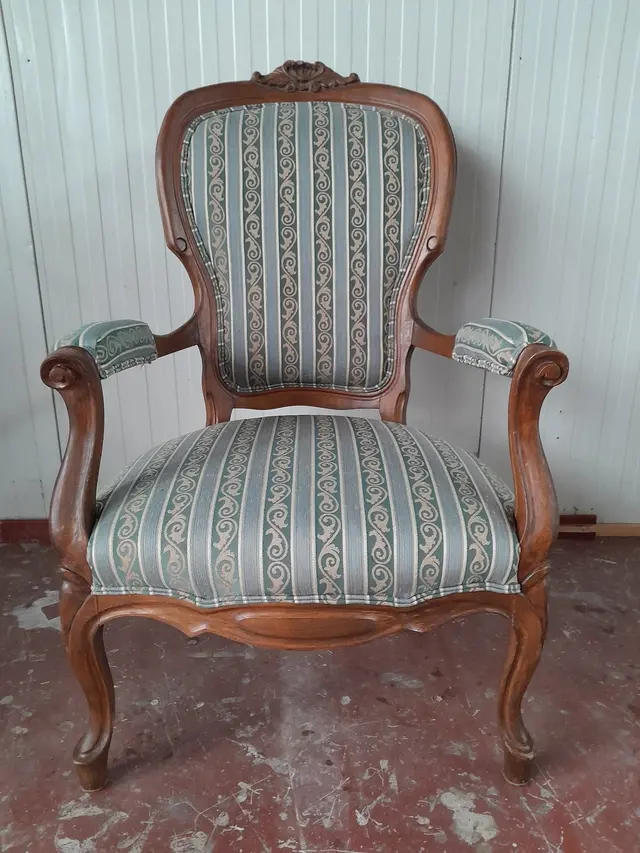
Louis XV Style Fauteuil à la Reine
Same category
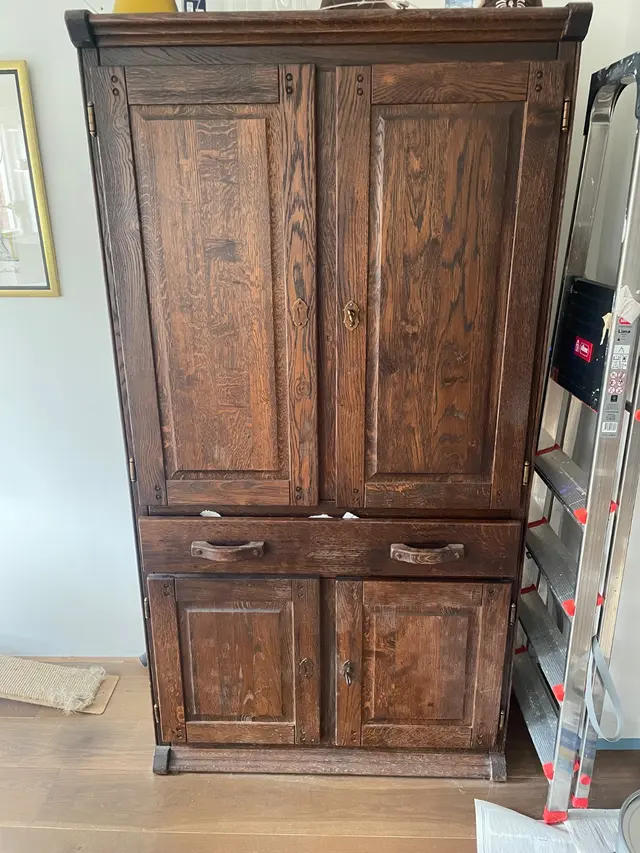
Mission Style Oak Dutch Cupboard (Kast)
Same category
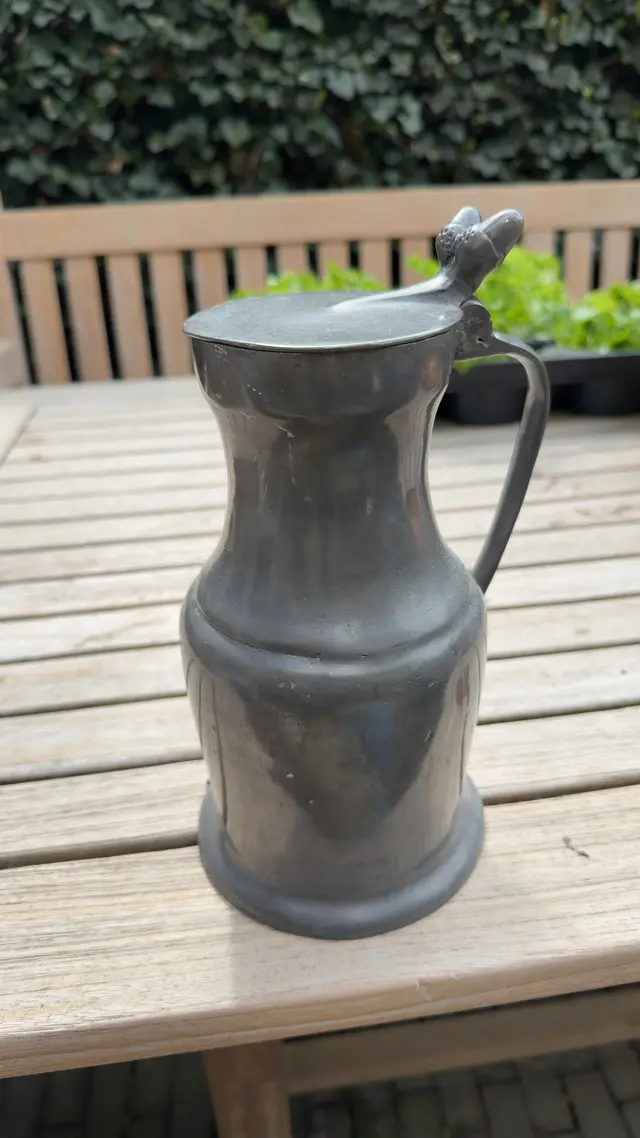
Continental Pewter Baluster Measure - 'Lidded Pinte' (Acorn Thumbpiece) c. 1820-1860
Same category
Explore Antiques
Objects over 100 years old with historical and aesthetic value.
Antiques value and rarity guideShare this find
A place for your antiques
Keep its photographs, maker’s marks and the story you know in one object record. Start with a photo.
Create an account for 10 free scans. No credit card needed.
Join the conversation
Recognise a detail or have a question? Add what you know and cite your source. Suggested corrections stay in the discussion for the owner or a moderator to review.
Sign in to leave a comment
Sign in